

Hilo Core vs. Apple Watch: Blood Pressure Compared
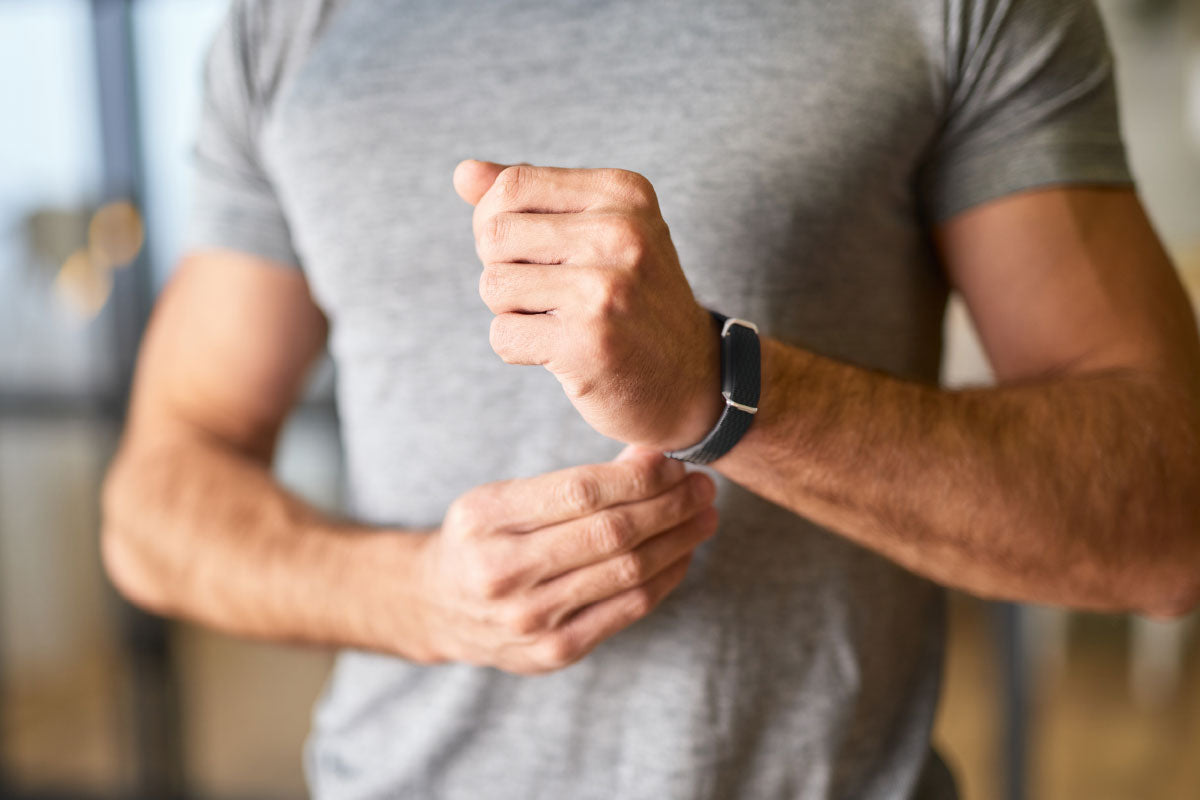
Hilo Core and Apple Watch take fundamentally different approaches to blood pressure. Hilo Core combines a validated upper-arm cuff for point-in-time systolic and diastolic readings with a cuffless band that shows directional trends across days and weeks. Apple Watch, by contrast, screens for patterns that may suggest hypertension but does not display blood-pressure values. Hilo Core is designed for people who want blood pressure to remain at the center of the experience rather than being one feature within a general-purpose smartwatch.
Read how Hilo Core works.
Key Facts
- Hilo Core includes a validated upper-arm cuff: Point-in-time systolic and diastolic readings from a device with peer-reviewed validation under the ANSI/AAMI/ISO 81060-2 protocol.
- Apple Watch does not display blood-pressure values: Its hypertension notification software is FDA-cleared for screening — not for measuring, diagnosing, or tracking treatment.
- Cuffless accuracy depends on device validation: That’s why Hilo Core includes a validated upper-arm cuff for reference readings alongside the wellness trend band — the 2025 AHA/ACC Guideline advises against relying on cuffless devices alone for diagnosis or treatment decisions.
- Hilo Core combines cuff and cuffless in one system: Use the included cuff for reference readings and the band for directional trends — both managed in a single app. Explore Hilo Core.
What Apple Watch Does — and Doesn’t Do — for Blood Pressure
When comparing Hilo Core vs. Apple Watch for blood pressure, the core difference is this: Hilo Core includes a validated upper-arm cuff that provides point-in-time systolic and diastolic readings, while its band and app add longer-term blood pressure trends. Apple Watch screens for a possible pattern. When the software finds a qualifying pattern of hypertension, the user receives a possible-hypertension notification. Apple then prompts the user to get a third-party blood-pressure cuff and log morning and evening measurements for seven days. The output is a notification; systolic and diastolic values still come from a cuff. The feature is not intended to replace traditional diagnosis, assess treatment progress, or serve as blood-pressure surveillance. An absent notification does not rule out hypertension.

A 2026 JAMA analysis of the feature interpreted a positive result as moderate evidence of possible hypertension and a negative result as weak evidence for ruling it out. See the JAMA analysis.
That screening function may be useful to someone already buying a smartwatch for communications, fitness, and other health features, though measurement and follow-up still depend on another device.
Why an Included Upper-Arm Cuff Changes the Experience
The 2025 AHA/ACC High Blood Pressure Guideline recommends a validated device with an appropriately sized upper-arm cuff, standardized technique, and averages from repeated readings. Its top take-home messages also advise against relying on cuffless devices, including smartwatches, for accurate blood-pressure measurements until their precision and reliability improve. Read the 2025 AHA/ACC High Blood Pressure Guideline.
Hilo Core includes the upper-arm cuff that supplies the system’s point-in-time reference. The peer-reviewed validation study cited for this cuff was published under its earlier Aktiia device name. Investigators evaluated 85 adults using a specific protocol. Mean differences from reference auscultation were 1.3 mm Hg for systolic pressure and -0.2 mm Hg for diastolic pressure, and the cuff met both validation criteria. See the cuff validation study.
Validation is one part of a usable reading. Cuff size and placement, five minutes of seated rest, back and feet support, an arm supported at heart level, and repeated measurements all affect the result. Hilo can guide setup for the included device within the same app.
Apple’s follow-up workflow assumes the user can choose and use an appropriate third-party cuff. That can be harder than it sounds. A 2023 JAMA analysis followed the best-selling blood-pressure devices on country-specific Amazon sites in 10 countries — covering off-the-shelf consumer models without published validation evidence, not systems with peer-reviewed clinical validation like the included Hilo Cuff.
Among those Amazon bestsellers, a median 79% of upper-arm models and 84% of wrist models were classified as nonvalidated because they were absent from recognized validation lists. Across the U.S. best-seller lists, the median figures were 84% for upper-arm models and 100% for wrist models. The study did not test each device for accuracy; it found no published validation evidence for those models. A separate 2022 JAMA analysis found the same broader problem in a global device database.
An included cuff with published validation evidence removes that purchasing step. Correct cuff size and technique still matter, but the user begins with a known device and one set of instructions.
How Hilo Core Uses Cuff Readings and Cuffless Trends
Blood pressure changes during the day. Recent activity, sleep, stress, posture, meals, and the measurement setting can all influence a reading. One carefully taken value is useful, while repeated readings and averages help show whether it was typical for that period.
Hilo Core organizes the experience around blood pressure. Use the cuff when you need a point-in-time systolic and diastolic value. The band and app show directional patterns over longer periods, and the app keeps those trends separate from cuff measurements. The cuffless experience does not provide diagnosis, treatment recommendations, or a reason to change medication.
The app can show whether a change persisted for several days, returned toward a familiar range, or appeared during a change in routine. Users can note possible associations without assigning medical causation.
Many wearables place cardiovascular signals inside a broader readiness or performance score. Hilo presents blood-pressure information directly and keeps unrelated metrics from taking over the experience. For someone who already has a smartwatch full of general health data, that narrower focus can be an advantage.
The Optical Research Behind Hilo Core’s Blood-Pressure Design
Hilo’s technology grew from more than 20 years of optical blood-pressure research and more than 100 publications. Earlier peer-reviewed studies were published under the Aktiia device name, which should remain attached to the devices and intended uses that were actually studied.
A 2021 one-month study evaluated an optical bracelet using an extended ISO 81060-2 protocol adapted for a cuffless wrist device. A separate 2021 study assessed performance across sitting, standing, and lying positions. In 2024, investigators analyzed 2,252,224 readings from 5,189 users over a 15-day reference period to examine how the length of the measurement period affected time-in-target-range classification.
These publications document the research program and the scale of its longitudinal data. They do not expand Hilo Core’s current U.S. claims. The included cuff provides point-in-time reference readings, and the band-and-app experience supports wellness trends across longer periods.
The 2026 American Heart Association scientific statement on cuffless blood-pressure devices examines calibration, signal quality, validation design, and performance outside the laboratory. Each issue needs independent evidence before cuffless data can support diagnosis or treatment decisions. The Hilo Core band’s cuffless features fall within the U.S. wellness framework — directional trends across time, not clinical measurements.
The Alert Is Only the Starting Point: Why What Comes Next Matters
A hypertension notification — whether from Apple Watch or any other screening tool — is only useful if the follow-up step produces a reliable reading. That follow-up depends on a validated cuff. For Apple Watch users, finding one means navigating a market where the majority of bestselling devices carry no published validation evidence. Hilo Core removes that step: the validated cuff is already included, and the same app guides setup and measurement. The notification and the reference reading live in the same system.
This distinction matters most for people who want to act on what a device tells them — for people who would like to understand what comes next after a screening alert.
Hilo vs. Apple Watch at a Glance
Here is how Hilo Core and Apple Watch compare across the key blood-pressure dimensions:
| Comparison point | Hilo Core | Apple Watch |
|---|---|---|
| Primary use | Dedicated blood-pressure system built around an included cuff, band, and app. | Multipurpose smartwatch with a possible-hypertension notification. |
| Point-in-time BP values | The included validated upper-arm cuff provides systolic and diastolic readings. | The watch does not provide systolic or diastolic values. A cuff that needs to be purchased separately supplies the measurements. |
| Wrist-worn output | The band and app show longer-term directional wellness trends, labeled separately from cuff readings. | Reviews 30-day periods and may issue a possible-hypertension notification. |
| Follow-up workflow | The reference cuff is already part of the system and uses the same app. | After a notification, Apple prompts the user to obtain a third-party cuff and log seven days of readings. |
| Accuracy standard | ISO 81060-2 validated upper-arm cuff for reference readings; cuffless band for directional wellness trends. | No blood-pressure accuracy validation for values because the watch does not display BP values; notification only. |
| Evidence and regulatory frame | The cuff has peer-reviewed validation. The cuffless features remain within the U.S. wellness framework. | The notification software is FDA-cleared for eligible adults without diagnosed hypertension; its indication excludes diagnosis, treatment monitoring, and blood-pressure surveillance. |
| Likely best fit | People buying mainly for blood pressure who want the cuff, band, and app in one focused system. | People buying a general smartwatch who value an added screening notification. |
Apple Watch’s role is most relevant before a hypertension diagnosis, within the population covered by its FDA-cleared indication. Hilo Core is built for people who have decided that blood pressure deserves regular attention and want the cuff, band, and app in one system.
Some people may use both. Apple Watch can remain the general smartwatch, while Hilo Core provides the dedicated blood-pressure experience.
Hilo vs. Apple Watch: Which Is the Better Fit?
Hilo Core is likely to be the better fit when blood pressure is the main purchase driver. The system includes the validated measurement device, guides the user through one app, and keeps the cuffless record focused on changes across days and weeks. The user does not need to identify a compatible third-party cuff after an alert.
Apple Watch is likely to be the better fit when the buyer primarily wants a full-featured smartwatch and sees hypertension notifications as an additional screening feature. Its notification can prompt follow-up. The follow-up requires an external cuff and, when appropriate, evaluation by a health care professional.
Hilo Core vs. Apple Watch: Let Blood Pressure Decide
Apple Watch can surface a possible hypertension pattern for eligible users. Hilo Core includes the validated cuff that provides systolic and diastolic readings, then keeps those readings visible beside a longer cuffless record. The app stays centered on blood pressure, and the band adds a view across days and weeks.
For people buying primarily for blood pressure, Hilo Core offers a more complete route from a well-taken cuff reading to trends that can be reviewed over time.
WHEN A VERY HIGH READING NEEDS URGENT ACTION
If your blood pressure is higher than 180 systolic and/or 120 diastolic, wait at least one minute and measure again.
If the second reading is just as high and you have chest pain, shortness of breath, back pain, numbness, weakness, a change in vision, difficulty speaking, or another new concerning symptom, call 911.
If you do not have symptoms but the reading remains that high, contact your health care professional promptly.
Follow the American Heart Association severe-hypertension guidance.
Do not change medication based on a single reading unless a qualified clinician tells you to.
Blood Pressure Deserves a Dedicated System — Not a Side Feature
Hilo Core combines a validated upper-arm cuff with a cuffless trend band and app — everything in one focused system, so you go from a well-taken reading to weeks of patterns without searching for a compatible third-party cuff.
Get Hilo CoreDisclaimer: Hilo Core is a wellness product. It is not intended to diagnose, treat, cure, or prevent any disease. It is not intended to measure blood pressure for medical purposes. This article is for general informational purposes only and does not constitute medical advice. Individual health decisions should be made in consultation with a qualified healthcare professional. Hilo Core is not recommended during pregnancy or for individuals with certain cardiac implants or pre-existing conditions. Please consult your healthcare provider before use.
Frequently Asked Questions
Does Apple Watch measure blood pressure for people who already have hypertension?
How do Hilo Core and Apple Watch differ for someone focused on blood pressure?
Does the Hilo Core band show exact systolic and diastolic values?
Why does the included Hilo cuff matter for home blood pressure monitoring?
Can I use Hilo Core and Apple Watch together?
Does Hilo Core work differently from other cuffless blood pressure wearables?
Sources
- Jones DW, Ferdinand KC, Taler SJ, et al. 2025 AHA/ACC/AANP/AAPA/ABC/ACCP/ACPM/AGS/AMA/ASPC/NMA/PCNA/SGIM guideline for the prevention, detection, evaluation, and management of high blood pressure in adults. Circulation. 2025;152:e114–e218. doi:10.1161/CIR.0000000000001356. Guideline. Current U.S. guidance on validated upper-arm devices, home monitoring technique, repeated readings, and the limits of cuffless devices for diagnosis or management.
- Muntner P, Shimbo D, Carey RM, et al. Measurement of blood pressure in humans: a scientific statement from the American Heart Association. Hypertension. 2019;73(5):e35–e66. doi:10.1161/HYP.0000000000000087. Scientific statement. Detailed guidance on device validation, cuff size, positioning, and standardized measurement.
- Cohen JB, Addo DK, Jacobs JA, et al. Impact of a smartwatch hypertension notification feature for population screening. JAMA. 2026;335(11):1001–1003. doi:10.1001/jama.2025.26925. Study. U.S. population-screening analysis based on the Apple feature’s validation performance.
- Cohen JB, Byfield RL, Hardy ST, et al. Cuffless devices for the measurement of blood pressure: a scientific statement from the American Heart Association. Hypertension. 2026;83(3):876–886. doi:10.1161/HYP.0000000000000254. Scientific statement. Current AHA review of calibration, validation, signal quality, and evidence gaps in cuffless blood-pressure technology.
- Alexandre J, Tan K, Almeida TP, Sola J, Alpert BS, Shah J. Validation of the Aktiia blood pressure cuff for clinical use according to the ANSI/AAMI/ISO 81060-2:2013 protocol. Blood Press Monit. 2023;28(2):109–112. doi:10.1097/MBP.0000000000000639. Study. Peer-reviewed validation study of the upper-arm cuff used in the Hilo product lineage.
- Picone DS, Chapman N, Schultz MG, et al. Availability, cost, and consumer ratings of popular nonvalidated vs validated blood pressure-measuring devices sold online in 10 countries. JAMA. 2023;329(17):1514–1516. doi:10.1001/jama.2023.2661. Study. Prospective analysis of validation status among best-selling devices on country-specific Amazon sites.
- Picone DS, Campbell NRC, Schutte AE, et al. Validation status of blood pressure measuring devices sold globally. JAMA. 2022;327(7):680–681. doi:10.1001/jama.2021.24464. Study. Global analysis of published validation evidence for automated upper-arm and wrist devices.
- Vybornova A, Polychronopoulou E, Wurzner-Ghajarzadeh A, Fallet S, Sola J, Wuerzner G. Blood pressure from the optical Aktiia bracelet: a 1-month validation study using an extended ISO 81060-2 protocol adapted for a cuffless wrist device. Blood Press Monit. 2021;26(4):305–311. doi:10.1097/MBP.0000000000000531. Study. Earlier medical-device research published under the Aktiia device name.
- Sola J, Vybornova A, Fallet S, et al. Validation of the optical Aktiia bracelet in different body positions for the persistent monitoring of blood pressure. Sci Rep. 2021;11:20644. doi:10.1038/s41598-021-99294-w. Study. Evaluation of the optical technology across common body positions.
- Fisher NDL, Almeida TP, Perruchoud D, Shah J, Sola J. Optimizing time-in-target-range assessment for blood pressure: insights from a large-scale study with continual cuffless monitoring. Front Med (Lausanne). 2024;11:1396962. doi:10.3389/fmed.2024.1396962. Study. Retrospective analysis of 2,252,224 readings from 5,189 users.
- Hilo. The science behind Hilo. Accessed July 15, 2026. Hilo science. Product research overview, publication history, and the cuff-validation study cited for Hilo Core.
- Hilo. How Hilo Core works. Accessed July 15, 2026. Product information. Description of the cuff, band, and app roles in the U.S. product experience.
- American Heart Association. When to call 911 for high blood pressure. Accessed July 15, 2026. Safety guidance. Consumer guidance for readings above 180/120 mm Hg and emergency symptoms.
Read more
Hilo Core may be a good fit when blood pressure is the health signal you most want to follow and isolated readings leave too much of the story between checks. This guide explains what the included ...

Hilo Core brings a focused cuff, band, and app system to the U.S. WIRED rated an earlier medical Hilo system 8/10. The Independent wore that system for two months and praised its comfort, pared-bac...

Can you wear Hilo Core day and night? Yes. Hilo Core is designed for day-and-night wear, with brief breaks for charging, cleaning, skin care, and app-guided cuff sessions. The screen-free band and ...