

Hilo Enters the US, Its Largest Addressable Market
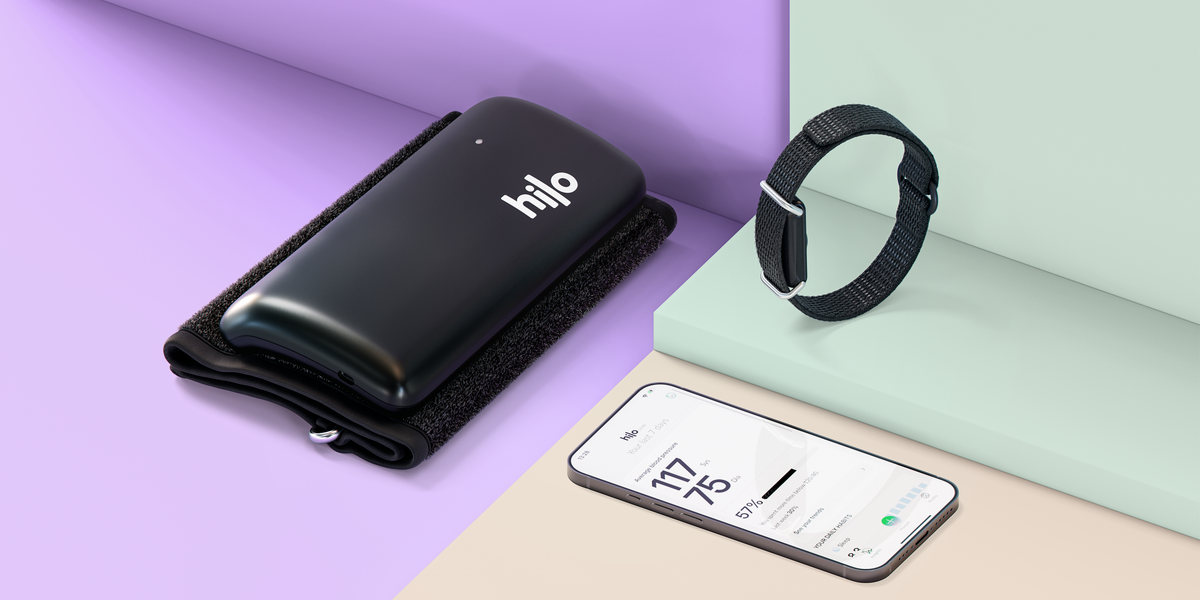
Hilo, the world leader in clinically validated cuffless blood pressure monitoring, launched Hilo Core, its first US product, on July 21, 2026. The launch marked Hilo’s entry into its largest addressable market. This landmark launch builds on Hilo’s established European footprint; globally, more than 200,000 people with hypertension issues or concerns have used its technology. It also paves the way to the company’s next milestone: FDA authorization of Hilo Medical, expected in the first half of 2027.
Hilo Band is available by subscription and is certified as a medical device in Europe. It tracks blood pressure automatically day and night, alongside sleep and activity. The band takes around 35 measurements a day, including overnight when blood pressure patterns are most revealing, and presents averages and trends over time, while a connected upper-arm cuff periodically calibrates it to each user’s physiology. Hilo Core launches with a focused version of this system calibrated with an FDA-cleared cuff. The US offering will broaden as Hilo secures further FDA authorizations, beginning with Hilo Medical, alongside a calibration-free version under development and expected for 2027-2028.
The launch comes as the wearables industry moves decisively into medical-grade health. Having built large franchises in fitness, sleep and activity tracking, category leaders are adding new features, acquiring platforms that connect wearables to hospital systems, and building AI health coaches. Blood pressure is the most valuable next metric, but due to its complexity has proved elusive. Many players have tried, but today’s offerings stop at notifying users of “possible” hypertension without clinically validated daily readings or blood pressure estimates. That leaves wearables tracking almost every vital sign except the one that matters most for cardiovascular health. It also confines them to screening, while most of the value for patients lies in long-term control. That is where Hilo is focused.
The reason for the shift is clear: health represents a much larger market, not only because it reaches a larger population, it also commands much better unit economics. Hilo estimates that a user monitoring their cardiovascular health can be worth up to 15x more over their lifetime than a fitness or performance user, across an addressable population of 290 million adults in the US and Europe.
Stefan Petzinger, CEO of Hilo, commented: “Entering the US is a critical milestone for Hilo. Not only is it our largest addressable market, but we are entering it with mature technology and a clear focus: long-term blood pressure control, not just screening.”
US expansion
The US is Hilo’s largest opportunity. According to the CDC, nearly 120 million American adults live with hypertension; only about one in four has it under control. US consumers are also notably more open to wearable blood pressure monitoring. In Hilo’s own research, 59% believe wearables can provide accurate and reliable readings, roughly double the share in Germany and the UK.
Hilo Core opens the market under the FDA’s wellness framework, allowing the company to build a broad US customer base, brand and distribution ahead of Hilo Medical, its clinical-grade system, which is progressing through the FDA’s De Novo pathway. The two products are kept distinct, with separate claims, labeling and intended use.
Health is the (far) bigger prize
A health user is worth dramatically more than a fitness user, for two reasons: willingness to pay is much higher, and retention is far greater. Wellness subscriptions typically cost $100-300 a year, while consumers already pay around $1,000 a year for over-the-counter continuous glucose monitoring, a well-established, highly relevant analogy to hypertension monitoring. Retention follows the same pattern: only 10% of continuous glucose monitoring users churn against 50% for many wearable brands. Combined, a health user pays several times more each year and stays five times longer, which Hilo estimates can result in lifetime value of up to 15x that of the more casual wellness consumer.
Blood pressure fits this profile better than any other metric. Like glucose, it tracks a lifelong condition that benefits from continuous monitoring, and affects nearly half of US adults, far more than diabetes. That makes it an incredibly valuable and logical next step for every wearable. Clinically validated blood pressure moves a wearable into the medical category. Hilo is the only company with clinically validated blood pressure monitoring that is certified as a medical device in Europe, with Hilo Medical now progressing through the FDA’s De Novo pathway.
According to the WHO, an estimated 1.4 billion adults aged 30-79 live with hypertension worldwide; only around one in five have it under control, and 44% are unaware they have the condition. Finally, as the leading cause of heart attack, stroke, chronic kidney disease and dementia, blood pressure monitoring opens a gateway to broader, clinical-grade cardiovascular monitoring on the wrist.
Stefan Petzinger commented: “Medical products like ours take longer to build and certify, but there is a much bigger prize behind them. It took the leading continuous glucose monitoring company 12 years from first FDA approval to $1 billion in sales, and it has added roughly $1 billion every two years since.”
Looking ahead
With Hilo Core now live in the US, Hilo’s focus turns to FDA authorization, expected in the first half of 2027, which will bring clinical-grade continuous blood pressure monitoring to US patients and clinicians.
“Blood pressure is the one signal wearables must have to move from detecting problems to managing cardiovascular health,” Stefan Petzinger added. “We have solved the hardest part. The US launch and our FDA pathway are about bringing that to the largest market in the world.”