

Cuffless Blood Pressure Monitor Accuracy: The Evidence Behind Hilo Core

Most people shopping for a cuffless blood pressure device encounter a wide range of claims — and very little guidance on what the evidence actually shows. Accuracy figures are rarely comparable across devices: they depend on the study design, the reference method, the population tested, and the body positions measured.
This is why Hilo Core takes a different approach: the validated upper-arm cuff handles point-in-time reference measurements, while the band builds a longer wellness picture alongside it — and both layers are always kept separate in the app.
Key Facts
- No single accuracy figure exists: For consumer wearables without clinical validation, accuracy figures depend on the technology, calibration method, study population, and conditions of measurement — and are rarely comparable across devices. Hilo Core addresses this directly by i ncluding a validated upper-arm cuff, supported by a peer-reviewed study as its reference layer.
- The Hilo Core cuff has peer-reviewed validation evidence: A published study found a mean difference of 1.3 mm Hg systolic vs. simultaneous reference auscultation — within the protocol’s acceptance criteria.
- The band is a wellness layer, not a clinical instrument: The Hilo Core band collects optical observations and presents trends across days and weeks — it does not provide point-in-time clinical blood pressure readings.
- Hilo Core combines both in one guided system: The validated cuff and the cuffless band work together in a single workflow, and the app always shows users which reading came from where.
How Hilo Core Approaches Blood Pressure
Hilo Core combines a validated upper-arm cuff with a cuffless wrist band and an app in one guided system. The cuff handles point-in-time reference measurements, while the band adds a longer view of blood pressure patterns across days and weeks. In the app, cuff readings and band-derived information remain separate, so users can always see where each result came from. See how Hilo Core works.
The 2025 AHA/ACC guideline stresses correct cuff size, standardized technique, repeated measurements, and averages for any point-in-time reading. Read the 2025 AHA/ACC High Blood Pressure Guideline.
Blood pressure changes across the day and night. Sleep, movement, stress, meals, posture, and ordinary routines can all coincide with changes in a reading.1 The cuff delivers the point-in-time reference measurement. Between cuff sessions, the band builds a broader picture of how blood pressure patterns shift across daily life. The app stays focused on blood pressure and does not assign a composite readiness or performance score. Learn why blood pressure changes throughout the day.
What Accuracy Means for a Cuffless Blood Pressure Device
Most cuffless devices estimate blood pressure indirectly. Some rely solely on photoplethysmography, or PPG, while others use tonometry, pulse transit time, or combinations of signals. Performance of these systems can change with motion, sensor contact, wrist position, body posture, and other influences. The American Heart Association scientific statement calls for device-specific testing under real-world conditions and across diverse populations. It also notes that many available validation methods do not fully capture how a wearable behaves during daily life. Read the AHA scientific statement on cuffless blood pressure devices.
In Hilo Core, the cuffless layer is presented as a general wellness feature. It organizes optical observations that pass quality checks into trends and averages over time. Diagnosis, treatment, and medication decisions should rely on validated cuffs — such as the included Hilo Core cuff — and professional evaluation. Read the FDA General Wellness guidance.
The Hilo Core Cuff Provides the Point-in-Time Reference
Because the validated cuff is included with Hilo Core, setup and later reference sessions stay within the same guided workflow. Users do not need to choose a separate device or move readings between unrelated apps.
The included cuff’s peer-reviewed validation report was published under the earlier device name Aktiia Blood Pressure Cuff. The study enrolled 85 adults and followed a specific protocol. Compared with simultaneous reference auscultation, the mean device-observer difference was 1.3 mm Hg (SD 7.11) for systolic pressure and -0.2 mm Hg (SD 5.46) for diastolic pressure. The cuff met the protocol’s acceptance criteria. Read the peer-reviewed cuff validation study.
At home, technique still matters. Before measuring, avoid smoking, caffeine, and exercise for 30 minutes, and empty your bladder. Use the correct cuff size on a bare upper arm. Sit quietly for at least five minutes with your back supported and feet flat on the floor, keep the arm supported at heart level, and avoid talking during the measurement. Repeat readings as instructed and use averages when reviewing blood pressure over time. These steps reduce avoidable variation even when the device itself has been validated. Review the 2025 AHA/ACC measurement guidance.
For practical guidance on creating a consistent home routine, see the Hilo guide to measurement timing and conditions. Read the best time and conditions for taking blood pressure.
How the Cuffless Hilo Band Uses PPG
The band records an optical pulse signal without inflating around the wrist. Green light enters the tissue, and a photodetector records changes in the reflected light as blood volume rises and falls with each heartbeat. The resulting waveform contains timing and shape features that can be analyzed in relation to the system’s cuff-based reference. Read the AHA overview of PPG and cuffless blood pressure technology.
Optical signals are sensitive to movement and contact with the skin. The system uses recorded segments only after they pass signal-quality checks. Earlier studies in the research program used automated quality assessment for the same reason: motion artifacts or reduced skin perfusion can make a wrist signal unsuitable for analysis. Review the signal-quality methods in the body-position study.
Signal screening removes unusable segments, although residual variation can remain in accepted data. The app presents the cuffless output as a trend view across time and keeps it distinct from the values measured with the cuff.
What Four Major Clinical Studies Show About the Technology Behind Hilo
Hilo’s work in optical blood pressure research began more than two decades ago and now includes over 100 publications. The studies below evaluated earlier wrist-based optical systems published under the Aktiia name and form part of that research lineage. None tested Hilo Core as a complete U.S. product, and their results do not establish that the Hilo Core band provides exact clinical blood pressure measurements. Explore the science behind Hilo.
1. Comparison With an Arterial-Line Reference
A 2020 intensive-care study enrolled 31 patients and compared optical estimates at the wrist with blood pressure recorded through a radial arterial catheter. After automated signal-quality assessment, 16 patients contributed 326 paired observations. The mean difference was 0.0 mm Hg (SD 7.1) for systolic pressure and 0.0 mm Hg (SD 2.9) for diastolic pressure. Correlations were 0.87 and 0.98, respectively. The standard deviations show the spread around the group averages, and the selected, closely observed sample limits how broadly the findings can be applied. Read the intra-arterial comparison study.
2. Four Weeks Across Common Body Positions
A 2021 study enrolled 91 adults and compared optical estimates with reference auscultatory readings over four weeks. In the standard seated position, mean differences were 0.46 mm Hg (SD 7.75) for systolic pressure and 0.39 mm Hg (SD 6.86) for diastolic pressure. Precision and the proportion of usable optical recordings varied in lying, standing, and wrist-on-lap positions. The acceptance rate fell to 45% while standing, and the widest spreads occurred in lying and standing measurements. Read the body-position study in Scientific Reports.
3. Performance in Adults Aged 65 to 85
A later study included 35 adults aged 65 to 85 who contributed 469 paired measurements during four visits over one month. The overall acceptance rate was 83%. Across all positions, the mean differences were -0.26 mm Hg (SD 9.96) for systolic pressure and -0.75 mm Hg (SD 7.0) for diastolic pressure. In the seated position, the corresponding differences were 1.23 mm Hg (SD 7.88) and 0.20 mm Hg (SD 5.55). The study used modified ISO criteria because no universal cuffless validation standard was available at the time, and performance varied by position. Read the study in older adults.
4. Seven-Day Averages Compared With 24-Hour Ambulatory Tracking
A 2025 prospective study enrolled 54 patients in cardiac rehabilitation. Fifty-one patients contributed 79 valid paired sessions comparing seven-day averages from the earlier optical system with one-day ambulatory blood pressure tracking. No statistically significant difference was found for average systolic pressure over the full 24-hour period or during daytime. For diastolic pressure, the optical averages were 2.9 mm Hg lower over 24 hours and 3.1 mm Hg lower during daytime, both statistically significant. Nighttime agreement was weaker. The mean nighttime difference was 12.5 mm Hg (SD 14.4) for systolic pressure and 4.1 mm Hg (SD 8.5) for diastolic pressure, and concordance for nocturnal dipping was 79%. Read the 2025 ambulatory-tracking comparison.
What the COOL-BP Study Found in U.S. Remote Care
The COOL-BP study placed an earlier cuffless wrist system inside the Mass General Brigham Remote Hypertension Program. Thirty-eight patients enrolled, and 25 provided overlapping data from the wrist device and standard home cuffs. Across 72 overlapping periods, correlations between average nonsimultaneous daytime values were moderate: 0.57 for systolic pressure and 0.64 for diastolic pressure. Average cuffless systolic values were 4.9 mm Hg higher than home cuff averages, while diastolic values were 4.2 mm Hg lower. Read the COOL-BP study in the American Journal of Hypertension.
Only five patients contributed data around eight medication-titration events. The two methods agreed on the direction of systolic change in seven of those eight events. Among 34 participants who completed the preference surveys, 91% preferred the wrist device, most often citing ease of use and convenience. Medication decisions in the program continued to use the standard home cuffs.
COOL-BP was a small, single-arm feasibility study. Its wrist and cuff readings were not simultaneous, and the investigators stated that the study was not designed as an accuracy validation. The study primarily describes how the device fit into a managed remote-care workflow and how participants felt about using it.
How to Use Hilo Core in Everyday Life
Take cuff readings whenever the app asks for a reference session and whenever you need a current value. Follow the fit, rest, position, and repeat-measurement instructions each time. A consistent routine makes comparisons between cuff sessions more useful.
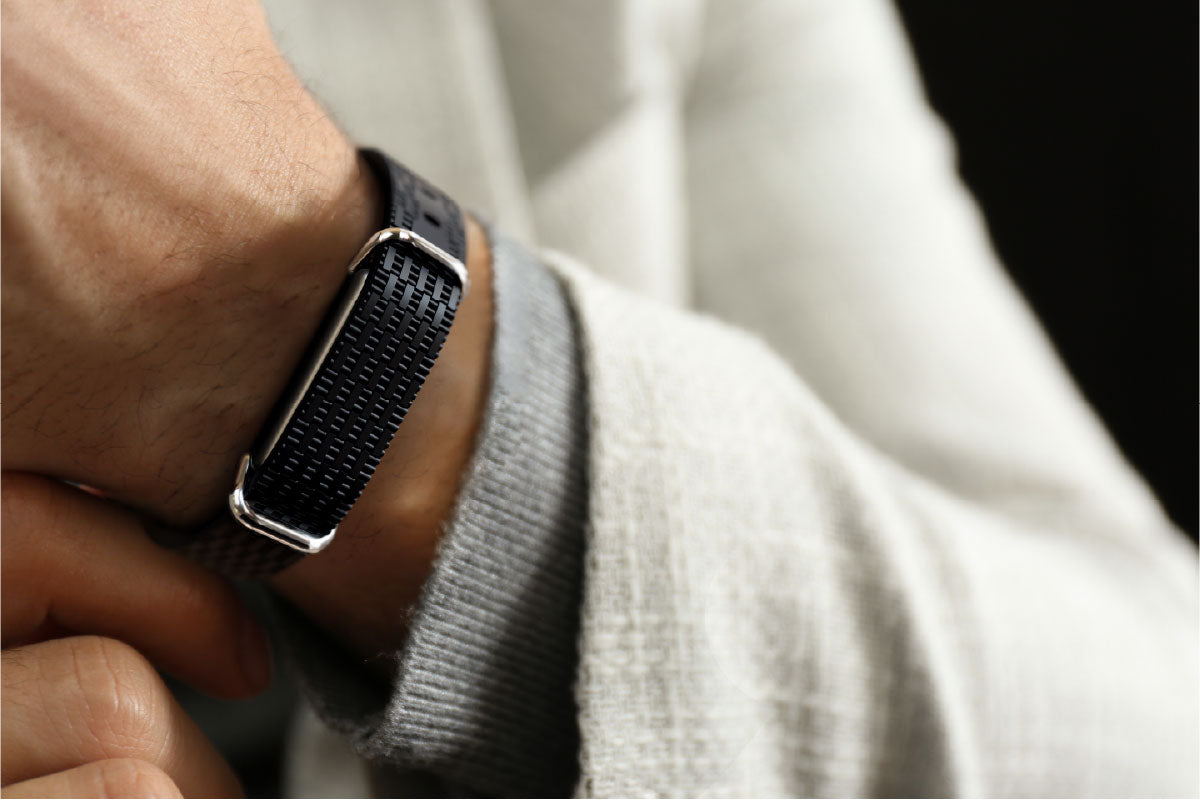
Wear the band as directed so the system can collect suitable optical observations during everyday life. Use the longer record to see whether a change recurs or persists across days. Reviewing patterns alongside changes in sleep, activity, stress, meals, or routine can surface context — but timing alone does not explain what changed or why.
The cuff, band, and app share one guided workflow, and the app identifies the source of each output. Unexpected or concerning cuff readings should be repeated with correct technique and discussed with a health care professional. Never stop, start, or change prescribed medication based on band-derived information.
WHEN A VERY HIGH READING NEEDS URGENT ACTION
If your blood pressure is higher than 180 systolic and/or 120 diastolic, wait at least one minute and measure again.
If the second reading is just as high and you have chest pain, shortness of breath, back pain, numbness, weakness, a change in vision, difficulty speaking, or another new concerning symptom, call 911.
If you do not have symptoms but the reading remains that high, contact your health care professional promptly.
Follow the American Heart Association severe-hypertension guidance.
Do not change medication based on a single reading unless a qualified clinician tells you to.
How Hilo Core Combines Cuff Readings With a Longer View
Hilo Core brings a validated cuff and a longer cuffless view into one blood-pressure-focused system. The cuff provides the point-in-time reference, while the band and app make it easier to observe how patterns develop across daily life. The app keeps band-derived information separate from cuff measurements.
We built Hilo Core for people who want the validated cuff and the longer record in the same guided experience.
See What Your Blood Pressure Patterns Look Like Over Time
Hilo Core combines a peer-reviewed validated upper-arm cuff with a cuffless wrist band — so you get the point-in-time reference and the longer wellness picture in one guided system.
Get Hilo CoreDisclaimer: Hilo Core is a wellness product. It is not intended to diagnose, treat, cure, or prevent any disease. It is not intended to measure blood pressure for medical purposes. This article is for general informational purposes only and does not constitute medical advice. Individual health decisions should be made in consultation with a qualified healthcare professional. Hilo Core is not recommended during pregnancy or for individuals with certain cardiac implants or pre-existing conditions. Please consult your healthcare provider before use.
Frequently Asked Questions
How accurate is Hilo Core?
Does the Hilo Core band track blood pressure continuously?
Why does Hilo Core include a cuff?
Can Hilo Core diagnose hypertension or guide medication changes?
Sources
- Jones DW, Ferdinand KC, Taler SJ, et al. 2025 AHA/ACC guideline for the prevention, detection, evaluation, and management of high blood pressure in adults. Circulation. 2025;152:e114–e218. doi:10.1161/CIR.0000000000001356. View guideline. (Accessed July 2026)
- Cohen JB, Byfield RL, Hardy ST, et al. Cuffless devices for the measurement of blood pressure: a scientific statement from the American Heart Association. Hypertension. 2026;83(3):876–886. doi:10.1161/HYP.0000000000000254. View statement. (Accessed July 2026)
- Alexandre J, Tan K, Almeida TP, Sola J, Alpert BS, Shah J. Validation of the Aktiia blood pressure cuff for clinical use according to the ANSI/AAMI/ISO 81060-2:2013 protocol. Blood Press Monit. 2023;28(2):109–112. doi:10.1097/MBP.0000000000000639. View study. (Accessed July 2026)
- Pellaton C, Vybornova A, Fallet S, et al. Accuracy testing of a new optical device for noninvasive estimation of systolic and diastolic blood pressure compared to intra-arterial measurements. Blood Press Monit. 2020;25(2):105–109. doi:10.1097/MBP.0000000000000421. View study. (Accessed July 2026)
- Sola J, Vybornova A, Fallet S, et al. Validation of the optical Aktiia bracelet in different body positions for the persistent monitoring of blood pressure. Sci Rep. 2021;11:20644. doi:10.1038/s41598-021-99294-w. View study. (Accessed July 2026)
- Theiler K, Sola J, Damianaki A, et al. Performance of the Aktiia optical blood pressure measurement device in the elderly. Blood Press. 2023;32(1):2281320. doi:10.1080/08037051.2023.2281320. View study. (Accessed July 2026)
- Almeida TP, Perruchoud D, Alexandre J, et al. Evaluation of Aktiia cuffless blood pressure device across 24-h, daytime, and night-time measurements versus ambulatory tracking. J Hypertens. 2025;43(4):690–697. doi:10.1097/HJH.0000000000003960. View study. (Accessed July 2026)
- Unlu O, Cannon CP, Almeida TP, et al. Continual versus occasional blood pressure (COOL-BP) in remote hypertension management. Am J Hypertens. 2025;38(5):295–302. doi:10.1093/ajh/hpaf003. View study. (Accessed July 2026)
- Sola J, Perruchoud D, Cortes M, et al. Abstract P304: persistent use of Aktiia 24/7 blood pressure device is associated with lower blood pressure in hypertensive patients. Hypertension. 2022;79(suppl 1):AP304. doi:10.1161/HYP.79.suppl_1.P304. View abstract. (Accessed July 2026)
- U.S. Food and Drug Administration. General Wellness: Policy for Low Risk Devices. Issued January 6, 2026. View guidance. (Accessed July 2026)
- American Heart Association. When To Call 911 About High Blood Pressure. Last reviewed August 14, 2025. View guidance. (Accessed July 2026)
Read more
Blood pressure time in target range (TTR) estimates the share of a measurement period during which blood pressure stayed within a defined range. TTR can add information beyond a single reading or a...
Hilo Core may be a good fit when blood pressure is the health signal you most want to follow and isolated readings leave too much of the story between checks. This guide explains what the included ...

Hilo Core brings a focused cuff, band, and app system to the U.S. WIRED rated an earlier medical Hilo system 8/10. The Independent wore that system for two months and praised its comfort, pared-bac...