

From Aktiia to Hilo: Our 20 Years of Blood Pressure Science
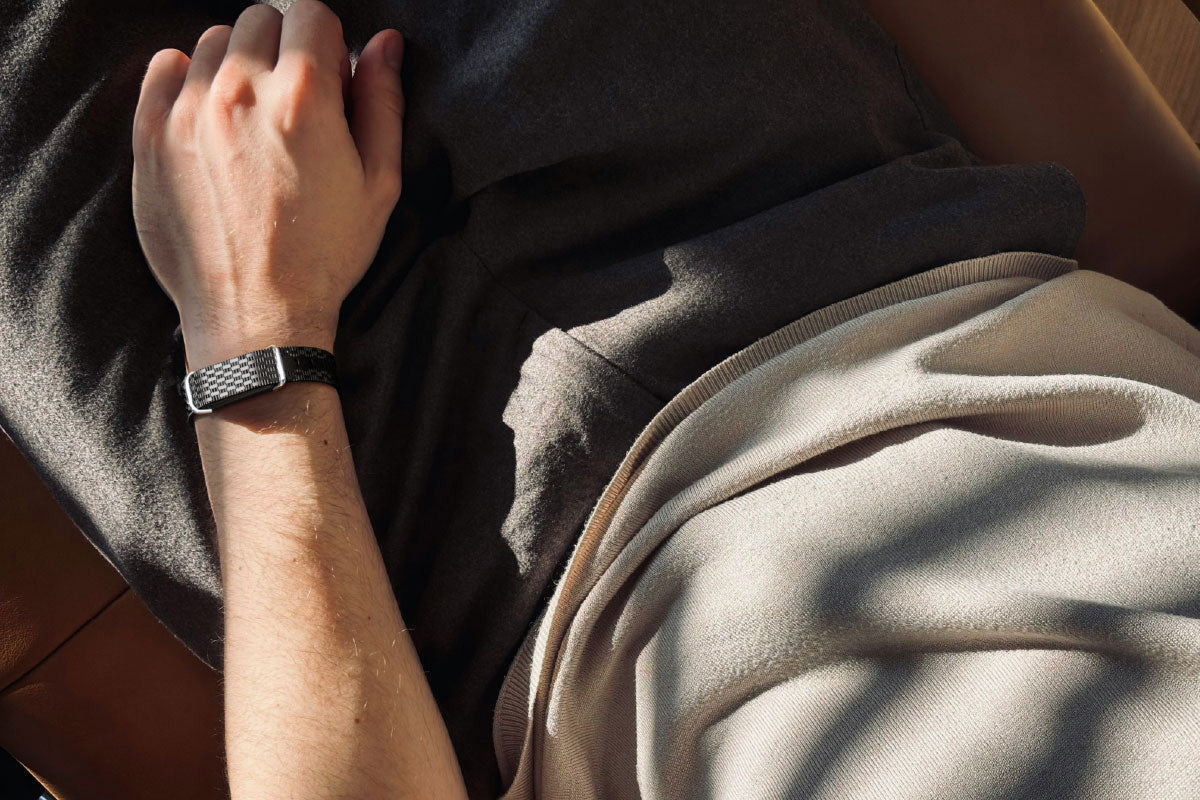
For many U.S. consumers, Hilo Core is a new name. The research behind it is not. Our blood pressure science began at CSEM in 2004, our company was founded as Aktiia in 2018, and we introduced the Hilo consumer brand in 2025. Across that journey: more than 35 patents, four major clinical trials, 20+ years of scientific development, and — in July 2025 — FDA clearance of the G0 Blood Pressure Monitoring System (a separate medical device). Hilo Core brings this foundation into an integrated cuff, Hilo Core Band, and app experience built around a validated reference reading and a longer view of everyday patterns.
Key Facts
- 20+ years of research: Our blood pressure science began at CSEM in 2004 — long before Hilo appeared as a consumer name. The same research and engineering program continues today.
- 35+ patents and four clinical trials: Our multidisciplinary team has contributed to more than 120 peer-reviewed publications, holds more than 35 patents, and has run four major clinical trials across design, development, and validation.
- What "validated" means in Hilo Core: The validated upper-arm cuff provides point-in-time reference readings. Its validation applies to the cuff specifically — not to the Hilo Core Band, which supports longer-term wellness pattern awareness.
- Explore the science behind Hilo Core: 20 years of blood pressure research in one integrated system — explore Hilo Core.
Our blood pressure research began at CSEM in 2004
Our 20 years of blood pressure science began at CSEM, where our founding research team investigated whether optical signals at the wrist could provide useful information about blood pressure without inflating a cuff for every observation. Between 2005 and 2017, the team explored more than 30 noninvasive measurement approaches before concentrating on optical sensing and pulse-wave analysis. CSEM later recognized the patented concept with its 2023 Inventor Award.
Wrist-based optical sensing is difficult for practical reasons. Photoplethysmography, or PPG, is sensitive to motion, sensor position, posture, fit, skin contact, and hydrostatic effects. A usable system also depends on signal-quality checks, a defined calibration method, algorithms, software, and human-factors engineering. The current AHA scientific statement on cuffless blood pressure devices reviews these technical issues and the evidence still needed for clinical use.
Our company was founded as Aktiia in 2018 to commercialize the research. More than a decade of cardiovascular sensing work was already behind the team. We introduced Hilo in 2025, while the research and engineering program continued within the same organization.
Inside Hilo: over 120 publications, 35+ patents and four major clinical trials
Our multidisciplinary team has contributed to more than 120 peer-reviewed publications and holds more than 35 patents. The broader technology program included four major clinical trials across design, development, and validation. Two of those trials supported CE marking of a separate medical device.
The patents span sensor design, signal processing, algorithms, and complete-system development. Our clinical program includes comparisons with recognized reference methods in defined populations and conditions. We keep the evidence base, regulatory status, and permitted claims attached to the product that generated them.
What our peer-reviewed studies examined
Peer-reviewed studies from our broader research program have evaluated earlier Aktiia medical-device implementations in a one-month study, a study across common body positions, an evaluation in adults aged 60 years and older, and a comparison with ambulatory blood pressure monitoring. Each study addressed a specific device version and research question.
The cuff validation study
Our evidence base also includes a separate validation study of the upper-arm cuff. In the 2023 cuff study, 85 adults were enrolled, and three trained observers compared the Aktiia initialization cuff with reference double-auscultation under the ANSI/AAMI/ISO 81060-2:2013 protocol. Mean test-reference differences were 1.3 mm Hg for systolic pressure (SD 7.11) and −0.2 mm Hg for diastolic pressure (SD 5.46), within the protocol’s acceptance criteria.
The ambulatory-monitoring study
The 2025 ambulatory-monitoring study included 54 people in cardiac rehabilitation and compared a seven-day Aktiia average with one day of ambulatory monitoring. The 24-hour and daytime systolic averages did not differ significantly. Mean diastolic differences were about 3 mm Hg over 24 hours and during daytime. Nighttime readings showed larger systematic differences, particularly for systolic pressure, and nocturnal-dip classification agreed in 79% of paired assessments.
The COOL-BP study (U.S. care setting)
Our technology has also been studied in U.S. care. The 2025 COOL-BP study enrolled 38 participants in the Mass General Brigham Remote Hypertension Program; 25 contributed overlapping cuffless and home-measurement data. Those 25 participants generated 28,971 daytime cuffless observations, including 5,790 that overlapped with 1,300 home readings. Across 72 overlapping periods, the correlations were moderate: r=0.57 for systolic pressure and r=0.64 for diastolic pressure. Average cuffless values were 4.9 mm Hg higher for systolic pressure and 4.2 mm Hg lower for diastolic pressure than the home readings. Five participants contributed eight medication-titration events; the two methods were concordant in seven of eight events (87.5%) using the study’s 4 mm Hg no-change zone. Among 34 people who completed all surveys, 91% preferred the cuffless device. The authors called for larger studies in more diverse populations. This study evaluated an earlier Aktiia product, not Hilo Core; Hilo Core is a general wellness product and is not intended for diagnosing, managing, or treating hypertension.
Why we became Hilo
In 2025, we introduced Hilo as our consumer-facing name. We chose it to make our mission and product experience easier to recognize around the world. Our research and engineering work, including the patent portfolio, continued within the same company.
That continuity explains why older papers and official records still use Aktiia. The FDA’s G0 record, for example, lists our legal entity, Aktiia SA, as the applicant. On our U.S. website, we use Hilo as the consumer brand and reserve Aktiia for study titles, author affiliations, and regulatory records where the name is factually required.
How we define the cuff and cuffless roles in Hilo Core
Current U.S. clinical guidance and our own design decisions both shaped how we split the roles inside Hilo Core. Each component has a defined purpose — and the two layers are never interchangeable.
What current guidance says about cuffless devices
The 2025 AHA/ACC High Blood Pressure Guideline places strong emphasis on measurement technique. It recommends a validated oscillometric device, the correct cuff size, standardized positioning and preparation, repeated readings, and averages for clinical decision-making. For diagnosis, blood pressure classification is based on an average of at least two careful readings obtained on at least two occasions.
The guideline gives cuffless devices a Class 3: No Benefit recommendation for diagnosis or management of high blood pressure at this time. The AHA’s scientific statement on cuffless blood pressure devices describes the potential of unobtrusive sensing while reviewing open questions around calibration, PPG signal quality, motion, posture, hydrostatic effects, and performance outside static conditions.
How Hilo Core separates the two layers
We give each Hilo Core component a defined role. The included validated upper-arm cuff provides a point-in-time reference reading. The Hilo Core Band and app add a longer record of wellness patterns across days and weeks. We display reference readings and cuffless trends separately in the app so users can see the source and purpose of each data stream.
One system, no separate purchase needed
By bringing the cuff, Hilo Core Band, and app into one system, we keep the reference step inside the product experience. The cuff arrives with Hilo Core, and setup follows one guided flow. Users do not need to source a separate reference device. Blood pressure remains the organizing focus instead of becoming one signal inside a broad performance score.
The cuffless experience gives users a longer view of everyday changes. They can compare displayed trends with sleep, activity, stress, travel, or changes in routine. Diagnosis, treatment decisions, and clinical care still require appropriate validated measurement and professional guidance.
What our 20 years of focus bring to Hilo Core
We have worked on blood pressure measurement since 2004, long before Hilo appeared as a consumer brand. That focus is visible in Hilo Core’s architecture. The validated upper-arm cuff supplies the point-in-time reading. The Hilo Core Band extends observation into ordinary days, and the app keeps both information types organized within one experience.
We include the cuff to keep the reference step inside the system. Users receive one set of instructions and one app workflow, with no separate purchase needed for the initial cuff-based reading. The cuffless layer then adds a view across weeks without turning every change into an alert, target, or treatment prompt.
For U.S. consumers, Hilo may be a new name. For us, it represents more than 20 years of blood pressure research and engineering. Hilo Core brings that work into an integrated cuff, band, and app experience built around a validated reference reading and a longer view of everyday patterns.
Explore Hilo Core, see how the system works, and review the science behind Hilo.
WHEN A VERY HIGH READING NEEDS URGENT ACTION
If your upper-arm cuff shows a reading higher than 180 systolic and/or 120 diastolic, wait at least one minute and measure again.
If the second reading is just as high and you have chest pain, shortness of breath, back pain, numbness, weakness, a change in vision, difficulty speaking, or another new concerning symptom, call 911.
If you do not have symptoms but the reading remains that high, contact your health care professional promptly.
Follow the American Heart Association severe-hypertension guidance.
Do not change medication based on a single reading unless a qualified clinician tells you to.
20 Years of Science. One Integrated System.
Hilo Core brings our blood pressure research into an integrated cuff, Hilo Core Band, and app — a validated reference reading and a longer view of everyday patterns in one guided experience. Available in the US for US$239.98 for the first year (US$89.99 hardware + US$149.99 annual subscription).
Get Hilo CoreDisclaimer: Hilo Core is a wellness product. It is not intended to diagnose, treat, cure, or prevent any disease. It is not intended to measure blood pressure for medical purposes. This article is for general informational purposes only and does not constitute medical advice. Individual health decisions should be made in consultation with a qualified healthcare professional. Hilo Core is not recommended during pregnancy or for individuals with certain cardiac implants or pre-existing conditions. Please consult your healthcare provider before use.
Frequently Asked Questions
Is Hilo the same company as Aktiia?
Yes. We introduced Hilo as our consumer-facing brand in 2025. We continued the same research program under the Hilo name. Aktiia still appears in older study titles and official records.
How long has Hilo worked on blood pressure technology?
Our underlying research began at CSEM in 2004. Our company was founded as Aktiia in 2018 to commercialize that work, and we introduced the Hilo consumer brand in 2025.
What has been validated in Hilo Core?
Hilo Core includes a validated upper-arm cuff for point-in-time reference readings. The peer-reviewed cuff study evaluated the Aktiia initialization cuff against reference double-auscultation and reported results within the protocol’s acceptance criteria. That validation applies to the cuff. The Hilo Core Band supports longer-term wellness pattern awareness and is not a diagnostic or treatment tool.
Why does Hilo Core include a validated upper-arm cuff?
We include a validated upper-arm cuff so the point-in-time reference reading is part of the same guided product experience. The Hilo Core Band and app then add a longer record of cuffless wellness trends.
Sources
- Aktiia. (Published May 2, 2025). Aktiia Secures $42 Million in Series B Funding Round and Rebrands to Hilo. PR Newswire. (Accessed July 2026). prnewswire.com
- CSEM. About Our History and Start-ups. (Accessed July 2026). csem.ch/en/history-and-start-ups
- CSEM. (2023). Invention for Continuous Blood Pressure Monitoring Wins CSEM’s 2023 Inventor Award. (Accessed July 2026). csem.ch
- A. Vybornova; E. Polychronopoulou; A. Wurzner-Ghajarzadeh et al. (2021). Blood pressure from the optical Aktiia Bracelet: a 1-month validation study using an extended ISO81060-2 protocol adapted for a cuffless wrist device. Blood Press Monit, 26(4), 305–311. https://doi.org/10.1097/MBP.0000000000000531. One-month validation study
- J. Sola; A. Vybornova; S. Fallet et al. (2021). Validation of the optical Aktiia bracelet in different body positions for the persistent monitoring of blood pressure. Sci Rep, 11, 20644. https://doi.org/10.1038/s41598-021-99294-w. Body-position validation study
- J. Alexandre; K. Tan; T.P. Almeida et al. (2023). Validation of the Aktiia blood pressure cuff for clinical use according to the ANSI/AAMI/ISO 81060-2:2013 protocol. Blood Press Monit, 28(2), 109–112. https://doi.org/10.1097/MBP.0000000000000639. Cuff validation study
- K. Theiler; J. Sola; A. Damianaki et al. (2023). Performance of the Aktiia optical blood pressure measurement device in the elderly: a comparison with double-blinded auscultation in different body positions. Blood Press, 32(1), 2281320. https://doi.org/10.1080/08037051.2023.2281320. Study in adults aged 60+
- T.P. Almeida; D. Perruchoud; J. Alexandre et al. (2025). Evaluation of Aktiia cuffless blood pressure monitor across 24-h, daytime, and night-time measurements versus ambulatory monitoring. J Hypertens, 43(4), 690–697. https://doi.org/10.1097/HJH.0000000000003960. Ambulatory-monitoring study
- O. Unlu; C.P. Cannon; S. Lee et al. (2025). Continual Versus Occasional Blood Pressure (COOL-BP) in Remote Hypertension Management. Am J Hypertens, 38(5), 295–302. https://doi.org/10.1093/ajh/hpaf003. COOL-BP study
- U.S. Food and Drug Administration. (Decision date July 2, 2025). 510(k) Premarket Notification K250415: G0 Blood Pressure Monitoring System. (Accessed July 2026). FDA 510(k) K250415
- D.W. Jones; K.C. Ferdinand; S.J. Taler et al. (2025). 2025 AHA/ACC guideline for the prevention, detection, evaluation, and management of high blood pressure in adults. Circulation, 152, e114–e218. https://doi.org/10.1161/CIR.0000000000001356. 2025 AHA/ACC High Blood Pressure Guideline
- J.B. Cohen; R.L. Byfield; S.T. Hardy et al. (2026). Cuffless devices for the measurement of blood pressure: a scientific statement from the American Heart Association. Hypertension, 83(3), 876–886. https://doi.org/10.1161/HYP.0000000000000254. AHA scientific statement on cuffless blood pressure devices
Read more
Blood pressure time in target range (TTR) estimates the share of a measurement period during which blood pressure stayed within a defined range. TTR can add information beyond a single reading or a...

Hilo Core may be a good fit when blood pressure is the health signal you most want to follow and isolated readings leave too much of the story between checks. This guide explains what the included ...

Hilo Core brings a focused cuff, band, and app system to the U.S. WIRED rated an earlier medical Hilo system 8/10. The Independent wore that system for two months and praised its comfort, pared-bac...