
Lower Blood Pressure Naturally by Understanding Your Patterns

Nearly half of American adults have high blood pressure — and many don't know it. Yet consistently elevated blood pressure damages blood vessels over time, raising the likelihood of heart disease, stroke, heart failure, kidney disease, and vision loss. Even a moderate rise in blood pressure can, in many cases, have long-term consequences. Well-documented, natural approaches can support healthy blood pressure through diet and lifestyle — and staying aware of your readings over time adds meaningful context to those efforts.
Key Takeaways
- Lifestyle changes make a measurable difference — over time: Weight loss, regular physical activity, a reduced salt intake, and a balanced diet have each been associated with meaningful reductions in blood pressure. These effects typically take weeks to months to appear, and work best when multiple changes compound together — not in isolation.
- Diet offers more levers than most people realize: From the DASH diet to garlic, dark chocolate, and cutting back on alcohol — what you eat directly affects your readings.
- Stress management matters: Chronic stress is a contributing factor to persistently elevated blood pressure. Relaxation techniques, adequate sleep, and regular breaks support a healthier baseline.
- Tracking over time reveals your longer-term patterns: The Hilo Core Band translates body signals into blood pressure insights an average of 35 times a day — giving you a longer-term view of how your blood pressure patterns develop across weeks and months as your habits change.
Blood Pressure Readings: Two Numbers
When your blood pressure is measured, two numbers are recorded: the systolic value and the diastolic value. The ideal ratio is 120/80 mmHg. The American Heart Association (AHA) defines high blood pressure, or hypertension, as readings above 130/80 mmHg.
If you have truly elevated blood pressure, medication is often medically indicated — that decision belongs to your doctor. Lifestyle and dietary changes are not a replacement for medication when BP is significantly high; they work best alongside it. Over months and years of consistent effort, however, lifestyle changes may allow for a reduction in medication — but only your doctor can decide when that is appropriate. What follows are some of the most well-documented natural approaches worth discussing with your healthcare provider.
Home Remedies: Blood-Pressure-Friendly Plants
Approximately 75 to 80% of the world's population relies on herbal medicines as a primary form of healthcare, since these remedies tend to be better tolerated by the body. Various plants have also been studied for their blood-pressure-related effects. A few examples worth knowing about:
Garlic has long been used for a wide range of cardiovascular conditions, and its blood-pressure-related effects have been confirmed by studies. According to traditional Chinese medicine, celery is effective against high blood pressure because of its effect on the liver — fresh celery juice can be mixed with vinegar to help ease dizziness and discomfort associated with hypertension. Other research suggests that radish may also have blood-pressure-related benefits.
Good news for chocolate lovers: cocoa powder is used to support cardiovascular health. Flavonoids found in chocolate stimulate the production of nitric oxide, widen blood vessels, and may help ease endothelial dysfunction. Consuming 46 to 105 grams of dark or milk chocolate daily has been associated with a reduction in systolic blood pressure of around 5 mmHg and diastolic blood pressure of around 3 mmHg.
Lifestyle Changes
Diet is only part of the picture. Staying active and making consistent lifestyle changes may help reduce, delay, or even lessen reliance on medication over time. The WHO recommends:
- Maintaining a healthy body weight
- Regular physical activity — ideally at least 30 minutes of exercise every day
- Reducing salt intake
- Quitting smoking
- Avoiding harmful alcohol consumption
- Following a balanced diet (see the DASH diet below)
Lose Weight
Weight loss is one of the most effective lifestyle changes for supporting healthy blood pressure, since blood pressure often rises as weight increases. Being overweight can also lead to breathing problems during sleep (sleep apnea), which can further elevate blood pressure.
Research shows that losing weight can be associated with a reduction in systolic blood pressure of an average of 4 to 5 mmHg and diastolic blood pressure of around 3 mmHg. Extreme, short-term diets rarely help — most people return to their old habits and regain the weight. Weight loss tends to be most effective when dietary changes are combined with increased physical activity over the long term.
Move More
Physical activity temporarily raises blood pressure because your heart has to pump more blood at a faster rate. Over time, however, it tends to come down as blood vessels become more elastic and better conditioned. Studies have found that increased physical activity was associated with a reduction in systolic blood pressure of an average of 5 to 8 mmHg. Recommended approaches include:
- Walking for at least 30 minutes a day
- Cycling for at least one hour three times a week
- Running for one hour three times a week
Consistency is key. If you stop exercising, blood pressure typically rises again — so staying active over the long term is what makes the difference.
Eat Less Salt
Cutting your salt intake by one teaspoon (about 4–5 grams) has been associated with a reduction in systolic blood pressure of around 5 mmHg and diastolic blood pressure of around 3 mmHg. Skip the salt shaker at meals and reach for herbs or spices to add flavor instead.
Reducing salt intake gradually tends to work better than cutting it out all at once — and over time, food tastes just as good without it. Fresh, unprocessed foods contain far less salt than ready meals, potato chips, canned goods, cured or smoked meats, and many cheeses. For people with high blood pressure, cooking from scratch is a healthier choice than reheating processed meals.
Quit Smoking
Smoking raises the likelihood of cardiovascular disease. Quitting brings real health benefits — but for many people, it's genuinely challenging to do. Professional support can make it easier. Nicotine replacement therapy and certain medications can increase your chances of successfully quitting for good.
Eat a Healthy Diet
A diet rich in whole grains, fruits, vegetables, and low-fat dairy products — and low in saturated fats and cholesterol — has been associated with blood pressure reductions of up to 11 mmHg. This eating plan is known as the DASH diet (Dietary Approaches to Stop Hypertension) and is one of the most well-studied dietary strategies for cardiovascular health.
Drink Less Alcohol
Drinking alcohol only in moderation — generally one drink per day for women or two per day for men — may be associated with a blood pressure reduction of up to 4 mmHg. Drinking more than that tends to have the opposite effect.
Reduce Stress
Numerous studies show that elevated blood pressure is often associated with psychosocial stress. When stress becomes chronic, the body can no longer maintain a healthy balance between activity and rest — and persistently elevated blood pressure readings can follow. Relaxation techniques such as yoga or meditation, adequate sleep, and regular breaks all help keep blood pressure in check.
Tracking your blood pressure at home can also help you stay aware of your longer-term patterns. Blood pressure shifts slowly in response to lifestyle changes — what matters is the trend across weeks and months, not any single reading. It's a good idea to talk with your doctor before starting home tracking.
See Your Patterns Develop Over Time
Blood pressure responds to lifestyle changes slowly — and typically only when multiple changes compound together over time. A single reading at the doctor's office can't capture that picture. What you need is a view that builds across weeks and months.
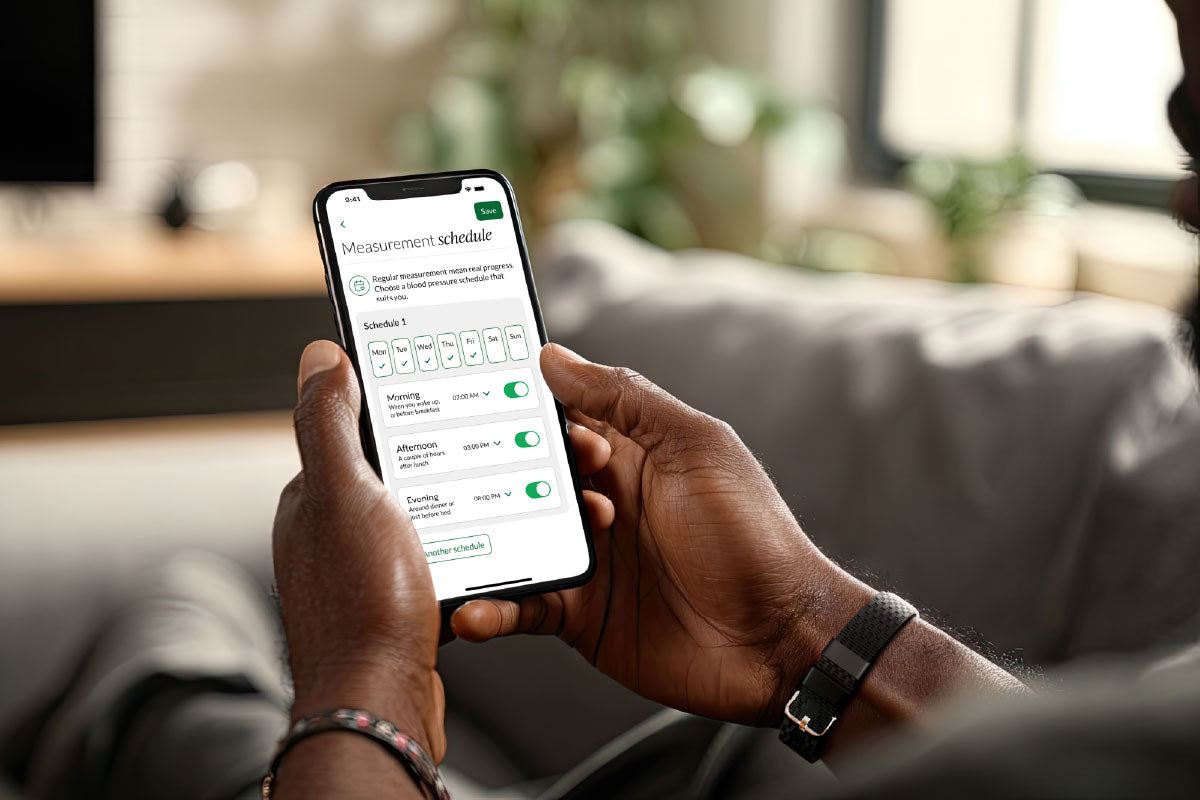
The Hilo Core Band translates body signals into blood pressure insights an average of 35 times a day, right from your wrist. Rather than individual snapshots, you build a longer-term view of how your blood pressure patterns develop as your habits change — context worth sharing with your doctor at your next visit. For initial calibration, the included Hilo Cuff (upper-arm cuff) is required — daily for the first four days, then once a month. The Hilo Core App provides a long-term view of your data, including sleep and activity context such as step tracking. Note: Hilo Core is a wellness product. It is not intended for use during pregnancy or by individuals with certain implanted devices — consult your doctor if you are unsure whether it is appropriate for you.
Supporting Healthy Blood Pressure Starts with Awareness
Weight loss, regular movement, a reduced salt intake, less alcohol, a plant-rich diet, and effective stress management all contribute to healthier blood pressure. Combined with consistent tracking, you can observe how your patterns develop over time. The Hilo Core Band translates body signals into blood pressure insights an average of 35 times a day — so that awareness is always within reach.
Start Building Awareness of Your Blood Pressure Today
Lifestyle changes work best when you can see their effect over time. The Hilo Core Band translates body signals into blood pressure insights an average of 35 times a day — so you can observe your patterns as they develop, right from your wrist.
Discover Hilo CoreFrequently Asked Questions
Can you lower blood pressure naturally without medication?
How much can diet affect blood pressure?
Does exercise lower blood pressure long-term?
How can I tell whether my lifestyle changes are working?
Disclaimer: This article is for general wellness and informational purposes only. It does not constitute medical advice. Hilo Core is a wellness product and is not intended to diagnose, treat, cure, or prevent any disease, nor is it intended to measure blood pressure for medical purposes. Always consult a qualified healthcare professional regarding any health concerns or before making changes to your health routine.
Sources
- Centers for Disease Control and Prevention (CDC). High Blood Pressure Facts and Statistics. Retrieved from https://www.cdc.gov/high-blood-pressure/data-research/facts-stats/index.html (Accessed July 2026)
- American Heart Association (AHA). Understanding Blood Pressure Readings. Retrieved from https://www.heart.org/en/health-topics/high-blood-pressure/understanding-blood-pressure-readings (Accessed July 2026)
- World Health Organization (WHO). Hypertension Fact Sheet. Retrieved from https://www.who.int/news-room/fact-sheets/detail/hypertension (Accessed July 2026)
- Ayaz M et al. Role of natural herbs in the treatment of hypertension. Pharmacognosy Reviews, Jun 2011. Retrieved from https://www.ncbi.nlm.nih.gov/pmc/articles/PMC3210006/ (Accessed July 2026)
- Institute for Quality and Efficiency in Health Care (IQWiG). High blood pressure: Lowering blood pressure without medication. In: InformedHealth.org. Updated May 2019. Retrieved from https://www.ncbi.nlm.nih.gov/books/NBK279237/ (Accessed July 2026)
- Siebenhofer A et al. Long-term effects of weight-reducing diets in people with hypertension. Cochrane Database of Systematic Reviews, 2016. Retrieved from https://pubmed.ncbi.nlm.nih.gov/26934541/ (Accessed July 2026)
- Müller R, Weninger S, Wenzel RR. Psyche, stress, and high blood pressure. Journal für Hypertonie — Austrian Journal of Hypertension, Apr 2013. Retrieved from https://www.kup.at/kup/pdf/11969.pdf (Accessed July 2026)
- Ware M. 15 natural ways to lower your blood pressure. Medical News Today, Jul 26, 2020. Retrieved from https://www.medicalnewstoday.com/articles/318716 (Accessed July 2026)
- Johns Hopkins Medicine. Natural Ways to Lower Blood Pressure. Retrieved from https://www.hopkinsmedicine.org/health/conditions-and-diseases/high-blood-pressure-hypertension/natural-ways-to-lower-blood-pressure (Accessed July 2026)
Read more

Hilo Core brings a focused cuff, band, and app system to the U.S. WIRED rated an earlier medical Hilo system 8/10. The Independent wore that system for two months and praised its comfort, pared-bac...

When you first set up Hilo Core — or when the app prompts you after 30 days — calibration is what connects the band’s optical readings to your physiology. Hilo Core, formerly developed under the Ak...
How does a blood pressure wristband work? Hilo Core combines a validated upper-arm cuff with a cuffless band and app. The cuff provides point-in-time reference readings. The band uses green-light p...