

Blood Pressure Regulation: Why It Matters and How You Can Influence It

Most people learn their blood pressure is a problem at a routine check-up — often years after it quietly became one. That 30-second reading gives you a data point — but it captures your BP in one moment, in an artificial environment. It tells you very little about what your BP was doing overnight, during your commute, or after a stressful meeting. This article explains how blood pressure regulation actually works, which lifestyle factors shift it most and why tools like Hilo Core exist: to give you the pattern visibility that a single clinic reading never could.
Key Facts
- More than 580 million people worldwide live with undiagnosed high blood pressure — most have no symptoms. (Hilo BP Report 2025)
- Less than half of adults with hypertension have it well controlled worldwide. (WHO)
- A single clinic reading captures your BP in one moment, in an artificial environment — it misses the patterns that actually drive long-term risk.
- Hilo Core tracks how your BP patterns shift across your day and night — so you can see whether the habits you’re building are actually making a difference. (Hilo BP Report 2025)
What Does “Blood Pressure Regulation” Actually Mean?
Your body is running a continuous balancing act. Every time you stand up, exercise, eat a salty meal, or feel stressed, your cardiovascular system adjusts to keep enough pressure in your arteries to supply blood to your brain, heart, and organs — but not so much that it damages vessel walls over time.
That regulation happens at three speeds:
- Short-term (seconds to minutes): Your nervous system detects sudden changes in pressure through baroreceptors — sensors in your arteries — and responds instantly. This is why you might feel briefly lightheaded when you stand up fast: your pressure dropped momentarily before the system corrected it.
- Circadian (24-hour cycle): Your blood pressure follows a predictable daily rhythm — dropping 10–20% during sleep (the “nocturnal dip”) and rising again in the early morning hours. This dip is clinically significant: people who don’t experience it (“non-dippers”) carry a meaningfully higher risk of cardiovascular events, independent of their average BP level. It is one of the patterns a single clinic reading can never reveal.
- Long-term (days to weeks): Your kidneys control how much fluid stays in your bloodstream. Your hormonal system — particularly the renin-angiotensin-aldosterone system (RAAS) and antidiuretic hormone (ADH) — adjusts vessel tone and fluid retention over longer periods.
That second mechanism is where your leverage lies. Lifestyle changes — what you eat, how you move, how you sleep — work primarily through long-term regulation, shifting the baseline your body is managing around rather than just the momentary spikes. This matters for expectations: a single workout won’t fix chronically elevated blood pressure, but consistent habits sustained over weeks change the set point your system is trying to maintain.
Why Blood Pressure Regulation Matters Beyond “High vs. Low”
The standard framing of blood pressure as a binary — either it’s high or it’s fine — misses most of the picture. The more important question is: what is your blood pressure doing across your actual day, and how much of that time are you spending in a healthy range?
Consider the scale of the problem:
- Hundreds of millions of people worldwide live with elevated blood pressure without knowing it — not because they are ignoring symptoms, but because high blood pressure typically has none. (Hilo BP Report 2025)
- Clinic readings can vary: One well-documented phenomenon is white-coat hypertension, where BP is elevated in the clinic but not outside it. The inverse also occurs: some people’s BP looks normal in the office but is elevated outside the clinic, known as masked hypertension.
- Pattern matters, not just peaks: A 2021 study in the Journal of the American College of Cardiology found that patients who spent more time within a defined BP range had lower rates of heart attacks, strokes, and heart failure, even when average readings looked similar. Time in target range remains a developing clinical measure and requires appropriate cuff-based data and professional interpretation. (JACC, 2021)
- The monitoring gap is real: Validated ambulatory BP monitoring captures daytime, nighttime, and 24-hour averages, along with information about nocturnal dipping and variability that point-in-time clinic readings cannot provide.
The gap between what your doctor sees and what your blood pressure is actually doing is where the real risk hides. That gap is where patterns — not single numbers — become the relevant unit of measure. Blood pressure patterns are also closely tied to long-term brain health, including dementia risk.
What Affects Blood Pressure Regulation — and What Can You Change?
Some factors that influence blood pressure are fixed: age, genetics, family history. Others are modifiable. These are the ones worth understanding in detail.
One important note on expectations: for truly elevated blood pressure, lifestyle changes alone are generally not sufficient to bring it under control. Medication is often necessary — and only your doctor decides whether and when it can be reduced or stopped.
Important: If you have been diagnosed with hypertension or are taking medication to manage your blood pressure, lifestyle changes work best as a complement to medical treatment — not a substitute. Your doctor decides whether and when medication adjustments are appropriate. Do not change or stop any medication without speaking to your healthcare provider first.
| Lever | How it works | What to do |
|---|---|---|
| Medication | Typically the single most effective lever — antihypertensives (e.g. ACE inhibitors, beta-blockers, calcium channel blockers) can reduce systolic BP by 10–20 mmHg or more. Medication works alongside — not instead of — lifestyle changes. | If your doctor has prescribed medication, take it consistently. Do not adjust or stop any medication without speaking to your healthcare provider first. |
| Diet and sodium | Sodium draws fluid into the bloodstream, raising the volume your heart pumps. High-sodium diets (processed foods, fast food, restaurant meals) are one of the most consistent drivers of elevated BP. | Follow the DASH diet — more vegetables, fruits, whole grains, lean protein; less sodium and saturated fat. Add potassium-rich foods (bananas, leafy greens, legumes) which help relax vessel walls — unless you have kidney disease, in which case potassium intake should be guided by your doctor. |
| Physical activity | Regular aerobic exercise strengthens the heart so it pumps more efficiently, reducing resting vascular resistance. Consistent moderate cardio (≥150 min/week, per AHA guidelines) produces measurable reductions in systolic and diastolic pressure. | Prioritize consistency over intensity. One hard workout temporarily raises BP; the long-term set-point shift comes from weeks of regular effort. |
| Sleep | Healthy sleep triggers a 10–20% nocturnal BP dip — a recovery period for blood vessels. Missing this dip (sleep apnea, poor quality, irregular schedule) raises your 24-hour pressure load and cardiovascular risk independently. | Target 7–9 hours with consistent timing. Poor sleep also elevates cortisol, which further drives BP up. |
| Stress | Acute stress spikes BP briefly — normal. Chronic stress keeps cortisol elevated over time, raising your baseline. Expert panel data show stress-reduction techniques produce measurable effects on BP patterns. | Structured breathing, regular movement, and adequate sleep all down-regulate the nervous system response. Indirect effects (better sleep, less compensatory eating) compound the benefit. |
| Alcohol and caffeine | Alcohol raises BP in a dose-dependent way, and the 2025 guideline identifies abstinence as the optimal goal. Caffeine may cause a temporary rise. | Avoid or reduce alcohol; if you drink, limit intake to no more than one drink per day for women and two for men. Avoid caffeine for at least 30 minutes before a cuff reading. |
Why Patterns Matter More Than a Single Number
A single clinic reading is a snapshot — taken in one moment, in an artificial environment. It has value, but it misses almost everything that matters. Here’s what your blood pressure is actually doing on a typical day:
- Resting baseline in the morning
- Spike during the commute
- Transient rise from your first coffee
- Drop during a quiet afternoon
- Rise during a stressful meeting
- Gradual dip as you wind down
- 10–20% nocturnal dip during deep sleep
Each of these transitions is part of the signal. Ambulatory blood pressure measurement — tracking BP over 24 hours in real-world conditions — has become the research standard precisely because it captures them. Studies including the Theiler et al. (2023) validation work on optical wearable BP devices showed that wearable sensors can detect clinically meaningful patterns — nocturnal dipping, exertion responses — that point-in-time readings miss, though wearable devices are not yet considered equivalent to 24-hour ambulatory monitors under current clinical guidelines.
The actionable insight is not just what your pressure peaked at today, but how much of your day and night you spent within a healthy zone. Data from Hilo users shows that people who can see their own BP patterns over time make more consistent lifestyle adjustments — and sustain them — compared to those relying on intermittent readings alone. Research on continual versus occasional BP measurement also shows that more frequent observation correlates with better long-term management outcomes. (Wasfy et al., 2025) Sustained BP patterns are also closely tied to long-term brain health and dementia risk.
How Hilo Fits into Your Blood Pressure Awareness Routine
There’s a gap in most people’s blood pressure picture. A clinic visit a few times a year gives you isolated data points — useful, but not enough to understand what your BP is doing in your actual life. Home cuff readings help, but most people use them inconsistently, and a cuff on its own doesn’t connect readings to the activities and habits that drove them.
Hilo Core is built around two connected layers that together close that gap:
- The Hilo Cuff: A calibration cuff validated in independent clinical studies for both systolic and diastolic accuracy across a wide range of participants, including people with obesity. (Alexandre et al., 2023) It anchors your BP data to a validated reference measurement.
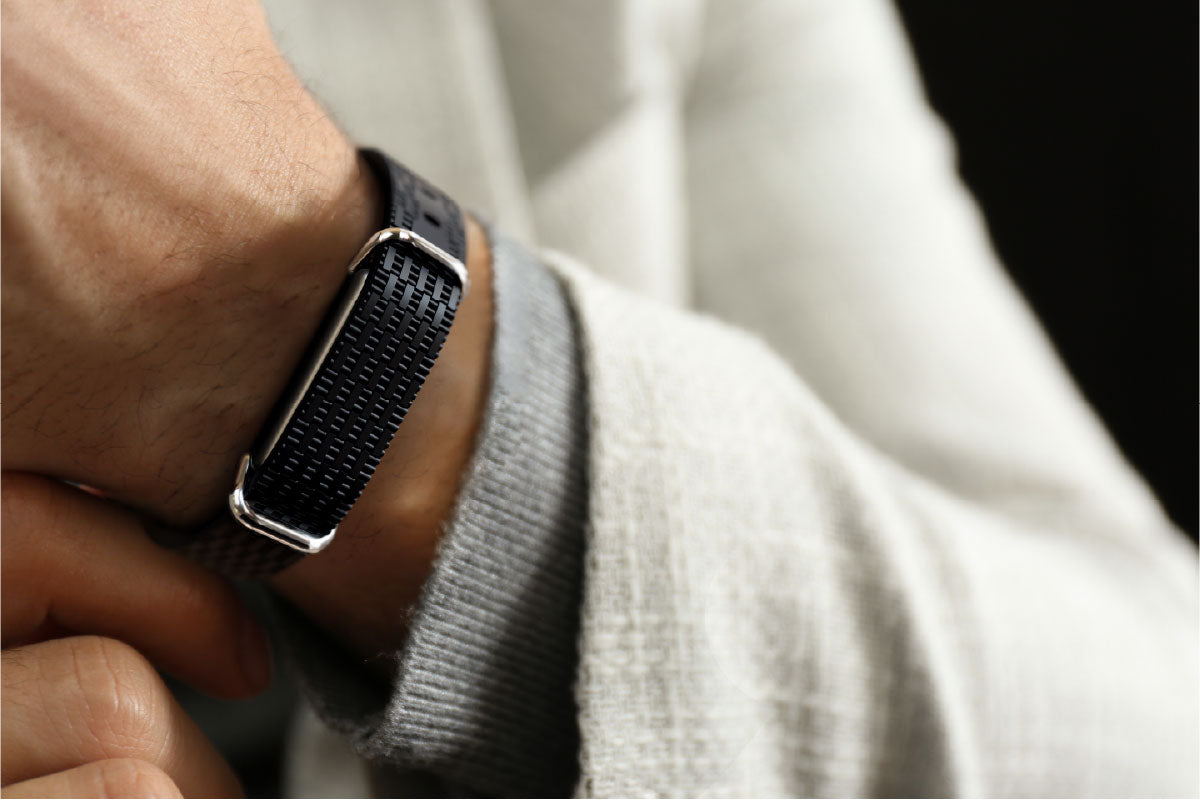
- Hilo Core: The wearable layer that tracks your BP patterns throughout the day and night — across sleep, activity, meals, and stress. This is the wellness layer: it shows you trends and patterns, not clinical diagnoses. You can see your nocturnal dip, your morning baseline, and your response to exercise.
The insight Hilo surfaces is how your BP patterns shift across your day and night — and whether the habits and changes you’re making are actually moving them over time.
Ready to See Your Patterns?
Hilo Core brings a validated upper-arm cuff, a screen-free band, and an app together in one system — cuff-based reference measurements and long-term blood pressure patterns, designed for everyday life.
Discover Hilo CoreDisclaimer: Hilo Core is a wellness product. It is not intended to diagnose, treat, cure, or prevent any disease. It is not intended to measure blood pressure for medical purposes. This article is for general informational purposes only and does not constitute medical advice. Individual health decisions should be made in consultation with a qualified healthcare professional. Hilo Core is not recommended during pregnancy or for individuals with certain cardiac implants or pre-existing conditions. Please consult your healthcare provider before use.
FAQ
What is blood pressure regulation?
Blood pressure regulation is the process by which your body continuously adjusts arterial pressure to supply adequate blood flow to your organs. It operates through two mechanisms: fast nervous-system responses (sensors in your arteries detect pressure changes and trigger instant corrections) and slower hormonal and kidney-based adjustments that regulate fluid volume and vessel tone over days to weeks.
What factors affect blood pressure regulation the most?
The most consistently modifiable factors are sodium intake, physical activity, sleep quality, chronic stress, and alcohol consumption. These work primarily through the slower long-term regulation pathway — meaning consistent habits over weeks matter more than any single action.
Why is a single clinic reading not enough?
A clinic reading captures your BP in one moment, in an environment that can itself elevate pressure (White Coat Hypertension). It misses nocturnal dipping, morning surges, exertion responses, and the patterns that research increasingly links to long-term cardiovascular outcomes. Tracking patterns across your full day gives a more representative picture.
Can a wearable device help with blood pressure awareness?
Wearable devices like Hilo Core can track your BP patterns across sleep, activity, and daily life — surfacing trends that isolated readings miss. Hilo Core is a wellness product; it is not a medical device and is not intended to replace clinical evaluation or medical treatment.
Sources
- J. Alexandre; D. Perruchoud; T. P. De Almeida et al. (2023). Validation of the Aktiia blood pressure cuff for blood pressure monitoring in an adult population. Blood Pressure Monitoring, 28(2). https://journals.lww.com/bpmonitoring/fulltext/2023/04000/validation_of_the_aktiia_blood_pressure_cuff_for.6.aspx (Accessed July 2026)
- K. Theiler; J. Sola; A. Damianaki; A. Pfister; T. P. De Almeida; J. Alexandre; P. Vermare; G. Wuerzner et al. (2023). Performance of the Aktiia optical blood pressure measurement device in the elderly: a comparison with double blinded auscultation in different body positions. Blood Pressure, 32(1):2281320. https://pubmed.ncbi.nlm.nih.gov/37971487/ (Accessed July 2026)
- M. M. Wasfy; J. N. Berman; A. O’Kelly et al. (2025). Continual Versus Occasional Blood Pressure (COOL-BP) in Remote Hypertension Management. American Journal of Hypertension, 38(5). https://academic.oup.com/ajh/article/38/5/295/7950863 (Accessed July 2026)
- N. Fatani; D. L. Dixon; B. Van Tassell; J. Fanikos; L. F. Buckley et al. (2021). Systolic Blood Pressure Time in Target Range and Cardiovascular Outcomes in Patients With Hypertension. Journal of the American College of Cardiology, 77(10), 1290–1299. https://www.jacc.org/doi/full/10.1016/j.jacc.2021.01.014 (Accessed July 2026)
- Hilo BP Report 2025. Published 2025. Hilo / Aktiia. https://hilo.com/en-us/pages/bp-report-2025 (Accessed July 2026)
- Hypertension Fact Sheet. Published 2023. World Health Organization (WHO). https://www.who.int/news-room/fact-sheets/detail/hypertension (Accessed July 2026)
Read more

As we introduce Hilo to U.S. consumers, we bring blood pressure research dating to 2004, more than 35 patents across our team, clinical studies across several device generations, and regulated-devi...

For most adults, healthy blood pressure means an average systolic pressure below 120 mm Hg and an average diastolic pressure below 80 mm Hg. The measurement must be taken correctly, and one reading...
Blood pressure time in target range (TTR) estimates the share of a measurement period during which blood pressure stayed within a defined range. TTR can add information beyond a single reading or a...