

Does Exercise Lower Blood Pressure? What the Research Really Shows

Regular exercise can reduce resting systolic blood pressure by up to 10 mmHg (Mayo Clinic) — an effect comparable to some medications. But most people exercising for their BP have no real way of seeing whether it’s working for them. That gap is exactly what Hilo Core is built to close: consistent at-home tracking that shows how your activity patterns connect to your readings over time.
Key Facts
- Effect size: Regular aerobic exercise can reduce resting systolic blood pressure by 4–10 mmHg — an effect comparable to some first-line antihypertensive medications, according to the American Heart Association and Mayo Clinic.
- Timeline: The effect is cumulative — your body adapts over weeks of consistent training, not after a single session.
- The visibility gap: A twice-yearly clinic reading alone cannot show the longer-term context around your exercise routine. Standardized cuff readings remain essential for medical assessment.
- Blood pressure patterns: Hilo Core lets you observe how your activity patterns connect to your readings over time, so you can see what a doctor’s visit every six months never could.
How Exercise Affects Your Blood Pressure
Regular aerobic exercise makes your heart stronger and more efficient. A stronger heart pumps more blood per beat — which means it does not have to work as hard, and the force exerted against your arterial walls can decrease. Over time, resting blood pressure may fall.
Two distinct effects are worth separating:
- The acute effect: During exercise, your BP rises — sometimes significantly — because your muscles are demanding more oxygenated blood. This is normal and expected. What’s interesting is what happens after: a healthy BP reduction after exercise — a measurable drop that can last several hours following a session (Brito et al., 2021). Your body temporarily settles lower than it started.
- The long-term effect: With consistent aerobic training over weeks and months, your resting systolic blood pressure typically decreases. Regular physical activity can reduce resting SBP by approximately 4–9 mmHg in people with elevated BP — an effect substantial enough to delay or reduce the need for medication in some cases (Mayo Clinic).
This long-term effect is what most people are aiming for. But it unfolds gradually — and it may not show up in a single reading at the doctor’s office months apart.
Which Exercise Lowers Blood Pressure Most Effectively?
Different forms of movement can help, although study populations and training programs vary:
| Exercise type | Evidence strength | Approximate average systolic effect |
|---|---|---|
| Aerobic (walking, jogging, cycling, swimming) | Strong — most studied | 4–9 mmHg reduction |
| Dynamic resistance / strength training | Moderate — growing evidence | About 2–4 mmHg reduction |
| Breathing control | Early-stage — short-term effects shown | Short-term reductions reported; sustained effects less established |
| Combined aerobic + resistance | Strong — complementary effect | 4–7 mmHg reduction |
Sources: AHA, 2025; Hegde & Solomon, 2015
Aerobic exercise has the strongest evidence base. The AHA recommends at least 150 minutes of moderate-intensity aerobic activity per week (AHA, 2025) — roughly 30 minutes, five days a week. Brisk walking, cycling, or swimming all count. Resistance training adds a complementary effect, and combining both outperforms either alone. Breathing exercises show short-term BP reductions, but sustained effects remain less established — a useful complement, not a replacement. The most consistent finding across all types: intensity matters less than consistency. Moderate movement done regularly beats intense training done sporadically.
Why Your Doctor’s Office Reading Can Miss the Bigger Picture
White coat hypertension — where BP reads elevated in a clinical setting but is normal at home — affects approximately one in three people with elevated clinic BP (A.P. Bress et al., 2021). The mechanism is a conditioned stress response: exposure to a medical environment can trigger sympathetic nervous system activation that transiently elevates systolic pressure — with studies reporting increases of 20 mmHg or more in affected individuals (A.P. Bress et al., 2021).
And that’s before accounting for the problem of timing. A reading taken once or twice a year captures a single snapshot — one morning, one set of circumstances, one moment. It tells you nothing about:
- How your BP behaves on days you exercise versus days you don’t
- Whether your morning readings have trended differently since you started your new routine
- What your BP does in the evening, or after a stressful week
The COOL-BP Study found that 91% of patients preferred access to more frequent personal readings over clinic-only visits, reporting a clearer understanding of their BP as a result (n=38, prospective single-arm study; Bress et al., 2022). More data points, seen over time, gave people a picture a periodic clinic snapshot never could.
Clinic visits are essential. A reading taken there, alone, simply isn’t the right tool for answering: is my exercise routine actually affecting my blood pressure?
What BP Patterns on Active vs. Rest Days Actually Look Like
Blood pressure data collected over time reveals patterns that isolated snapshots can’t.
Data from thousands of Hilo users across international markets shows that active days and rest days tend to produce meaningfully different BP patterns. The averages across the user base differ in ways that correlate with daily movement — not always dramatically, but consistently and observably over time.
Evening readings tell a particularly interesting story. Around 7–9 PM, BP varies significantly across individuals — some users see higher averages at this time, others lower — and these variations often track with the activity level of that day and the preceding 24 hours. (Source: Hilo BP Report 2025, UK and international data.)
Not every active day produces lower readings — individual responses vary, and the relationship between exercise and BP isn’t instant or linear. But the pattern is only visible when you can see it — across days, across weeks, across different types of activity. A reading at the clinic every six months doesn’t give you that. Consistent at-home tracking does.
Hilo Core: See How Your Workouts Relate to Your BP Trends
Knowing that exercise can lower blood pressure in general is not the same as understanding how your activity routine sits alongside your own longer-term patterns. That calls for consistent observation — without claiming that a wearable can prove cause, diagnose a condition, or monitor treatment effectiveness.
A note on medication: If your blood pressure is significantly elevated, medication may be medically necessary. Exercise works best alongside prescribed treatment, not instead of it. Your doctor decides if and when any medication adjustment is appropriate.
Hilo Core is built for longer-term pattern awareness. Three components work together while keeping their roles clearly separate:
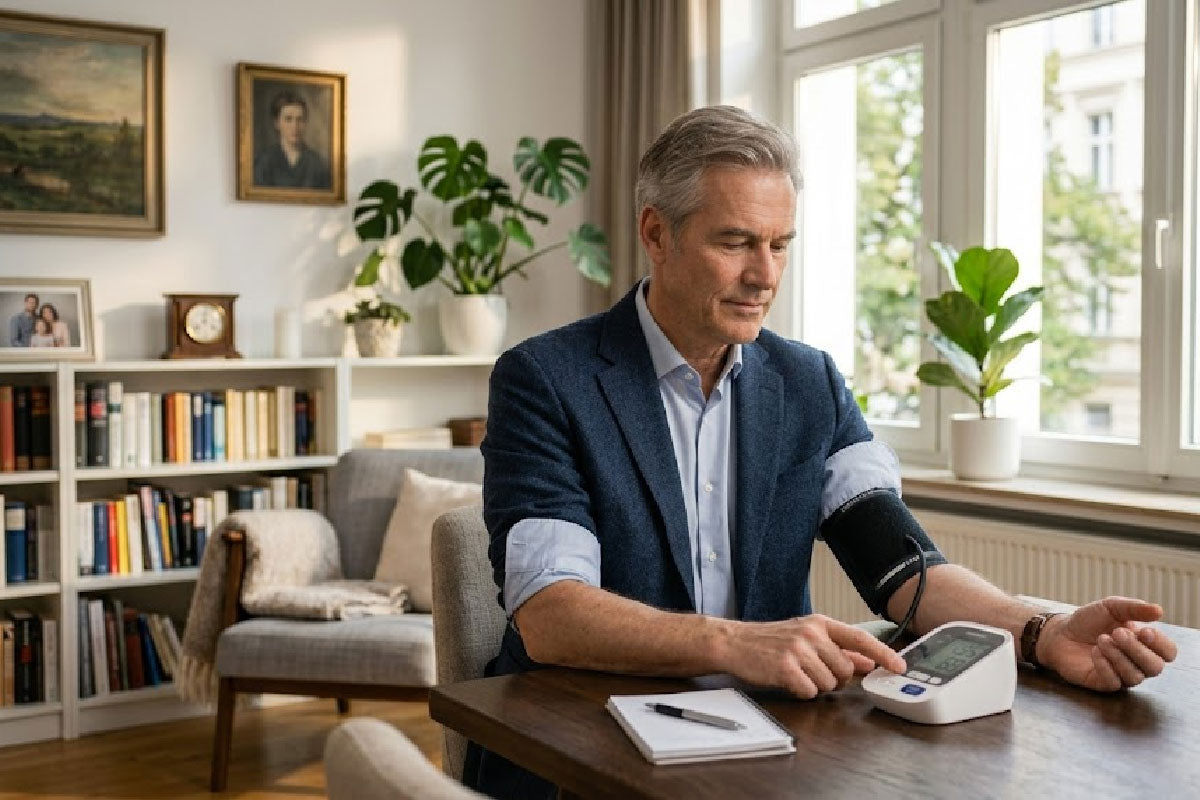
- Validated upper-arm cuff: Gives you an accurate measurement anchor for reliable at-home readings.
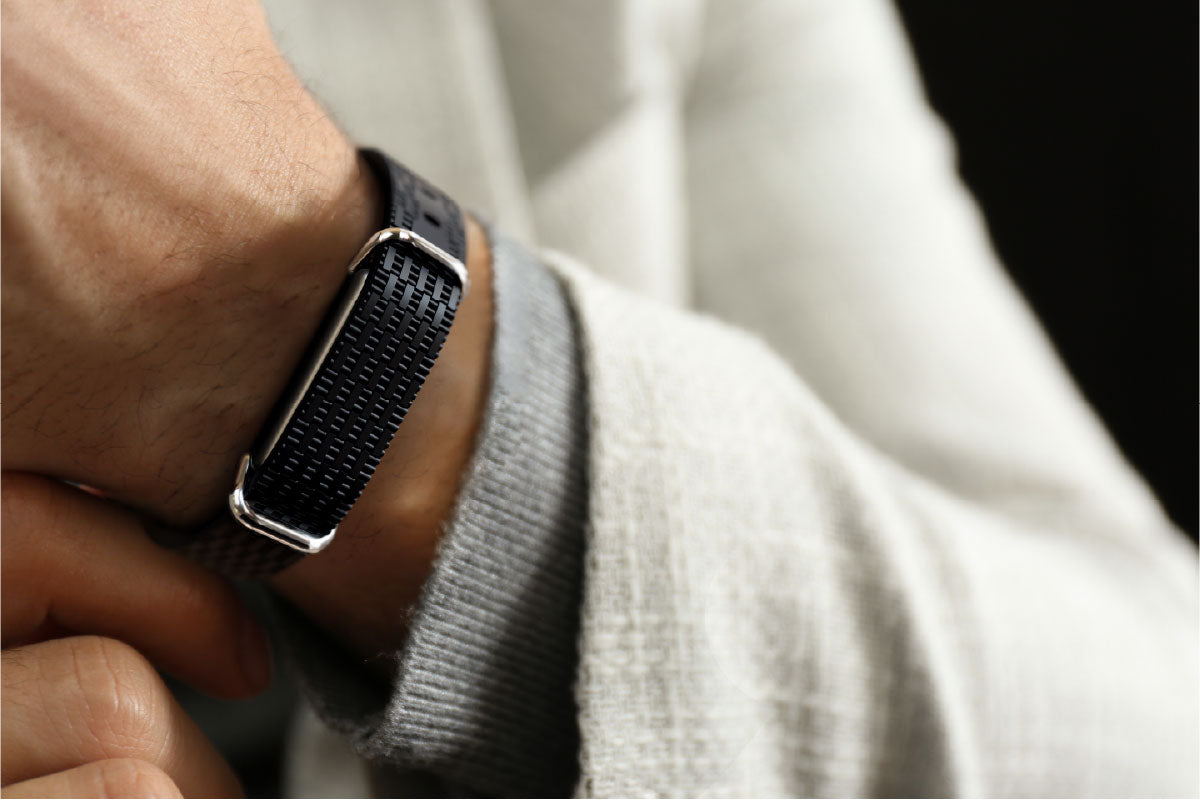
- Pattern-tracking band: Supports a long-term view of blood pressure patterns across active days, rest days, and different times of day.
- App: Displays cuff-based reference measurements and wellness trends as distinct layers, alongside sleep and activity context, so you can observe how routines relate to patterns over time.
Hilo Core is a wellness product — not intended to diagnose, treat, cure, or prevent any disease, and not intended to measure blood pressure for medical purposes. Available in the US at $89.99 for the band plus an annual subscription of $149.99 (first-year total: $239.98).
See Whether Your Workouts Are Actually Moving Your BP
Hilo Core tracks your blood pressure across active days, rest days, and times of day — so the pattern between your exercise routine and your readings becomes visible over time. Available in the US from US$89.99.
Get Hilo CoreDisclaimer: Hilo Core is a wellness product. It is not intended to diagnose, treat, cure, or prevent any disease. It is not intended to measure blood pressure for medical purposes. This article is for general informational purposes only and does not constitute medical advice. Individual health decisions should be made in consultation with a qualified healthcare professional. Hilo Core is not recommended during pregnancy or for individuals with certain cardiac implants or pre-existing conditions. Please consult your healthcare provider before use.
Frequently Asked Questions
How much can exercise lower blood pressure for someone with Stage 1 hypertension?
Regular aerobic exercise can reduce resting systolic BP by 4–10 mmHg in people with elevated or Stage 1 hypertension — an effect comparable to some first-line medications. The actual result depends on your starting point, the type of exercise, and how consistently you maintain your routine. Anyone with a hypertension diagnosis should discuss their exercise plan with their doctor.
How long does it take for exercise to lower blood pressure?
Two timelines are at play. The acute effect — the healthy BP reduction after exercise, where your BP temporarily dips below baseline — happens within hours of a single session. The long-term effect, where resting BP decreases measurably, typically takes several weeks of consistent aerobic training to begin (AHA, 2025). Meaningful, sustained reductions usually require months of regular activity. A reading at a twice-yearly check-up rarely captures this — the change is gradual, not linear, and visible only over time.
Is walking enough to lower blood pressure, or does it need to be intense cardio?
Walking alone, done consistently at moderate intensity, shows meaningful BP effects. The AHA’s guideline of 150 minutes per week was specifically designed to be achievable for most adults, including older adults and those with limited fitness. Intensity matters less than consistency. Adding resistance training on top of moderate cardio produces a stronger combined effect than either alone.
Why does blood pressure read higher at the doctor’s office than at home?
White coat hypertension is well-documented: in a clinical setting, some people experience a stress response that pushes systolic readings well above their typical home values — studies report increases of 20 mmHg or more in affected individuals (A.P. Bress et al., 2021). It affects roughly one in three people with elevated clinic BP. Clinic readings aren’t useless — but they shouldn’t be your only data point, especially when you’re trying to assess whether a lifestyle change is having an effect.
Sources
- Hegde, S.M. & Solomon, S.D. (2015). Influence of Physical Activity on Hypertension and Cardiac Structure and Function. Current Hypertension Reports, 17(10), 77. https://pmc.ncbi.nlm.nih.gov/articles/PMC4624627/
(Accessed: July 2026) - A.P. Bress et al. (2021). White coat hypertension: Diagnosis, prevalence, and understanding. Current Hypertension Reports. https://pmc.ncbi.nlm.nih.gov/articles/PMC7318827/
(Accessed: July 2026) - American Heart Association (2025). Getting Active to Control High Blood Pressure. https://www.heart.org/en/health-topics/high-blood-pressure/changes-you-can-make-to-manage-high-blood-pressure/getting-active-to-control-high-blood-pressure
(Accessed: July 2026) - Bress, A.P. et al. (2022). COOL-BP Study — Wrist-worn cuffless blood pressure device for home blood pressure monitoring. JAMA Network Open. https://pubmed.ncbi.nlm.nih.gov/39789184/
(Accessed: July 2026) - Brito, L.C. et al. (2021). Post-exercise Hypotension in Response to High-Intensity Interval Exercise: Potential Mechanisms. Revista Portuguesa de Cardiologia. https://www.revportcardiol.org/en/post-exercise-hypotension-in-response-high-intensity-articulo-S0870255121003206
(Accessed: July 2026) - Aktiia (2023). Validation of the Aktiia Blood Pressure Cuff. Blood Pressure Monitoring. https://journals.lww.com/bpmonitoring/fulltext/2023/04000/validation_of_the_aktiia_blood_pressure_cuff_for.6.aspx
(Accessed: July 2026)
Read more

For most adults, healthy blood pressure means an average systolic pressure below 120 mm Hg and an average diastolic pressure below 80 mm Hg. The measurement must be taken correctly, and one reading...
This article explains how blood pressure regulation actually works, which lifestyle factors shift it most and why tools like Hilo Core exist: to give you the pattern visibility that a single clinic...
Blood pressure time in target range (TTR) estimates the share of a measurement period during which blood pressure stayed within a defined range. TTR can add information beyond a single reading or a...