

Why Is My Blood Pressure Still High on Medication?

You’re taking your medication. You’ve cut back on salt. And yet, your blood pressure is still too high. In most cases, there’s a specific, fixable reason — but your doctor can only work with what they can see. A single reading at the office rarely tells the whole story. Tools like the Hilo Core Band exist precisely to close that gap.
Key Facts
- True resistance is rare: About 40% of cases that look like resistant hypertension turn out to have a simpler cause — most often related to how medication is being taken, not whether it works.
- Adherence matters more than most people realize: Studies suggest non-adherence is a factor in roughly a third of cases that appear treatment-resistant — often without the patient or doctor knowing it.
- Office readings can mislead: A single in-office snapshot may not reflect what your blood pressure actually looks like across daily life.
- Hilo Core can add context: Long-term blood pressure patterns from the Hilo Core Band and App can support a more informed conversation at your next visit, while treatment decisions remain based on cuff-based measurements and clinical evaluation.
“Resistant” Hypertension and “Uncontrolled” Hypertension Are Not the Same Thing
These two terms are often used interchangeably, but they mean very different things. Uncontrolled hypertension simply means blood pressure that hasn’t reached target levels — for any reason. Resistant hypertension is a specific diagnosis: blood pressure that remains at or above 140/90 mmHg even when a patient is taking at least three different blood pressure medications — including a diuretic — all at their optimal doses. If it takes four or more medications just to reach that target, that also qualifies (Cleveland Clinic).
But here’s the important part: before any doctor can diagnose true resistant hypertension, they’re supposed to work through a checklist of common, correctable causes first. The reason? About 40% of cases that look like resistant hypertension turn out to have a simpler explanation — most often related to how medication is being taken, not whether it works (Cleveland Clinic).
If your blood pressure is still high on medication, the first question isn’t “what stronger drug do I need?” It’s “what else might be going on?”
6 Reasons Your Blood Pressure May Still Be High on Medication
Each of the six reasons below has a practical path forward. Some may be addressed without a new prescription; others require clinician-directed testing or medication changes.
1. Medication Adherence — Timing and Consistency Matter More Than You Think
It’s not just about whether you take your pills — it’s about when and how consistently. Many blood pressure medications, particularly ACE inhibitors and ARBs, are designed to maintain a steady level in your bloodstream over a 24-hour cycle. Miss a dose, take it a few hours late on different days, or split your pills differently than prescribed, and the coverage gaps can show up directly in your readings.
The fix is often practical rather than medical: a weekly pill organizer, a phone alarm tied to a daily habit, or asking your doctor whether a once-daily formulation is available for your current regimen. Small adjustments to timing and routine — rather than adding a new drug — resolve the problem in many cases (Harvard Health, University of Rochester Medical Center). Some medications also work better when split between morning and evening; it’s worth asking explicitly.
2. Hidden Culprits in Your Medicine Cabinet
Blood pressure doesn’t exist in isolation from everything else you take. A surprisingly common reason medication stops working — or never seems to work — is interference from other drugs, including many you might not think of as “medications” at all.
The biggest offenders: NSAIDs like ibuprofen (Advil), naproxen (Aleve), and celecoxib directly counteract many antihypertensives and can raise blood pressure meaningfully even with occasional use. Decongestants in cold and flu medicines (look for pseudoephedrine or phenylephrine on the label) are vasoconstrictors by design. Oral contraceptives can raise BP in some women, particularly over 35. Certain antidepressants, stimulants, and weight-loss medications also contribute (American Heart Association).
The actionable step: bring every bottle — prescription, over-the-counter, vitamins, supplements — to your next appointment. Harvard Health cardiologist Dr. Deepak Bhatt recommends this “bag of bottles” review, noting it often reveals the culprit faster than any new test.
3. Lifestyle Factors Working Against the Medication
Medication works best as part of a system. When certain lifestyle factors are working against it, even the right drug at the right dose has to work harder than it should.
The most common pressure-elevating factors: sodium intake (including hidden sodium in restaurant food, canned goods, and packaged meals), caffeine in high amounts, alcohol — particularly more than one drink per day for women and two for men — and carrying excess weight. Even modest weight loss matters: losing just 5 to 10 pounds can produce a measurable drop in blood pressure for people who are overweight (Harvard Health).
Exercise is also underestimated here. A small randomized trial published in JAMA Cardiology found that aerobic exercise — walking or cycling for 40 minutes, three times a week over 12 weeks — reduced systolic blood pressure by approximately 7 points and diastolic by 5 points in patients with resistant hypertension, compared to non-exercising controls.
4. A Secondary Condition May Be Contributing
If adherence, drug interactions, and lifestyle factors have all been addressed and blood pressure is still elevated, a secondary condition may be the cause — something that’s actively raising BP in a way that antihypertensive medication can’t overcome on its own.
The most common secondary cause of high blood pressure is sleep apnea. When breathing repeatedly stops during sleep, it triggers a surge in stress hormones that keeps blood pressure elevated — not just at night, but throughout the day. Many people don’t know they have it. Ask yourself: Do you snore? Do you wake up tired even after seven or eight hours of sleep? Has anyone told you that you stop breathing at night? A home sleep study, which your doctor can order, is a straightforward way to find out.
Other secondary causes worth asking your doctor about:
- Primary hyperaldosteronism: The adrenal glands overproduce a hormone that causes the body to retain sodium and water. A simple blood test can screen for it.
- Thyroid dysfunction: Both hypothyroidism and hyperthyroidism affect blood pressure; easily tested.
- Renal artery stenosis: Narrowing of the arteries supplying the kidneys, which triggers BP elevation.
- Cushing’s syndrome: Excess cortisol production; rarer, but worth ruling out if other causes haven’t been identified (Cleveland Clinic).
5. Your Readings at the Doctor’s Office May Not Reflect Your Usual Blood Pressure
For a meaningful share of patients, the blood pressure reading at the doctor’s office doesn’t represent what their blood pressure actually looks like in everyday life.
White coat hypertension — where BP is elevated specifically in the medical setting but normal elsewhere — can account for up to 30 to 40% of people. The inverse, masked hypertension, is equally problematic: BP appears normal at the office but runs elevated throughout daily life. Both patterns are invisible if all your doctor has to work with is a reading taken during a visit.
The distinction matters enormously for treatment decisions. Adjusting medication based on an unrepresentative snapshot can mean either overtreating a problem that doesn’t exist at that level, or missing one that does.
6. The Dose or Combination May Need Clinical Optimization
Sometimes the medication is working — just not quite enough, or the combination isn’t optimized. Blood pressure treatment is inherently iterative. A dose or drug that was appropriate when you started may need to be adjusted as your body changes, your other health factors shift, or a better option becomes available.
If your doctor determines that simpler explanations have been ruled out, they may add a fourth medication. The evidence base for spironolactone — an aldosterone antagonist — as a fourth-line addition in resistant hypertension is strong and well-established.
Why Your Doctor May Need More Reliable Information
Your doctor is making decisions about a dynamic system using a limited number of standardized measurements. The answer is not simply more data; it is the right data collected with the right method.
The current AHA/ACC guideline recommends validated cuff-based home blood pressure monitoring, often combined with education, clinician follow-up, or medication-titration protocols. A productive clinical conversation combines a reliable cuff log, a complete medication list, symptom and sleep information, and any relevant lifestyle context. That gives your clinician a clearer basis for deciding what — if anything — should change.
The point isn’t that more data automatically fixes anything. It’s that the quality of a clinical conversation — and the decisions that follow — depends directly on the quality of the information going into it.
Your Pre-Appointment Checklist When BP Won’t Go Down
The most useful thing you can do before your next appointment is bring reliable information and context:
- Every medication and substance you take: Bring the actual bottles or a complete list. Include prescriptions, OTC pain relievers, cold medicines, supplements, hormones, vitamins, nicotine, and alcohol.
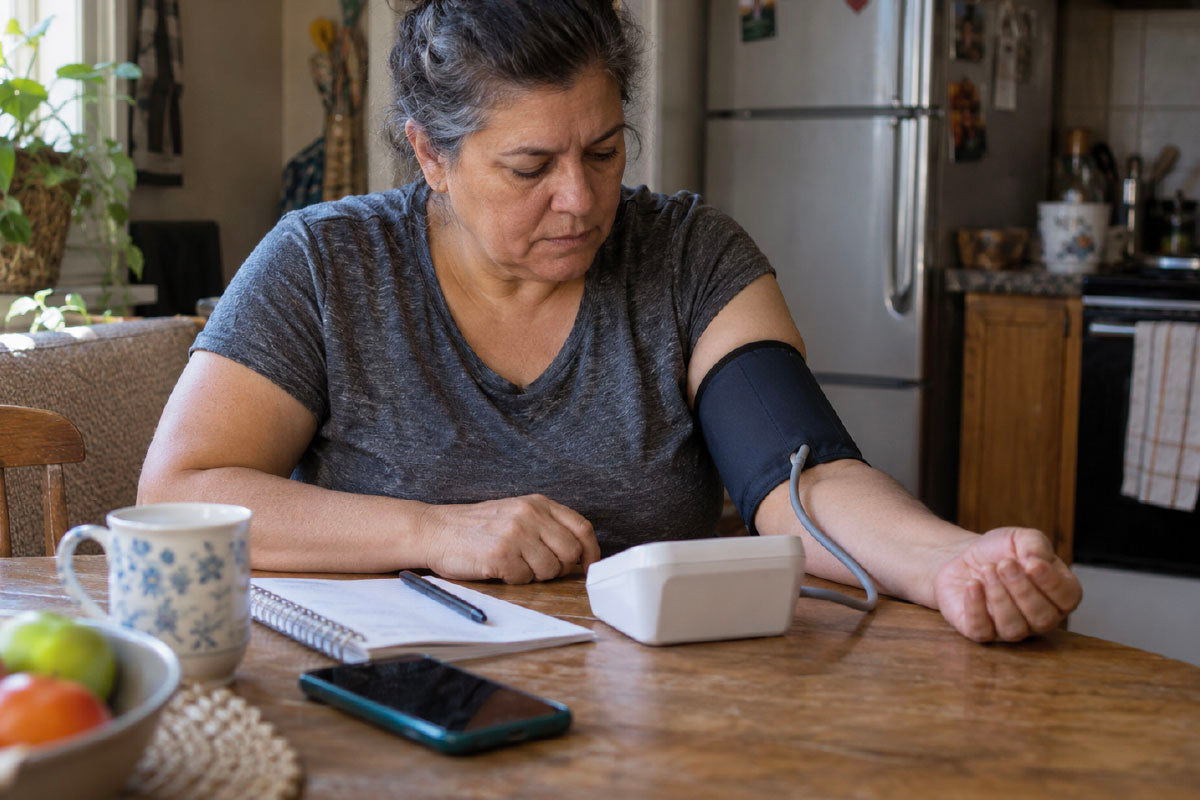
- A structured home cuff log: Include date, time of day, arm used, medication timing, and the conditions before measurement. Use a validated upper-arm cuff and the schedule your healthcare professional recommends.
- Your BP trend data: If you have a tracking device such as Hilo Core, bring the app or a printed report. Weeks of trend data tell a different story than a few isolated numbers.
- Your sleep notes: Mention snoring, gasping, daytime sleepiness, or a partner noticing pauses in breathing. These clues can help a clinician decide whether sleep-apnea testing is appropriate.
- Your sodium, alcohol, caffeine, and activity habits: A rough, honest estimate is more useful than a perfect-looking record.
How Hilo Core Helps You Build a Clearer Picture Between Appointments
Hilo Core is designed to add long-term blood pressure context between the moments when you are in a doctor’s office or taking an exact cuff-based reference measurement.
The Hilo Core system works as complementary layers:
- The Cuff provides exact point-in-time upper-arm measurements you can record and discuss with your healthcare professional.
- The Band supports a long-term blood pressure view, helping you observe how blood pressure trends evolve across days and weeks.
- The App displays cuff measurements and wellness trends separately, adds sleep and step context, and creates a shareable report that can provide background for a conversation at your next appointment.
Bring More Context to Your Next Appointment
Hilo Core combines a validated upper-arm cuff with a cuffless band and app — so your doctor sees weeks of BP patterns, not just the reading from your last visit.
Get Hilo CoreDisclaimer: Hilo Core is a wellness product. It is not intended to diagnose, treat, cure, or prevent any disease. It is not intended to measure blood pressure for medical purposes. This article is for general informational purposes only and does not constitute medical advice. Individual health decisions should be made in consultation with a qualified healthcare professional. Hilo Core is not recommended during pregnancy or for individuals with certain cardiac implants or pre-existing conditions. Please consult your healthcare provider before use.
Frequently Asked Questions
Can ibuprofen keep my blood pressure medication from working?
Yes — and this is one of the most commonly overlooked causes of uncontrolled blood pressure in people on medication. NSAIDs like ibuprofen (Advil), naproxen (Aleve), and celecoxib directly interfere with how antihypertensive medications work. Even occasional use — a few days of ibuprofen for back pain, for example — can produce a measurable rise in blood pressure. If you regularly reach for OTC pain relievers, tell your doctor. Acetaminophen (Tylenol) is generally considered a safer alternative for people managing blood pressure.
How do I know if my doctor’s office reading reflects my real blood pressure?
You often can’t know from a single office visit. Research suggests that up to 40% of patients have a reading at the doctor’s office that isn’t representative of their typical blood pressure pattern. White coat hypertension — where BP runs high in clinical settings but normal at home — is a real and common phenomenon. The best way to get a clearer picture is to measure at home consistently (same time of day, same arm, five minutes of seated rest before measuring) and bring that data to your appointment. If readings differ significantly, ask your doctor about ambulatory blood pressure monitoring or whether home readings should be guiding your treatment decisions.
Should I ask about a sleep study?
Yes — especially if you snore, feel tired after a full night of sleep, or have been told you stop breathing at night. Sleep apnea is one of the most commonly missed secondary causes of treatment-resistant hypertension. The mechanism is direct: repeated breathing interruptions during sleep trigger stress hormone surges that keep blood pressure elevated around the clock. Treating sleep apnea often produces a meaningful drop in BP — sometimes enough to change the medication conversation entirely. Home sleep studies are widely available and far less disruptive than they used to be.
When does uncontrolled blood pressure become an emergency?
If a blood pressure reading is higher than 180/120 mm Hg, wait at least one minute and measure again. If it remains that high and you have chest pain, shortness of breath, back pain, numbness, weakness, a change in vision, or difficulty speaking, call 911. If you do not have those symptoms, contact your healthcare professional promptly. Do not adjust your medication on your own.
What should I ask my doctor when my medication isn’t working?
A few questions worth raising directly: “Have we ruled out secondary causes like sleep apnea or hyperaldosteronism?” — “Could any of my other medications be interfering with my blood pressure treatment?” — “Should we be making decisions based on home readings rather than office readings?” — “Is the timing or combination of my current medications optimized?” — “What would it take to consider adding a fourth medication, and is spironolactone an option?”
Sources
- Carey RM, et al. Resistant Hypertension: Detection, Evaluation, and Management. Hypertension. 2018;72(5):e53–e90. doi:10.1161/HYP.0000000000000084
- Cleveland Clinic. Resistant Hypertension: Causes, Symptoms & Treatment. 2023. clevelandclinic.org
- American Heart Association. Resistant Hypertension — High Blood Pressure That’s Hard to Treat. 2024. heart.org
- Bhatt DL, et al. What to Do When Your Blood Pressure Won’t Go Down. Harvard Health Publishing. health.harvard.edu
- Montgomery C. 5 Reasons Your Blood Pressure Medication Isn’t Working. University of Rochester Medical Center. urmc.rochester.edu
- Hiremath S, et al. Continual Versus Occasional Blood Pressure in Remote Hypertension Management (COOL-BP Study). American Journal of Hypertension. 2025;38(3). doi:10.1093/ajh/hpaf003
- Lopes S, et al. Effect of Exercise Training on Ambulatory Blood Pressure Among Patients With Resistant Hypertension: A Randomized Clinical Trial. JAMA Cardiology. 2021;6(11):1317–1323. pmc.ncbi.nlm.nih.gov
- Obstructive Sleep Apnea and Endothelial Function in Patients With Resistant Hypertension. ClinicalTrials.gov, NCT01854190. clinicaltrials.gov
- Kapa S, et al. Sleep Apnea and Hypertension: Interactions and Implications for Management. Hypertension. 2008. doi:10.1161/hypertensionaha.106.076190
- Williams B, et al. 2018 ESC/ESH Guidelines for the Management of Arterial Hypertension. European Heart Journal. 2018;39(33):3021–3104. doi:10.1093/eurheartj/ehy339
- McEvoy JW, et al. 2024 ESC Guidelines for the Management of Elevated Blood Pressure and Hypertension. European Heart Journal. 2024;45(38):3912–4018. doi:10.1093/eurheartj/ehae178
- Williams B, et al. Spironolactone Versus Placebo, Bisoprolol, and Doxazosin to Determine the Optimal Treatment for Drug-Resistant Hypertension (PATHWAY-2). The Lancet. 2015;386(10008):2059–2068. doi:10.1016/S0140-6736(15)00257-3
Read more

Blood pressure naturally dips during sleep and surges after waking, but an exaggerated morning rise is linked to cardiovascular risk. Here is what is normal about the morning rise, when it becomes ...

Blood pressure naturally rises in the early-morning hours as part of the body's daily rhythm, so a higher morning reading is often normal. Here is what is ordinary, what doctors mean by a morning s...
Blood pressure naturally rises and falls over each day and night, so two checks can show two different numbers, and usually both are real. This article walks through the daily rhythm, the nighttime...