

Blood Pressure by Age: Normal Ranges and Charts for Men and Women (2026)
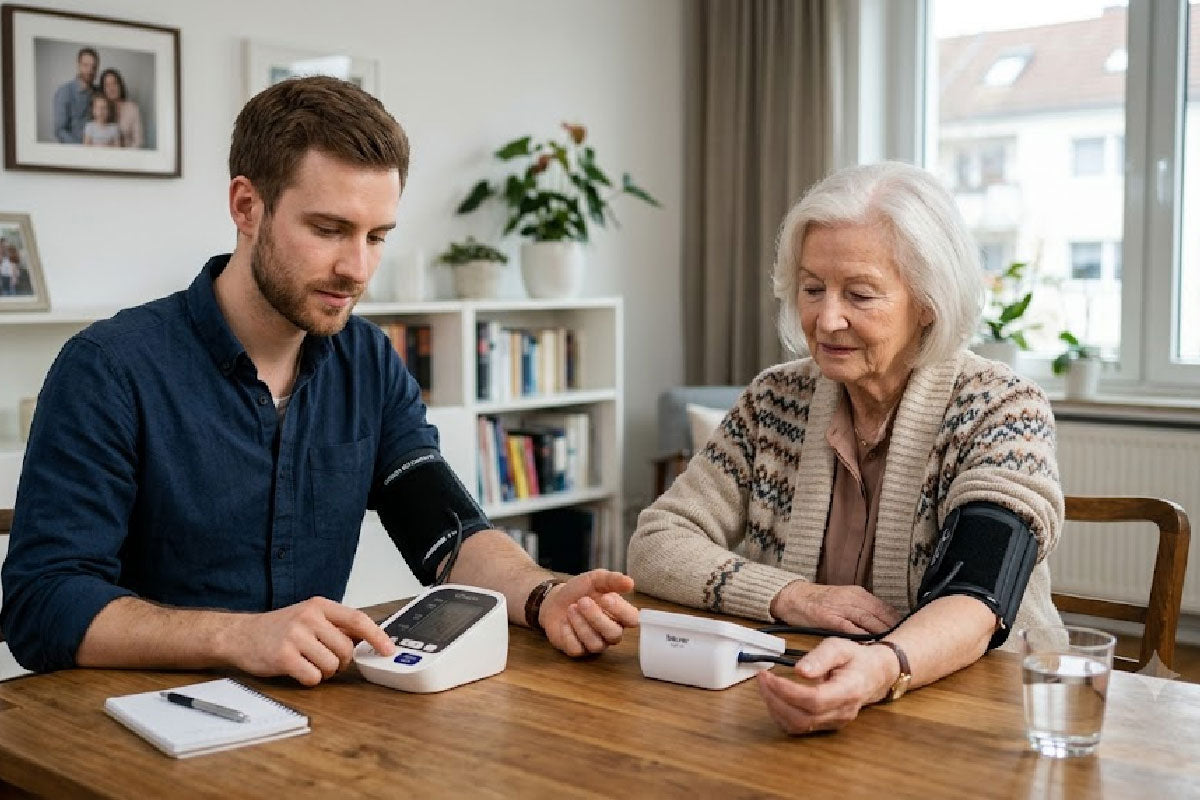
You check your blood pressure — but what does the number actually mean for your age? Average readings change across the life course, but adult diagnostic thresholds do not shift with each decade. Whether you’re curious about observed values at 60, 70, or 80, or why women and men can follow different trajectories, this guide separates population averages from the thresholds used in clinical care. Hilo Core combines point-in-time cuff references with long-term blood pressure patterns and everyday context.
Key Takeaways
- Adult categories do not change by age: Normal blood pressure is below 120 mm Hg systolic and below 80 mm Hg diastolic for adults at any age. Population averages may rise with age, but higher average values are not automatically healthy or appropriate.
- Two numbers, two stories: Systolic pressure reflects pressure when the heart contracts; diastolic pressure reflects pressure between beats. Both matter, although systolic pressure often carries greater prognostic weight in middle-aged and older adults.
- Treatment decisions are individualized: The 2025 AHA/ACC guideline recommends medication for all adults with average BP of at least 140/90 mm Hg and for selected adults starting at 130/80 mm Hg based on cardiovascular disease, stroke, diabetes, kidney disease, and estimated risk. Frailty, tolerance, and personal goals also matter.
- Regular awareness can add context: Nearly half of American adults have high blood pressure — many without knowing it. Hilo Core supports long-term blood pressure pattern awareness, while the included validated upper-arm cuff provides point-in-time reference measurements.
Why Blood Pressure Across the Life Course Matters
The World Health Organization (WHO) identifies elevated blood pressure as one of the most significant health risks worldwide. When readings fall outside the normal range over time, the risk of serious conditions rises — from kidney disease and stroke to cardiovascular conditions, which are among the leading causes of illness in the United States.
That’s why blood pressure checks are a standard part of routine medical visits. Blood pressure gives a quick, clear window into how your body is doing — and tracking it regularly at home can help you stay informed between appointments.
What Is a Normal Blood Pressure by Age?
According to the current AHA/ACC guidelines, for adults, normal blood pressure is defined the same way at every age: systolic pressure below 120 mm Hg and diastolic pressure below 80 mm Hg. Average systolic pressure often rises across the life course, but an age-related increase should not be mistaken for a new normal range.
Children and adolescents are different. Pediatric blood pressure is interpreted using age-, sex-, and height-specific criteria, so a single simplified number is not sufficient. For adults, what is appropriate for an individual also depends on overall health, cardiovascular risk, comorbidities, symptoms, tolerance of treatment, and guidance from a health care professional.
Systolic and Diastolic Blood Pressure: What Both Numbers Mean
Blood pressure is expressed as two numbers. The first — systolic blood pressure — reflects pressure in the arteries when the heart contracts. The second — diastolic blood pressure — reflects pressure between heartbeats. Both are measured in mm Hg (millimeters of mercury).
Persistent elevation in either number can meet the definition of hypertension. In middle-aged and older adults, systolic pressure is often the stronger predictor of cardiovascular risk, but the diastolic value still matters and should not be ignored.
Normal Blood Pressure Readings and the Threshold for High Blood Pressure
The current AHA/ACC guideline classifies adult blood pressure as follows:
- Normal: systolic below 120 mm Hg and diastolic below 80 mm Hg
- Elevated: systolic 120–129 mm Hg and diastolic below 80 mm Hg
- Stage 1 hypertension: systolic 130–139 mm Hg or diastolic 80–89 mm Hg
- Stage 2 hypertension: systolic at least 140 mm Hg or diastolic at least 90 mm Hg
- Severe hypertension: above 180 mm Hg systolic and/or above 120 mm Hg diastolic. Repeat the reading after at least one minute; call 911 if it remains that high and you have symptoms such as chest pain, shortness of breath, weakness, vision change, or difficulty speaking.
These adult categories apply regardless of age. Medication thresholds and treatment goals are then individualized according to cardiovascular risk, health conditions, frailty, side effects, and patient preferences.
Blood Pressure Chart by Age: What Changes and What Does Not
The most useful age-based chart separates adult thresholds from population averages:
| Age group | How blood pressure should be interpreted |
|---|---|
| Children and adolescents | Use pediatric criteria that account for age, sex, and height. A single universal number is not an adequate diagnostic range. |
| Adults age 18 and older | Use the same adult categories at every age: normal, elevated, stage 1 hypertension, or stage 2 hypertension, based on repeated standardized readings. |
| Older adults | The adult categories remain the same. Treatment intensity may be individualized for frailty, limited life expectancy, orthostatic symptoms, comorbidities, and personal goals. |
Average readings in observational cohorts often rise with age, especially systolic pressure. Average is not the same as optimal, and population data should not be used to normalize a persistently elevated individual reading.
Regular tracking can become especially useful as people get older because blood pressure, medication use, sleep, activity, and health conditions can all change. The Hilo Core system keeps the included cuff-based reference readings separate from the longer-term wellness trends shown by the band and app.
Blood Pressure by Age and Sex: The Difference in Detail
Women tend to have lower average blood pressure than men in early adulthood, and the trajectories can converge or cross later in life. The following values were reported as approximate cohort averages in a longitudinal study; they are not normal ranges, diagnostic thresholds, or treatment targets:
| Age | Women | Men |
|---|---|---|
| 20 to 29 years | 119/75 | 129/78 |
| 30 to 39 years | 122/78 | 130/84 |
| 40 to 49 years | 130/82 | 135/88 |
| 50 to 59 years | 143/86 | 143/89 |
| 60 to 69 years | 153/86 | 150/88 |
| 70 to 79 years | 155/83 | 153/83 |
A heart-healthy eating pattern, regular physical activity, sodium reduction, weight management when appropriate, and reduced or no alcohol intake can support healthier blood pressure. Standardized cuff measurements are the right way to determine whether a personal reading is within the adult categories used in clinical care.
3 Common Risks Associated with High Blood Pressure
High blood pressure usually develops gradually and often causes no obvious symptoms. The consequences can still be serious, which is why early awareness and appropriate measurement matter.
Risk 1: Ongoing Strain on the Heart and Blood Vessels
During physical exertion or moments of stress, blood pressure rises temporarily — and that can be normal. When pressure remains elevated at rest over time, however, it places ongoing strain on the heart and blood vessels and contributes to damage in the brain, kidneys, eyes, and other organs.
Risk 2: High Blood Pressure Often Goes Undetected
Many people live with high blood pressure without realizing it because it often causes no noticeable symptoms. Readings may rise gradually over years alongside changes in weight, diet, activity, sleep, medication, and health conditions. Regular, correctly performed cuff measurement is the only way to know whether BP is elevated.
Risk 3: Single Readings Can Be Misleading
Some people have higher readings in a clinical setting than outside it, a pattern known as white-coat hypertension. The reverse pattern, masked hypertension, can also occur. A single reading is not enough to diagnose either condition, although a severely elevated reading or one accompanied by concerning symptoms should never be dismissed.
For a clearer clinical picture, the current AHA/ACC guideline recommends repeated out-of-office measurements using validated cuff-based home monitoring or ambulatory monitoring. Hilo Core adds a separate long-term blood pressure view around those point-in-time cuff references.
Stay Aware of Your Blood Pressure at Every Age with Hilo Core
Adult diagnostic categories do not shift upward with each decade. What changes is the pattern of blood pressure in populations and in an individual over time. That makes it useful to keep accurate cuff-based reference readings and observe the broader context around them.
Hilo Core is designed around that approach:
- Long-term trend view — the Hilo Core band and app help you observe how wellness patterns evolve over days and weeks
- Sleep and activity context — sleep duration, steps, and heart rate add everyday context to the trend view
- Validated upper-arm cuff included — provides point-in-time systolic and diastolic reference measurements
- Integrated system — cuff readings and blood pressure trends are displayed separately in the Hilo Core app
- Price — Hilo Core Band US$89.99 plus Annual Subscription US$149.99, for US$239.98 in the first year, excluding tax
Know Your Numbers — and Your Patterns — at Every Age
Hilo Core combines point-in-time cuff references with long-term blood pressure trends and lifestyle context, helping you build awareness without turning the band into a clinical measurement device.
Get Hilo CoreDisclaimer: Hilo Core is a wellness product. It is not intended to diagnose, treat, cure, or prevent any disease. It is not intended to measure blood pressure for medical purposes. This article is for general informational purposes only and does not constitute medical advice. Individual health decisions should be made in consultation with a qualified healthcare professional. Hilo Core is not recommended during pregnancy or for individuals with certain cardiac implants or pre-existing conditions. Please consult your healthcare provider before use.
Frequently Asked Questions
What blood pressure readings are normal for each age?
For adults, the normal category is the same at every age: systolic below 120 mm Hg and diastolic below 80 mm Hg. Children and adolescents require pediatric interpretation based on age, sex, and height. Population averages may rise with age, but averages are not treatment targets or normal ranges.
How high can blood pressure be in older adults?
Older age does not create a separate higher normal category. The current AHA/ACC guideline supports a general treatment goal below 130/80 mm Hg for most adults with hypertension, with individualization for frailty, limited life expectancy, tolerance, and other clinical factors. Discuss repeated readings with a health care professional.
Is a blood pressure of 150 over 90 too high?
A repeated reading of 150/90 mm Hg falls in stage 2 hypertension for adults of any age and should be reviewed by a health care professional. It is not considered normal simply because someone is older. A reading above 180/120 mm Hg should be repeated after at least one minute; if it remains that high and you have concerning symptoms, call 911. The Hilo Core band can help you observe how long-term blood pressure patterns evolve.
Which blood pressure number matters more — the upper or the lower?
Both numbers matter. Systolic pressure is often the stronger predictor of cardiovascular risk in middle-aged and older adults, while diastolic pressure remains clinically important. Persistent elevation in either number warrants attention.
Sources
- Whelton PK, Carey RM, Aronow WS, et al. 2017 ACC/AHA/AAPA/ABC/ACPM/AGS/APhA/ASH/ASPC/NMA/PCNA Guideline for the Prevention, Detection, Evaluation, and Management of High Blood Pressure in Adults. Hypertension. 2018;71(6):e13–e115. doi:10.1161/HYP.0000000000000065
- Jones DW, Ferdinand KC, Taler SJ, et al. 2025 AHA/ACC/AANP/AAPA/ABC/ACCP/ACPM/AGS/AMA/ASPC/NMA/PCNA/SGIM Guideline for the Prevention, Detection, Evaluation, and Management of High Blood Pressure in Adults. Hypertension. 2025;82(10):e212–e316. doi:10.1161/HYP.0000000000000249
- Ji H, Kim A, Ebinger JE, et al. Sex Differences in Blood Pressure Trajectories Over the Life Course. JAMA Cardiology. 2020;5(1):19–26. doi:10.1001/jamacardio.2019.5306
- Fryar CD, Kit B, Carroll MD, Afful J. Hypertension Prevalence, Awareness, Treatment, and Control Among Adults Age 18 and Older: United States, August 2021–August 2023. NCHS Data Briefs, No. 511. National Center for Health Statistics. doi:10.15620/cdc/164016
- High Blood Pressure Facts and Statistics. Centers for Disease Control and Prevention. Accessed July 2026. cdc.gov
- Understanding Blood Pressure Readings. American Heart Association. Accessed July 2026. heart.org
- High Blood Pressure. National Heart, Lung, and Blood Institute. Accessed July 2026. nhlbi.nih.gov
Read more

Measuring your blood pressure correctly means the number on the screen should reflect your resting body, not the rush that got you there. Small, fixable steps in preparation and positioning have a ...

You just got a blood pressure reading back with a normal top number, but the bottom one is elevated. This guide covers what lowers diastolic blood pressure day to day, why the number behaves differ...
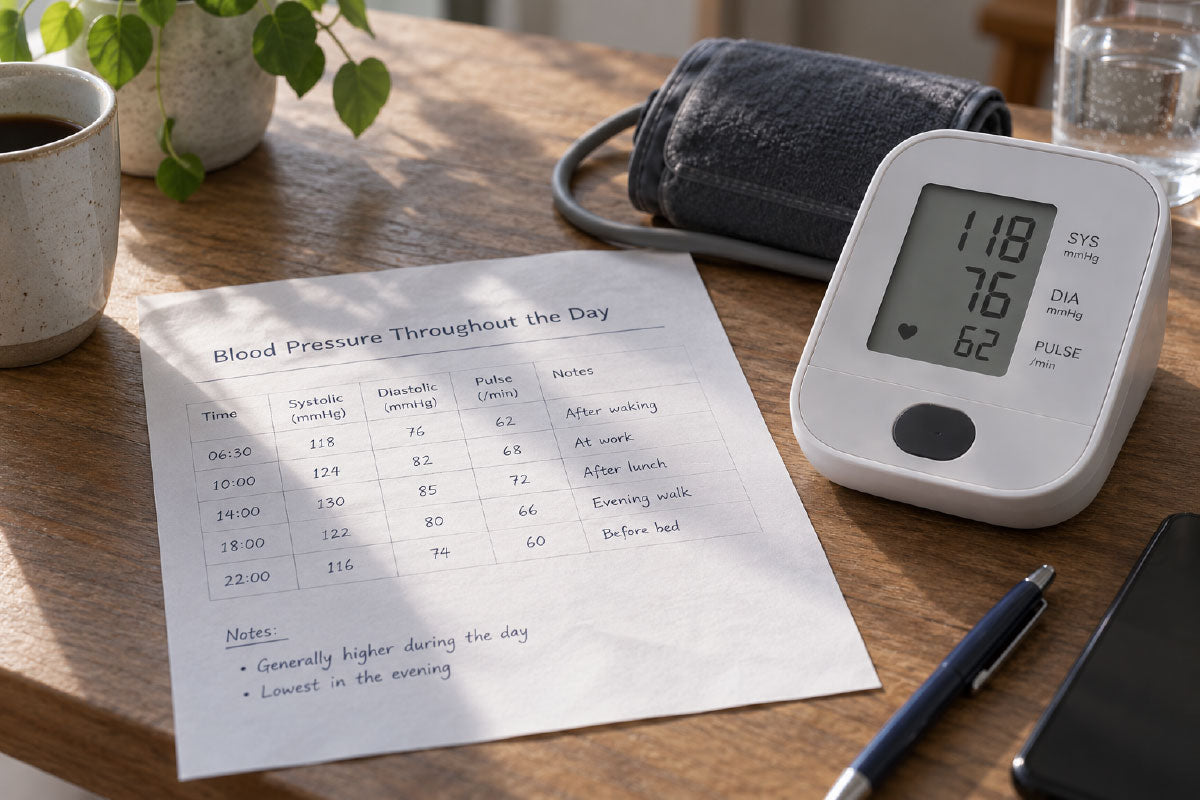
You check your blood pressure in the morning, then again after lunch, and the numbers don't match. That's not a mistake or a broken cuff. Blood pressure changes throughout the day as part of a norm...