

How to measure your blood pressure correctly
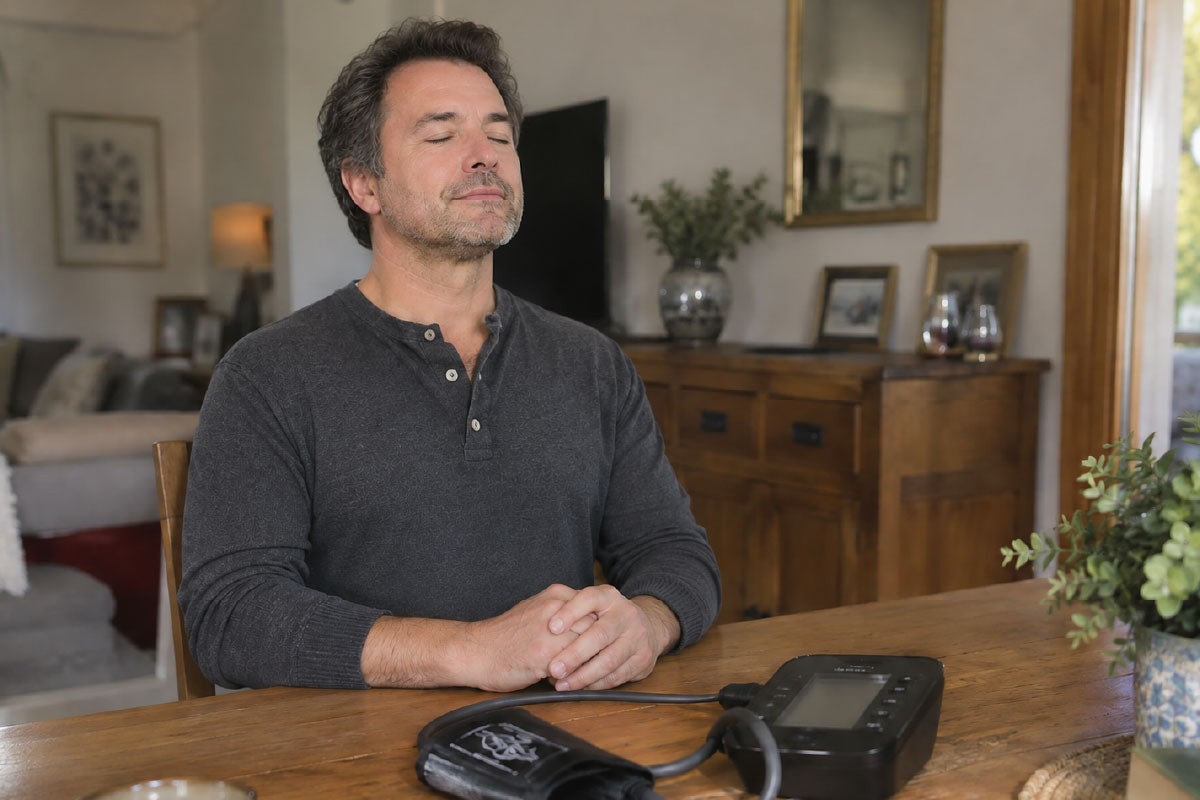
You just got out of the car after a rushed commute, sat down, wrapped the cuff around your arm, and pressed start. Measuring your blood pressure correctly means the number on the screen should reflect your resting body, not the rush that got you there. If you want a reading you can trust, whether for a home log or a conversation with your doctor, how you take it matters as much as the device you use. Small, fixable steps in preparation and positioning have a measurable effect on the accuracy of your reading.
Key facts
- Technique changes the number: preparation, posture, and arm position can shift your reading by several mmHg, with arm position alone approaching a 10 mmHg swing.
- Cuff fit is not optional: a bladder that doesn’t cover roughly 75–100% of your upper-arm circumference produces an inaccurate reading, regardless of how good the device is, per cuff bladder sizing guidance.
- One reading tells you a moment, not a pattern: taking more than one reading in a sitting and averaging the results catches normal moment-to-moment variation a single check can miss.
- A validated cuff removes one variable: Hilo Core is delivered with a validated calibration cuff, so correct technique becomes the one thing left in your hands.
Why technique changes what the cuff actually shows
A blood pressure cuff only measures what your body is doing in that exact moment. If your arm is unsupported, your legs are crossed, or you just climbed a flight of stairs, the cuff faithfully records that moment rather than your resting systolic and diastolic mmHg. You control that variable directly, through preparation and positioning, regardless of which device you use.
Preparation, posture, and arm position can alter a reading by several mmHg. Improper arm positioning on its own can push the error close to 10 mmHg. Arm position is one of the most common and most correctable sources of blood pressure measurement errors.
A well-calibrated device still needs controlled conditions to produce a trustworthy number. The rest of this guide walks through exactly which conditions matter and why.
Prepare your body to measure blood pressure correctly
A handful of everyday habits can quietly inflate a reading before you even reach for the cuff. Skipping this step is one of the most common mistakes in home blood pressure measurement.

- Avoid caffeine, nicotine, and exercise for at least 30 minutes before measuring. Each temporarily raises heart rate and blood pressure, so a reading taken right after coffee or a workout reflects that spike, not your baseline, per the American Heart Association’s home monitoring guidance.
- Use the bathroom first. A full bladder is a known, if often overlooked, source of an elevated reading, per the American Heart Association.
- Sit quietly for at least five minutes before your first reading. Five minutes of rest gives your cardiovascular system time to settle out of whatever you were doing beforehand, a step both the American Heart Association and the CDC recommend.
Get your position right to measure blood pressure correctly
Posture affects the reading independent of anything happening internally. Sit with your back supported, feet flat on the floor, and legs uncrossed. Rest your bare arm on a flat surface so the cuff sits at heart level, and stay quiet while the cuff inflates.
Crossing your legs or letting your arm hang unsupported at your side rather than resting it on a table at chest height can raise a blood pressure reading, according to a systematic review of measurement-accuracy factors. Both habits distort the single number you’re trying to capture.
Arm position at heart level is one of the simplest, most repeatable corrections you can make, and it costs nothing but a few seconds of attention before you press start.
Choose and fit the right cuff
Not every home blood pressure device measures the same way, and the difference matters. An automatic, cuff-style, upper-arm device is the recommended choice; wrist and finger devices are not recommended because they produce less reliable readings, per the American Heart Association.
Cuff fit is just as important as cuff type. For an accurate reading, the cuff bladder should cover roughly 75–100% of your upper-arm circumference, placed directly on bare skin, positioned just above the bend of the elbow, per cuff bladder sizing research. A cuff that’s the wrong size for your arm produces an inaccurate reading no matter how good the device’s internal sensor is, according to the American Heart Association.
Device setup and personal technique intersect at this step. Hilo Core ships with a calibration cuff that is validated for reference readings, leaving posture, timing, and preparation as the parts still in your hands.
Take multiple readings, not one
A single reading captures your blood pressure in one moment; it shows you a value, but not the pattern behind it. Taking more than one reading in a sitting helps average out that moment-to-moment noise.
Take more than one reading in a sitting and record the average rather than trusting the first number you see.
It’s also worth checking both arms at least once. Small arm-to-arm differences are common, and a difference of 10 mmHg or less is considered normal, per the American Heart Association. But if your systolic readings consistently differ by more than 10 mmHg, mention it to your healthcare professional; a persistent difference that large can be a sign of an underlying condition such as peripheral artery disease, according to the Mayo Clinic. This general guidance holds regardless of which validated device you use.
Know when a reading means something different
Not every unusual reading means your blood pressure has actually changed. As many as 1 in 3 people with a high reading at the doctor’s office have normal readings outside it, a phenomenon known as white coat syndrome, caused by the clinical setting itself rather than a real shift in blood pressure, per the CDC.
There’s one reading that always deserves immediate action regardless of context: if your upper-arm cuff shows a systolic reading above 180 mmHg and/or a diastolic reading above 120 mmHg, accompanied by chest pain, shortness of breath, back pain, numbness, weakness, vision changes or difficulty speaking, that is a hypertensive emergency. Call 911 right away if that happens, per the American Heart Association. Even without any of those symptoms, a reading at this level should be discussed with your healthcare professional as soon as possible.
Outside of that emergency threshold, a single well-taken reading is still a genuine data point about that moment. It just can’t show what happens across a day or a week the way a longer record can, a question our guide on single blood pressure readings covers in more depth.
How Hilo Core helps you measure blood pressure correctly
Hilo Core is built around the same idea this guide has walked through: a trustworthy reading depends on both a validated device and correct technique. The system pairs a wearable band and app with a calibration cuff that provides validated reference measurements, so the device side of the equation is handled from day one.
The band and app give you ongoing context, how your day-to-day patterns relate to sleep, activity, and routine. The cuff remains your point-in-time reference for an accurate spot check whenever you need one. Together they’re designed to help you understand your own patterns over time and bring more useful context into conversations with your doctor.
Hilo Core is a wellness product intended for adults tracking everyday blood pressure patterns. It is not designed for use during pregnancy, and people with certain implanted electronic devices or specific pre-existing heart conditions should check the product documentation and consult their doctor before use.
Correct technique turns a reading into something you can trust
An accurate blood pressure reading depends on controlling a handful of variables, preparation, posture, cuff fit, and repetition, that determine whether the number reflects your true resting blood pressure. Once your technique is consistent, a validated cuff like the one built into Hilo Core gives you a dependable reference point, and the patterns you track over time become genuinely useful context for your next conversation with your doctor.
See how Hilo Core supports accurate readings
Explore the system built around a validated calibration cuff and long-term pattern tracking, so correct technique is the only variable left for you to manage.
Get Hilo CoreFAQ
Why does my blood pressure reading change every time I measure it?
Some variation is normal biology, but technique also plays a real role. Preparation, posture, and arm position can alter a reading by several mmHg, with arm position alone accounting for errors approaching 10 mmHg. Take more than one reading in a sitting and use the average; that covers normal moment-to-moment fluctuation and gives you a more reliable value to track. If your numbers still swing widely, check your setup before assuming something has changed internally.
Which arm should I use to measure blood pressure?
Either arm works for a routine reading, but it’s worth checking both at least once. Small arm-to-arm differences are common, and a difference of 10 mmHg or less is considered normal, per the American Heart Association; if your readings consistently differ by more than 10 mmHg, mention it to your healthcare professional, since a persistent difference that large can signal an underlying condition such as peripheral artery disease.
How do I know if my blood pressure cuff is the right size?
The cuff’s inflatable bladder should cover roughly 75–100% of your upper-arm circumference. A cuff that’s too small or too large for your arm will produce an inaccurate reading, regardless of how good the device itself is.
Disclaimer: Hilo Core is a wellness product. It is not intended to diagnose, treat, cure, or prevent any disease. It is not intended to measure blood pressure for medical purposes. This article is for general informational purposes only and does not constitute medical advice. Individual health decisions should be made in consultation with a qualified healthcare professional. Hilo Core is not recommended during pregnancy or for individuals with certain cardiac implants or pre-existing conditions. Please consult your healthcare provider before use.
Sources
- H. Liu; D. Zhao; A. Sabit et al. (2024). Arm Position and Blood Pressure Readings: The ARMS Crossover Randomized Clinical Trial. JAMA Internal Medicine, 184(12), 1436–1442. https://doi.org/10.1001/jamainternmed.2024.5213
- N. Kallioinen; A. Hill; M. S. Horswill et al. (2017). Sources of Inaccuracy in the Measurement of Adult Patients’ Resting Blood Pressure in Clinical Settings: A Systematic Review. Journal of Hypertension, 35(3), 421–441. https://doi.org/10.1097/hjh.0000000000001197
- T. G. Pickering; J. E. Hall; L. J. Appel et al. (2005). Recommendations for Blood Pressure Measurement in Humans: An AHA Scientific Statement from the Council for High Blood Pressure Research Professional and Public Education Subcommittee. The Journal of Clinical Hypertension, 7(2), 102–109. https://doi.org/10.1111/j.1524-6175.2005.04377.x
- Monitoring Your Blood Pressure at Home. American Heart Association. https://www.heart.org/en/health-topics/high-blood-pressure/understanding-blood-pressure-readings/monitoring-your-blood-pressure-at-home (Accessed September 2026)
- Blood Pressure: Can It Be Higher in One Arm? Mayo Clinic. https://www.mayoclinic.org/diseases-conditions/high-blood-pressure/expert-answers/blood-pressure/faq-20058230 (Accessed October 2026)
- Measuring Your Blood Pressure. Centers for Disease Control and Prevention (CDC). https://www.cdc.gov/high-blood-pressure/measure/index.html (Accessed September 2026)
Read more

Choosing between Hilo Core and WHOOP for blood pressure comes down to one question: is blood pressure the main reason for the purchase, or is it one feature among many? Hilo Core is built around bl...

For most people diagnosed with hypertension, medication is the primary treatment — it is safe, effective, and for many, potentially life-saving. Lifestyle strategies are an important complement: th...
Hilo Core and Apple Watch take fundamentally different approaches to blood pressure. Hilo Core combines a validated upper-arm cuff for point-in-time systolic and diastolic readings with a cuffless ...