

Blood Pressure Fluctuations: Understand Your Patterns Over Time

Your blood pressure shifts throughout the day in response to what you eat, how you move, and how stressed you feel. Some fluctuations are normal — others may be worth paying attention to. Hilo Core helps you observe long-term blood pressure trends and everyday context between cuff checks, so you can spot patterns before your next doctor’s visit.
Key Takeaways
- Fluctuations are normal — but patterns matter: Blood pressure naturally rises and falls throughout the day. Large or persistent swings, however, may be worth discussing with a healthcare professional.
- Eight everyday factors influence your readings: From caffeine and cold temperatures to stress and a full bladder — knowing what affects your blood pressure helps you take readings at the right moment and interpret them more accurately.
- One reading is rarely enough: The American Heart Association recommends multiple readings over several days to get a more realistic picture of blood pressure.
- Tracking over time adds context: Hilo Core supports a longer-term view of blood pressure trends alongside sleep and activity context.
Why Blood Pressure Fluctuations Matter
Some blood pressure fluctuations throughout the day are completely normal and can be triggered by everyday activities like movement or physical effort. That said, larger swings can sometimes signal something worth paying attention to. Researchers suggest that large blood pressure fluctuations may be associated with elevated cardiovascular risk. That is why staying aware of changes over a longer period of time matters — a single snapshot rarely tells the whole story.
In people with hypertension, greater blood pressure variability has been associated with organ strain and cardiovascular risk, although interpretation also depends on average blood pressure, symptoms, measurement quality, and clinical context. The American Heart Association defines normal blood pressure as systolic below 120 mmHg and diastolic below 80 mmHg. Stage 1 hypertension begins at an average systolic pressure of 130 mmHg or an average diastolic pressure of 80 mmHg.
Hypertension affects nearly half of all American adults — a figure confirmed by AHA research published in Circulation — and many people are unaware of it because elevated blood pressure rarely causes noticeable symptoms in its early stages.
Some fluctuations, however, are tied to completely ordinary factors — diet, activity, stress, weather, time of day — and are not a cause for concern. Understanding which is which is where awareness starts.
8 Factors Behind Blood Pressure Fluctuations
1. Temperature
Cold temperatures raise blood pressure, while heat tends to lower it, because low temperatures cause blood vessels to narrow. Changes in humidity or barometric pressure can also influence readings.
2. Time of Day
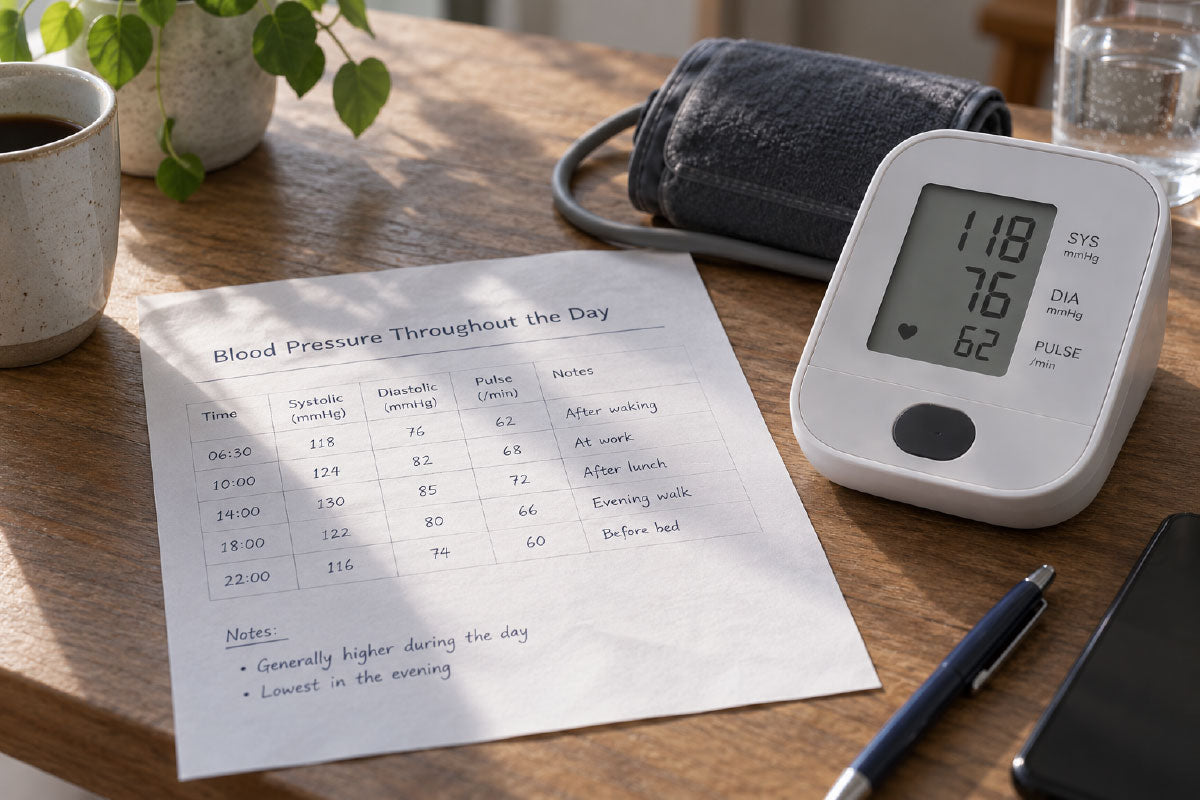
Blood pressure often falls during sleep and rises after waking, but the exact pattern varies from person to person. That is why it is generally recommended to take cuff readings at consistent times — so you are comparing like with like.
3. Exercise
It is normal for blood pressure to rise temporarily during physical exertion. This is not a cause for concern in most cases. What matters is not holding your breath during effort — and not ignoring serious warning signs like dizziness, severe shortness of breath, or chest pain.
4. A Full Bladder
A full bladder can raise a blood pressure reading. For a more accurate measurement, it is worth using the restroom beforehand.
5. Stress
Everyday stress can cause temporary blood pressure spikes. That is why you should rest for at least five minutes before taking a reading. Taking a few slow, deep breaths may also help you settle before the measurement.
6. Over-the-Counter Cold Medications
Some decongestant ingredients found in certain cold remedies — such as pseudoephedrine or phenylephrine — can cause a temporary rise in blood pressure readings. If you take a reading while using such a product and the number looks higher than usual, that context is worth noting and sharing with your doctor. Never stop or adjust any medication based on a single reading — always speak with your healthcare provider first.
7. Caffeine
Coffee, cola, and other caffeinated beverages can cause a temporary rise in blood pressure. Some researchers believe caffeine may block hormones that widen arteries; others point to increased adrenaline levels. Either way, it’s a good idea to avoid caffeinated drinks — and smoking — for at least 30 minutes before taking a reading.
8. Cigarettes
Smoking narrows blood vessels and triggers an immediate cardiovascular response that can raise blood pressure and heart rate. Toxins in cigarette smoke can also damage the inner lining of blood vessels over time.
How to Take an Accurate Blood Pressure Reading
Given the fluctuations that naturally occur throughout the day, the American Heart Association recommends taking readings under consistent, calm conditions:
- Rest for at least five minutes before taking a reading.
- Sit comfortably with your back supported against the chair.
- Do not talk during the measurement.
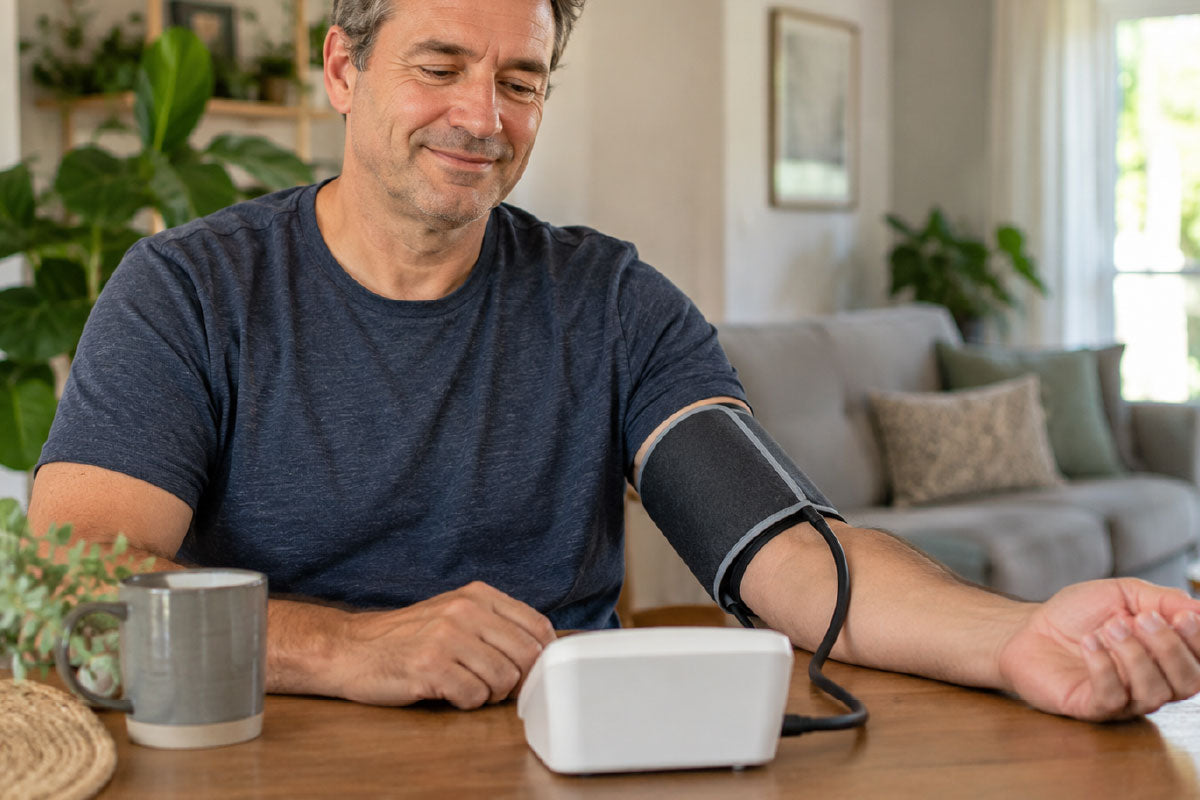
- Rest the arm with the cuff on a table for support, keeping it at heart level.
- Remove any clothing from your upper arm to avoid restricting blood flow.
- Keep your feet flat on the floor and avoid moving your arm during the reading.
- Take two readings at least one minute apart and record both.
- If you take blood pressure medication, follow your clinician’s instructions about when to measure in relation to your dose.
- Older adults may be advised to occasionally take readings while standing, especially if they experience dizziness when getting up.
If you take multiple readings in a row, you will almost always see slightly different numbers. For a structured home-monitoring period, the 2025 AHA/ACC guideline recommends morning and bedtime readings for at least three days, with seven days preferred. Keep a log and discuss significant fluctuations with your doctor.
Why Tracking Over Time Makes the Difference
A single blood pressure reading is a snapshot. Your patterns over days and weeks are the story. Tracking consistently over time helps you and your healthcare provider distinguish normal daily variation from readings that deserve attention — and gives you context that a single clinical measurement simply cannot provide.
Hilo Core combines two clearly separated layers. The included validated upper-arm cuff provides point-in-time reference measurements for calibration and medical reporting. The band and app support long-term wellness trends and show sleep and activity context. They do not continuously measure exact blood pressure and do not replace cuff-based home monitoring.
The Hilo Core App gives you a long-term view of your data, including sleep and activity context such as step tracking, so you can observe patterns as they develop.
Stay Aware of Your Blood Pressure with Hilo Core
Blood pressure fluctuations are a normal part of daily life — but understanding what drives them puts you in a better position to interpret your readings clearly. Knowing the eight factors that influence your numbers, taking measurements under consistent conditions, and tracking your patterns over time all contribute to a more complete picture of your cardiovascular health.
Ready to See Your Patterns?
Hilo Core gives you reliable cuff readings and helps you observe long-term blood pressure patterns alongside sleep and activity context.
Discover Hilo CoreDisclaimer: Hilo Core is a wellness product. It is not intended to diagnose, treat, cure, or prevent any disease. It is not intended to measure blood pressure for medical purposes. This article is for general informational purposes only and does not constitute medical advice. Individual health decisions should be made in consultation with a qualified healthcare professional. Hilo Core is not recommended during pregnancy or for individuals with certain cardiac implants or pre-existing conditions. Please consult your healthcare provider before use.
FAQ
Is it normal for blood pressure to fluctuate throughout the day?
Yes — blood pressure naturally rises and falls in response to activity, stress, meals, time of day, and other everyday factors. These fluctuations are expected and normal. What matters is the overall pattern of standardized cuff readings over time, not any single reading. If you notice large or frequent swings, it is worth discussing them with a healthcare professional.
What causes sudden spikes in blood pressure?
Common causes include stress, physical exertion, caffeine, cold temperatures, or a full bladder. Certain decongestant ingredients in some cold remedies can also temporarily affect a reading — worth noting if you measure while sick.
How often should I check my blood pressure at home?
For a structured home-monitoring period, the 2025 AHA/ACC guideline recommends two cuff readings in the morning and two at bedtime, at least one minute apart, for a minimum of three days and preferably seven. Follow your clinician’s plan. Hilo Core can add long-term wellness context between cuff checks, but clinical decisions should rely on validated cuff-based readings.
What is masked hypertension?
Masked hypertension refers to blood pressure that is not elevated in the clinic but is elevated outside the clinic. It is confirmed with validated cuff-based home or ambulatory blood pressure monitoring. Hilo Core does not diagnose masked hypertension.
Sources
- Parati G. Blood pressure variability: its measurement and significance in hypertension. Journal of Hypertension Supplement. 2005;23(1):S19–S25. doi:10.1097/01.hjh.0000165624.79933.d3
- Martin SS, Aday AW, Almarzooq ZI, et al. 2024 Heart Disease and Stroke Statistics: A Report of US and Global Data From the American Heart Association. Circulation. 2024;149(8):e347–e913. doi:10.1161/CIR.0000000000001209
- Big Swings in Blood Pressure Could Spell Trouble. WebMD. Accessed July 2026. webmd.com
- Understanding Blood Pressure Readings. American Heart Association. Accessed July 2026. heart.org
- Monitoring Your Blood Pressure at Home. American Heart Association. Accessed July 2026. heart.org
- High Blood Pressure Facts and Statistics. Centers for Disease Control and Prevention. Accessed July 2026. cdc.gov
- Blood Pressure and Cold Temperatures. Mayo Clinic. Accessed July 2026. mayoclinic.org
- Caffeine and Blood Pressure. Mayo Clinic. Accessed July 2026. mayoclinic.org
Read more
You just got a blood pressure reading back with a normal top number, but the bottom one is elevated. This guide covers what lowers diastolic blood pressure day to day, why the number behaves differ...
You check your blood pressure in the morning, then again after lunch, and the numbers don't match. That's not a mistake or a broken cuff. Blood pressure changes throughout the day as part of a norm...

Blood pressure changes throughout the day. A morning reading may be accurate for that moment while leaving the surrounding hours unobserved. U.S. guidance therefore relies on repeated, standardized...