

Blood Pressure Patterns in African Americans: What You Need to Know

You leave your doctor’s office with a single number on a printout. According to the American Heart Association, approximately 58% of Black adults in the US live with high blood pressure. Yet that one reading may not show you what happens at 3 a.m., during a tense work call, or on a quiet Sunday morning. Your blood pressure patterns shift across hours, days, and weeks, and a snapshot misses most of that story. This article unpacks why pattern visibility matters, what the science shows, and how Hilo fits into a fuller view of your everyday health.
Key Facts
- Earlier onset, higher prevalence: About 58% of Black adults in the US have high blood pressure, and rates climb sharply with age (American Heart Association).
- Office visits leave gaps: Between appointments, BP patterns shift across mornings, nights, and stressful moments that a single clinic reading cannot capture.
- Patterns matter more than a snapshot: According to research from Columbia University Irving Medical Center, extended out-of-office BP monitoring can reveal masked hypertension that a single office reading misses entirely.
- Hilo helps you see the bigger picture: Designed to give you long-term visibility into how your BP patterns evolve, day by day, without disrupting your daily life.
Why Hypertension Hits African Americans Harder
The numbers tell a clear story. According to the American Heart Association, approximately 58% of Black adults live with high blood pressure, compared with 44.5% of the total US population. The disparity starts early: about 30% of African American men are already affected by age 30, and roughly 75% of African Americans over 60 live with hypertension (University Hospitals, 2024). These figures reflect earlier onset and a steeper rise across the lifespan.
Control rates lag too. Per the HHS Office of Minority Health, only 13.2% of Black adults with hypertension had their blood pressure under control between 2017 and 2020, compared with 16.1% of the total population — an 18% gap. The risk of stroke and other cardiovascular events climbs alongside this control gap, especially when patterns go unseen between office visits.
Several forces shape this reality, and most operate together rather than in isolation:
- Genetic and physiological factors: Individual differences in salt sensitivity and inherited traits can influence how the body regulates pressure across the day and night.
- Structural healthcare access barriers: Uneven access to consistent primary care, specialist follow-up, and affordable medication adjustments — meaning gaps between office visits tend to be longer, and what happens in those gaps matters more.
- Lifestyle and chronic stressors: Everyday stress, sleep disruption, and environmental factors that shape long-term blood pressure trends in young adults and older adults alike.
Taken together, these factors create a specific problem: blood pressure that shifts significantly outside the clinic, driven by a combination of physiological, structural, and daily-life factors, yet is most often measured only at the occasional office visit. That is exactly where pattern visibility between appointments becomes especially important for Black adults.
Why One Office Reading Falls Short for Black Adults
A single clinic reading captures one moment under one set of conditions. According to the ESC E-Journal of Cardiology Practice, the majority of clinical studies report that white-coat hypertension accounts for up to 25–30% of individuals attending outpatient hypertension centers. The white-coat effect can push numbers up during an appointment, while a calm office visit can mask elevations that appear during a normal workday.
The reverse pattern is equally important. According to Columbia University Irving Medical Center, masked hypertension — normal readings at the office but elevated pressure outside the clinic — is particularly prevalent in African Americans, approaching 30–50% in some studies. Per CUIMC research, 79.2% of participants with masked hypertension later developed clinic high blood pressure, compared with 42.2% without it.
When the Clinic Reading Doesn’t Tell the Full Story
Nighttime adds another blind spot. According to the CARDIA study, African Americans were more likely than White adults to have nocturnal hypertension, with a prevalence ratio of 2.44, and non-dipping patterns, with a prevalence ratio of 2.50. The Jackson Heart Study echoes that African Americans have higher rates of nocturnal hypertension and less nighttime dipping than White adults.
Without validated out-of-office and overnight cuff measurements, an important part of the cardiovascular picture can stay hidden. Masked hypertension, nocturnal hypertension, and non-dipping are clinical classifications that require cuff-based home or ambulatory blood pressure monitoring and professional interpretation.
Data density compounds the problem: clinical research comparing a cuffless wrist-worn device — not Hilo Core — against traditional 24-hour ambulatory monitors found the wrist-worn approach generated over 200 readings per day, compared with roughly 50 with standard ambulatory BP measurement (De Almeida, Perruchoud, Alexandre et al., 2025). This illustrates the research potential of frequent out-of-office data. It does not establish clinical validation of Hilo Core or make a cuffless wearable equivalent to validated cuff-based home or ambulatory blood pressure monitoring.
How to Build Consistent Blood Pressure Awareness
Technique matters before tracking. Oscillometric blood pressure measurement with a home cuff only works when the equipment fits. The right cuff size depends on your arm circumference: a standard adult cuff typically fits 22–32 cm, and a large-arm cuff is recommended above that range. A poor fit produces readings that drift high or low and undermines every conclusion you draw afterward.
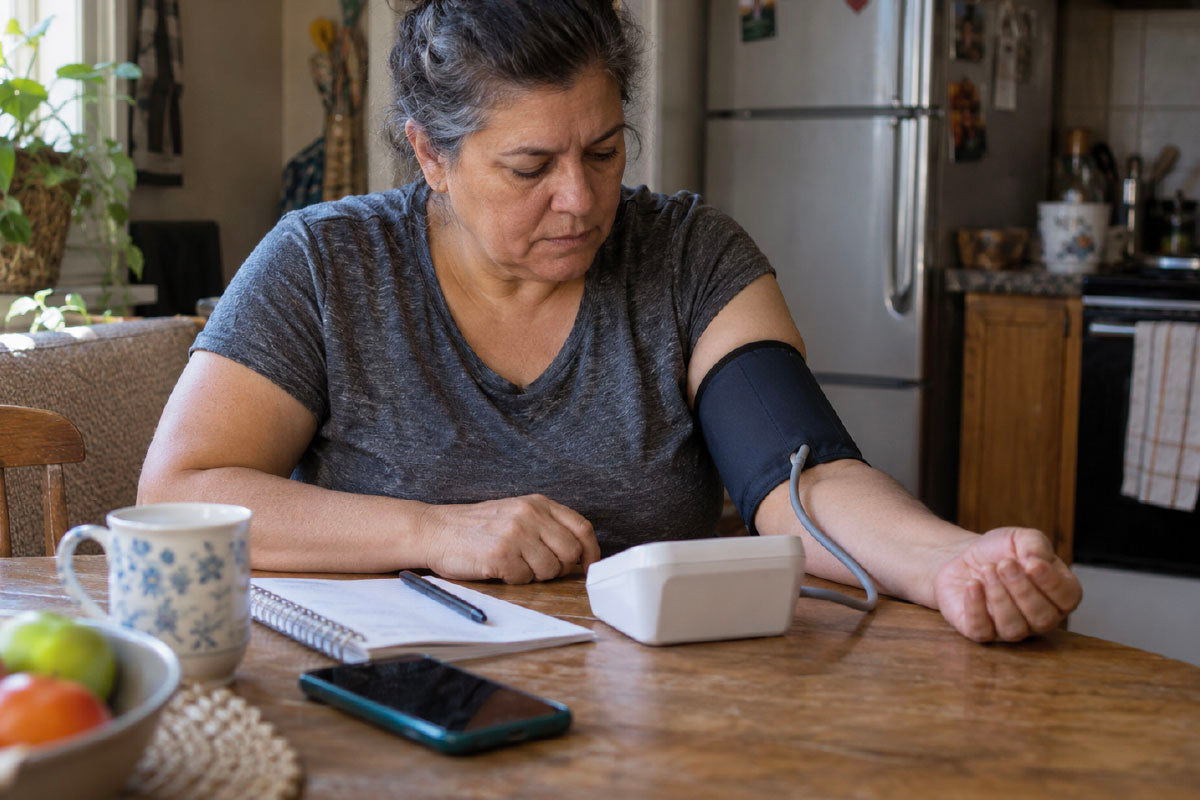
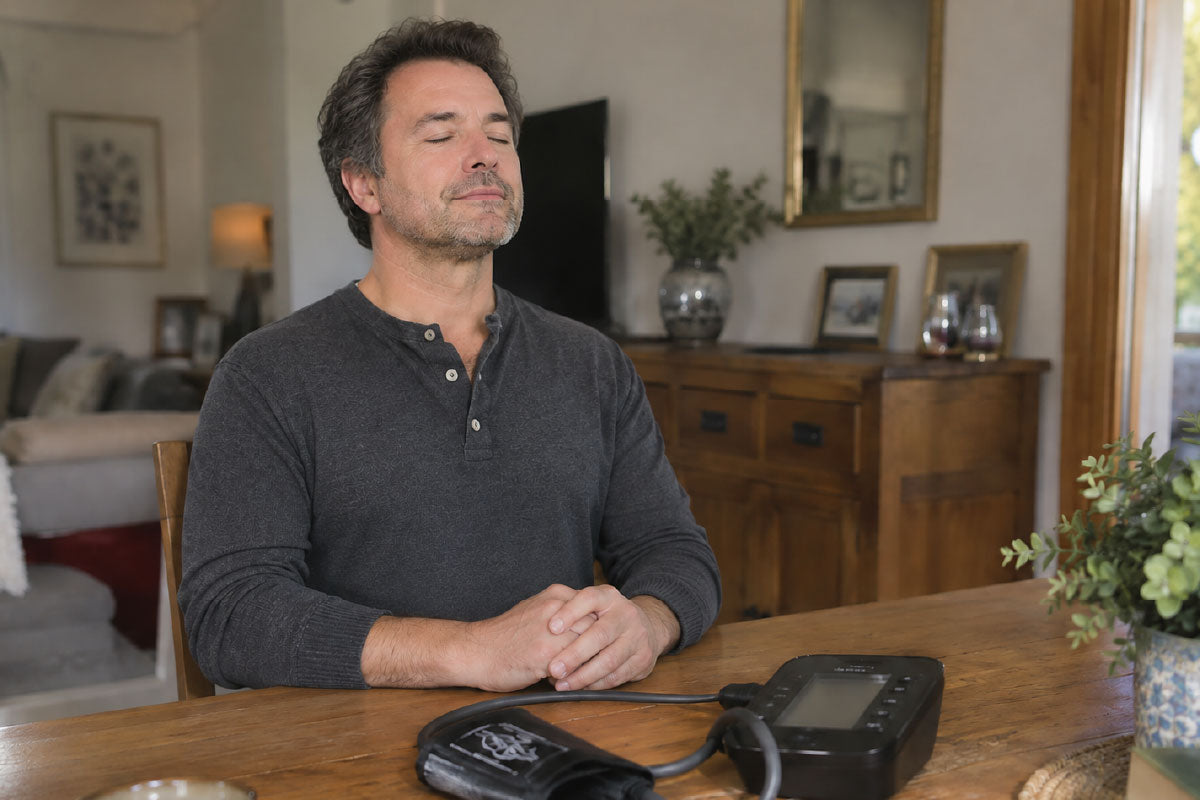
Consistency outperforms frequency. Per AHA home BP tracking guidance, the most useful readings come from a steady routine: in the morning before medication, after five minutes of quiet sitting, feet flat, back supported, and arm at heart level. The same conditions at the same time of day make patterns comparable across weeks, which is what your care team needs to interpret trends rather than isolated numbers.
Build a Routine That Works for Real Life
Engagement with daily tracking is achievable. A study conducted within the Mass General Brigham Remote Hypertension Program found that 91% of participants preferred a wrist-worn device over a traditional arm cuff, and 79% used it daily. The study also found that the device tracked BP pattern changes after medication adjustments with 87.5% concordance with traditional home BP measurement (Unlu, Cannon, Lee et al., 2025). The device studied was not Hilo Core, so these findings should not be interpreted as clinical validation of Hilo Core.
The takeaway: daily pattern awareness is sustainable when the tool fits real life.
A practical routine you can build this week:
- Confirm your cuff size matches your arm circumference, and replace it if the fit is wrong. See our guide on how to use a blood pressure monitor.
- Pick consistent measurement times. For a structured home-monitoring period, the 2025 AHA/ACC guideline recommends morning and bedtime readings.
- Sit quietly for five minutes, take two readings at least one minute apart, and record both.
- Pair tracking with sustainable habits, including the DASH diet and steps to lower BP naturally.
- Bring your log to every appointment so your clinician sees repeated cuff readings, not just one snapshot. For Black adults with limited access to frequent follow-up care, this log can be an especially important bridge between visits.
Research published via NIH/PubMed found that home blood pressure tracking was associated with improved control outcomes in African Americans with previously uncontrolled hypertension, reinforcing that consistency between office visits matters (Nye, Ramachandran, Olaleye et al., 2022).
Long-Term Blood Pressure Awareness with Hilo Core
Hilo Core is built for exactly the patterns described above — masked hypertension, nocturnal shifts, and the gaps between appointments that a single office reading can’t see. It’s not a fitness tracker and not a clinical device: it’s a new approach to understanding how your blood pressure evolves over time, designed to fit into daily life without disruption.
- Wrist-worn band: 15-day battery, IP68 waterproof — stays with you through showers, workouts, and sleep. The band and app support long-term blood pressure trend insights.
- Sleep and step tracking: Sleep duration and step count are tracked alongside blood pressure trends in the App v2.8, adding everyday context to your long-term patterns.
- Upper-arm cuff included: Provides point-in-time cuff-based reference measurements that anchor the system. Complete four calibration sessions at onboarding so the system reflects your personal baseline.
- Shareable report: The cuff generates a downloadable report you can bring to every appointment so your care team sees patterns, not snapshots.
- Pricing: $239.98 for the first year — $89.99 hardware plus a $149.99 annual subscription, excluding tax.
Hilo Core works alongside, not instead of, regular medical care. The technology has been validated in clinical research across participants of varying ages and skin tones, including participants with a range of Fitzpatrick skin types (Theiler, Kaufmann, Müller et al., 2023). Based on research conducted on a similar product used in Europe, not the same exact product available in the US. Hilo Core is a wellness product and is not intended for diagnosing or treating hypertension.
If you want to understand how your blood pressure patterns shift across the day, night, and weeks — not just at the occasional office visit — Hilo Core gives you that visibility. Learn more about Hilo Core.
See Your BP Patterns Between Appointments — Not Just at the Doctor’s Office
For Black adults, important blood pressure differences may appear between office visits. Hilo Core brings a validated upper-arm cuff, a screen-free band, and an app together to help you observe long-term BP trends alongside sleep and activity context. Get the complete system for $239.98 in your first year ($89.99 hardware plus a $149.99 annual subscription). Available at us.hilo.com and Amazon from July 21, 2026.
Get Hilo CoreDisclaimer: Hilo Core is a wellness product. It is not intended to diagnose, treat, cure, or prevent any disease. It is not intended to measure blood pressure for medical purposes. This article is for general informational purposes only and does not constitute medical advice. Individual health decisions should be made in consultation with a qualified healthcare professional. Hilo Core is not recommended during pregnancy or for individuals with certain cardiac implants or pre-existing conditions. Please consult your healthcare provider before use.
FAQ
Are blood pressure devices accurate on darker skin tones?
It’s a fair concern, since PPG-based wearables have faced scrutiny for performance differences across skin tones. The technology behind Hilo has been validated in clinical research across participants of varying ages and skin tones, including participants with a range of Fitzpatrick skin types (Theiler, Kaufmann, Müller et al., 2023). For individual guidance, talk with your healthcare provider.
What blood pressure level should African Americans aim for?
The 2025 ACC/AHA hypertension guideline classifies stage 1 hypertension as an average systolic blood pressure of 130 mmHg or higher or an average diastolic blood pressure of 80 mmHg or higher. Individual treatment goals can vary based on age, other health conditions, medication, and overall cardiovascular risk. Talk with your healthcare provider about the right blood pressure goal for you.
Is home blood pressure tracking enough on its own?
No. Validated cuff-based home tracking complements clinical care; it does not replace it. Home or ambulatory cuff monitoring can help identify masked and nighttime patterns, but interpreting those patterns and making decisions about medication, lifestyle, or follow-up belongs with a qualified healthcare professional. Hilo Core adds long-term wellness context and does not diagnose these conditions.
How do I know if my cuff size is right?
Measure around your bare upper arm at the midpoint between your shoulder and elbow. A standard adult cuff typically fits arm circumferences of 22–32 cm, while a large-arm cuff is recommended above 32–33 cm. A poor fit can push readings artificially high or low, undermining every measurement. For step-by-step technique, see our guide on how to use a blood pressure monitor.
Sources
- American Heart Association. High Blood Pressure and African Americans. heart.org (Accessed June 2025).
- American Heart Association. Monitoring Your Blood Pressure at Home. heart.org (Accessed June 2025).
- American Heart Association. Blood Pressure Measurements in the Clinic May Vary Widely Between Doctor’s Visits. heart.org (Accessed July 2026).
- HHS Office of Minority Health. Hypertension and Black/African Americans. minorityhealth.hhs.gov (Accessed June 2025).
- P. Muntner; D. Shimbo; M. Tonelli et al. (2015). Racial Differences in Abnormal Ambulatory Blood Pressure Monitoring Measures: Results From the CARDIA Study. American Journal of Hypertension, 28(5), 640–648. ncbi.nlm.nih.gov (Accessed June 2025).
- G. Ogedegbe; J. Spruill; C. Pickering et al. (2013). Correlates of Isolated Nocturnal Hypertension in African Americans: The Jackson Heart Study. American Journal of Hypertension, 26(8), 1011–1016. pmc.ncbi.nlm.nih.gov (Accessed June 2025).
- Columbia University Irving Medical Center. 24-Hour Tracking May Unmask High Blood Pressure in African-Americans. cuimc.columbia.edu (Accessed June 2025).
- T. P. De Almeida; D. Perruchoud; J. Alexandre et al. (2025). Comparative Evaluation of a Cuffless Wrist-Worn BP Monitor Versus 24-Hour Ambulatory Monitoring. Journal of Hypertension, 43(4), 690–697. doi:10.1097/01.hjh.0001019984.85980.45 (Accessed June 2025).
- K. Theiler; S. Kaufmann; M. Müller et al. (2023). Performance of the Aktiia Optical Blood Pressure Measurement Device in the Elderly. Blood Pressure, 32(1), 2281320. doi:10.1080/08037051.2023.2281320 (Accessed June 2025).
- O. Unlu; C. P. Cannon; S. Lee et al. (2025). Continual Versus Occasional Blood Pressure (COOL-BP) in Remote Hypertension Management. American Journal of Hypertension, 38(5), 295–302. doi:10.1093/ajh/hpaf003 (Accessed June 2025).
- University Hospitals (2024). How Blood Pressure Treatment Is Different for African Americans. uhhospitals.org (Accessed June 2025).
- R. Nye; A. Ramachandran; B. Olaleye et al. (2022). Is Home Blood Pressure Monitoring Effective at Controlling Hypertension in African American Patients? Journal of Patient-Centered Research and Reviews, 9, 185–190. ncbi.nlm.nih.gov (Accessed June 2025).
- G. Mancia; G. Parati; M. Hennig et al. (2014). White-coat hypertension: not so innocent. ESC E-Journal of Cardiology Practice, 14. escardio.org (Accessed July 2026).
- P. K. Whelton; R. M. Carey; W. S. Aronow et al. (2025). 2025 AHA/ACC Guideline for the Prevention, Detection, Evaluation, and Management of High Blood Pressure in Adults. Hypertension. doi:10.1161/HYP.0000000000000249 (Accessed July 2026).
Read more
Blood pressure naturally rises and falls over each day and night, so two checks can show two different numbers, and usually both are real. This article walks through the daily rhythm, the nighttime...
A single number on a cuff display used to be the whole story. Then the guidelines moved the line for high blood pressure lower than the number most people memorized. Here is what current guidance a...
Measuring your blood pressure correctly means the number on the screen should reflect your resting body, not the rush that got you there. Small, fixable steps in preparation and positioning have a ...