

Blood pressure reading myths vs. facts
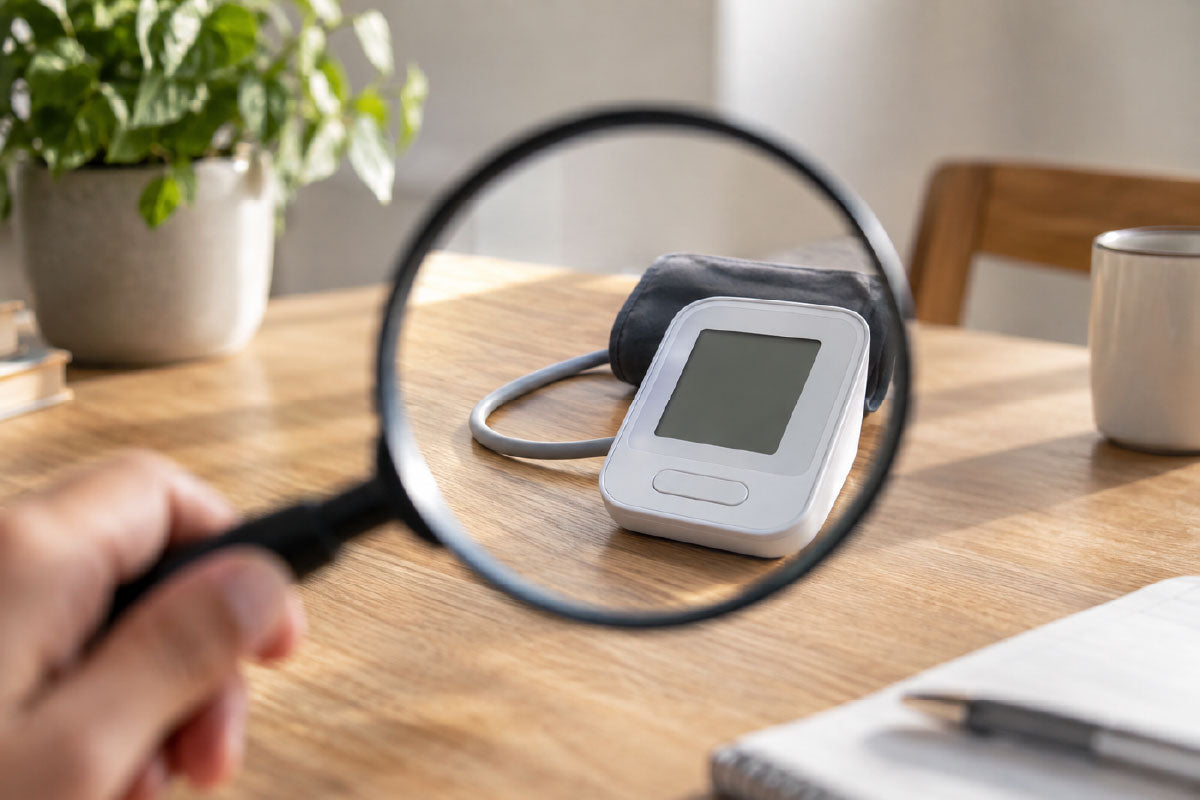
A single number on a cuff display used to be the whole story. Then the guidelines moved the line for high blood pressure lower than the number most people memorized, and the advice from years ago stopped matching what your doctor says today. If you have found yourself wondering which blood pressure myths still hold up, you are not alone. Here is what current guidance actually says, and how to read your own numbers with more context.
Key facts
- The reference line moved: the guideline that applies in the United States defines high blood pressure as 130/80 mmHg or higher, lower than the 140/90 figure many people grew up with, so a number that looked normal by the old rule of thumb may need a second look (2025 AHA/ACC Guideline).
- Feeling fine is not proof: high blood pressure is often symptom-free for years, so a lack of symptoms says nothing about your actual numbers (CDC).
- One reading is a data point, not the pattern: a single measurement, especially in a clinic, can be shaped by the setting itself and answers a narrow question (Myers, 2012).
- Patterns beat single numbers: Hilo Core pairs a validated cuff reading with everyday trend data from the band and app, so you can observe how your numbers relate to daily habits over time.
Myth: "High blood pressure means over 140/90"
For years, 140/90 mmHg was the number everyone learned to associate with high blood pressure. Under the guideline that applies in the United States, that figure no longer marks the starting line for high blood pressure. It marks stage 2. Where the line actually sits, including when you measure at home, is lower than most people expect.
The American College of Cardiology and the American Heart Association define high blood pressure as 130/80 mmHg or higher. Readings of 130 to 139 systolic or 80 to 89 diastolic count as stage 1 hypertension, and 140/90 mmHg or higher counts as stage 2 (2025 AHA/ACC Guideline).
The same line applies at home: the ACC/AHA guideline sets the same 130/80 mmHg threshold for home measurement as for office measurement (2025 AHA/ACC Guideline). A home reading of 138/86 mmHg already falls into stage 1.
Myth: "A single reading tells the whole story"
A well-taken reading is real information. It tells you your blood pressure at that moment. What it cannot tell you is whether that moment was typical, whether your numbers are trending up or down, or whether the setting itself changed the result.
Most people don’t realize how much the setting itself can affect that last point. Manual blood pressure checks in a clinical setting can actually push readings higher than they would be in daily life, simply because of the setting. Researchers have found that manual readings in routine clinical practice may over-diagnose hypertension by provoking office-induced increases in blood pressure (Myers, 2012). This is sometimes called white coat hypertension, a conditioned response to the clinical environment itself, not a random fluctuation in your numbers.
That context effect is why a pattern across several readings gives a clearer picture than any single one. Hilo Core’s validated cuff gives you a precise point-in-time reference, while the band and app reveal how your numbers move across days and weeks, in the settings where you actually live your life. (For a closer look at why one reading a day is not enough, see our dedicated article on the topic.)
Myth: "You'll know if your blood pressure is high"
This is one of the most persistent and most dangerous myths. High blood pressure earns its nickname, the silent killer, honestly: many people carry it for years without a single symptom (American Heart Association).
Most people do not experience direct symptoms of high blood pressure, even at levels high enough to cause real damage (CDC). The long-term risk comes from the slow effect on your arteries and organs, the heart, brain, and kidneys, and that damage builds quietly. Symptoms often only appear once it is severe, which is later than anyone would want.
This is not a rare situation. Nearly half of adults in the United States have high blood pressure: 47.7% between August 2021 and August 2023 (CDC/NCHS Data Brief No. 511). Because high blood pressure is so common and so well understood, most people who know their numbers can manage it well with the right approach and their doctor’s guidance. The first step is checking your numbers; why blood pressure patterns matter explains what to look for once you have them.
Myth: "It's in my genes, there's nothing I can do"
Family history is real. If your parents or close relatives have had high blood pressure, your own risk is higher. But genetics is not the deciding factor many people assume it is.
Genes likely play some role in high blood pressure and related conditions, but people with a family history often also share common environments, habits, and other factors that raise their risk independently of genetics (CDC). That risk climbs further when heredity combines with choices like smoking or an unhealthy diet, which means the outcome is not fixed the moment you learn your family history.
Risk also varies across groups for reasons beyond genetics alone: hypertension prevalence is higher among non-Hispanic Black adults (57.1%) than non-Hispanic White (43.6%) or Hispanic (43.7%) adults in the United States (CDC/NCHS Data Brief No. 364), and populations of African descent tend to develop hypertension earlier in life with greater disease severity than white people (JACC). Understanding your personal risk factors, family history included, is useful context, not a verdict.
Myth: "Cutting out the salt shaker is enough"
Reducing sodium matters, but the salt shaker is a small part of the picture, and assuming it covers the job can leave the bigger levers untouched.
Current dietary guidance recommends adults keep sodium intake under 2,300 mg a day, roughly one teaspoon of table salt total (U.S. FDA). Pattern matters as much as any single ingredient: following the DASH eating plan has been shown to lower systolic blood pressure within eight weeks, with reductions of about 5.5 mmHg overall and 11.4 mmHg among people who already have hypertension (L. J. Appel; T. J. Moore; E. Obarzanek et al., 1997).
Lifestyle changes like these are genuinely useful, and for some people they make a meaningful difference over months. But when blood pressure is significantly elevated, medication is often medically appropriate too, and that decision belongs to your doctor. Lifestyle changes work best alongside medical guidance, not as a stand-in for it. Over time, consistent lifestyle changes may reduce how much medication someone needs, but only your doctor can decide if and when that’s possible.
Myth: "Once your numbers improve, you can stop your medication"
This myth can be genuinely risky, and it is one of the most common reasons blood pressure creeps back up after a period of good numbers.
Managing blood pressure is a long-term commitment, often a lifelong one. Even when a reading looks great, that does not mean the underlying condition is gone; it usually means the current approach, including medication, is working (American Heart Association). Cutting back or stopping medication without talking to a healthcare professional first is one of the most common ways blood pressure rises again.
If your numbers have improved and you are wondering whether your medication routine still makes sense, that is a conversation for your doctor, not a decision to make alone based on how you feel that week.
Where Hilo Core fits
Each myth above comes down to a missing piece: the pattern around a single number. Hilo Core makes that pattern visible.
The system pairs a validated upper-arm cuff, used for calibration and on-demand reference checks, with a lightweight band and app that capture trend data throughout your day. Together they give you a clearer, longer-term view of how your blood pressure patterns relate to your sleep, activity, and daily habits.
Clinical care remains the foundation. Hilo Core adds context you and your doctor can use, more than one number from one morning ever could.
Hilo Core should not be used during pregnancy, on damaged or irritated skin, or by anyone with an implanted electronic device such as a pacemaker or defibrillator. Anyone unsure whether it’s right for them should check with a healthcare professional first.
Reading your numbers with more context
Every myth here traces back to the same habit: treating one number, or one outdated rule of thumb, as the whole answer. The reference line for high blood pressure sits at 130/80 mmHg, lower than the 140/90 many people memorized, and it applies at home as well as in the doctor’s office. A symptom-free day says nothing about your actual numbers. Genetics shapes your baseline risk, but lifestyle and environment shape how it plays out. Medication decisions belong to your doctor, built on a long-term view of your numbers.
Understanding your blood pressure means looking at patterns over time, gathered through home readings, cuff checks, and conversations with your doctor; how blood pressure changes throughout the day is one of those patterns worth knowing.
See your patterns, not just a number
Hilo Core pairs a validated cuff with everyday trend data from your band and app, so you and your doctor have more context than one reading can give.
Get Hilo CoreFAQ
Is a reading over 140/90 mmHg still considered high blood pressure?
Yes, and under the US guideline the line sits even lower. The ACC/AHA guideline classifies 130/80 mmHg or higher as high blood pressure: 130 to 139 systolic or 80 to 89 diastolic counts as stage 1, and 140/90 or higher is stage 2. The same 130/80 threshold applies to home measurement (2025 AHA/ACC Guideline).
Why does my blood pressure read higher at the doctor’s office than at home?
This is a well-documented pattern sometimes called white coat hypertension, a conditioned response to the clinical setting itself rather than a sign that your numbers are unstable. Manual readings taken in routine clinical practice can run higher purely because of the environment (Myers, 2012).
Can I stop taking blood pressure medication once my readings improve?
No, not without talking to your doctor first. Managing blood pressure is typically a long-term commitment, and stopping medication on your own, even when numbers look good, is one of the most common reasons blood pressure rises again (American Heart Association).
Do I need to worry about my blood pressure if I feel fine?
Yes, feeling fine is not a reliable indicator. High blood pressure is often symptom-free for years, which is exactly why it is nicknamed the silent killer (American Heart Association). The only way to know your numbers is to check them.
Disclaimer: Hilo Core is a wellness product. It is not intended to diagnose, treat, cure, or prevent any disease. It is not intended to measure blood pressure for medical purposes. This article is for general informational purposes only and does not constitute medical advice. Individual health decisions should be made in consultation with a qualified healthcare professional. Hilo Core is not recommended during pregnancy or for individuals with certain cardiac implants or pre-existing conditions. Please consult your healthcare provider before use.
Sources
- D. W. Jones; K. C. Ferdinand; S. J. Taler et al. (2025). 2025 AHA/ACC/AANP/AAPA/ABC/ACCP/ACPM/AGS/AMA/ASPC/NMA/PCNA/SGIM Guideline for the Prevention, Detection, Evaluation, and Management of High Blood Pressure in Adults. Circulation, 152, e114-e218. https://doi.org/10.1161/CIR.0000000000001356
- M. Ogunniyi; Y. Commodore-Mensah; K. Ferdinand (2021). Race, Ethnicity, Hypertension, and Heart Disease: JACC Focus Seminar 1/9. JACC, 78(24), 2460-2470. https://www.jacc.org/doi/10.1016/j.jacc.2021.06.017
- M. G. Myers (2012). The great myth of office blood pressure measurement. Journal of Hypertension, 30(10), 1894-1898. https://doi.org/10.1097/HJH.0b013e3283577b05
- L. J. Appel; T. J. Moore; E. Obarzanek et al. (1997). A Clinical Trial of the Effects of Dietary Patterns on Blood Pressure. New England Journal of Medicine, 336(16), 1117-1124. https://doi.org/10.1056/NEJM199704173361601
- Hypertension Prevalence, Awareness, Treatment, and Control Among Adults Age 18 and Older: United States, August 2021-August 2023. CDC/NCHS Data Brief No. 511. https://www.cdc.gov/nchs/products/databriefs/db511.htm (Accessed October 2026)
- About High Blood Pressure. CDC. https://www.cdc.gov/high-blood-pressure/about/index.html (Accessed September 2026)
- High Blood Pressure Risk Factors. CDC. https://www.cdc.gov/high-blood-pressure/risk-factors/index.html (Accessed September 2026)
- QuickStats: Prevalence of Hypertension Among Adults, by Race and Hispanic Origin. CDC/NCHS Data Brief No. 364. https://www.cdc.gov/nchs/products/databriefs/db364.htm (Accessed September 2026)
- Common High Blood Pressure Myths. American Heart Association. https://www.heart.org/en/health-topics/high-blood-pressure/the-facts-about-high-blood-pressure/common-high-blood-pressure-myths (Accessed September 2026)
- Managing High Blood Pressure Medications. American Heart Association. https://www.heart.org/en/health-topics/high-blood-pressure/changes-you-can-make-to-manage-high-blood-pressure/managing-high-blood-pressure-medications (Accessed September 2026)
- Sodium in Your Diet. U.S. FDA. https://www.fda.gov/food/nutrition-education-resources-materials/sodium-your-diet (Accessed September 2026)
Read more
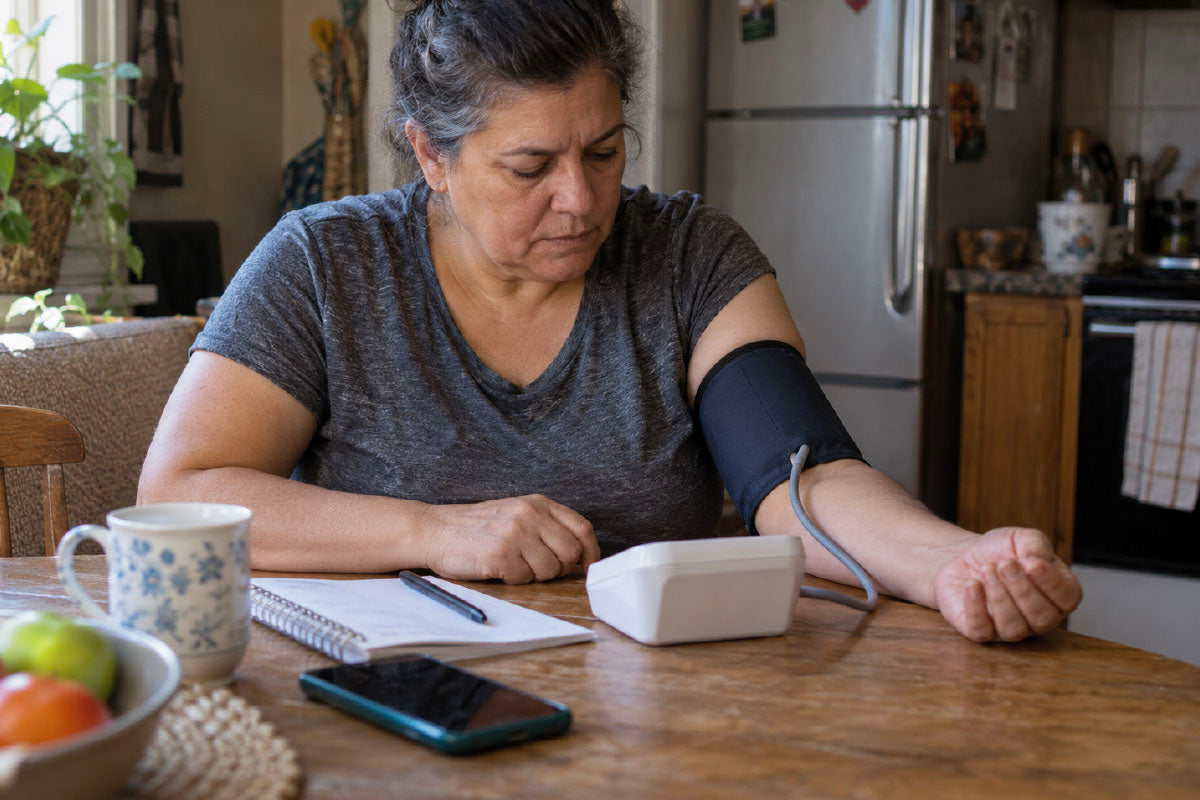
Blood pressure naturally rises and falls over each day and night, so two checks can show two different numbers, and usually both are real. This article walks through the daily rhythm, the nighttime...
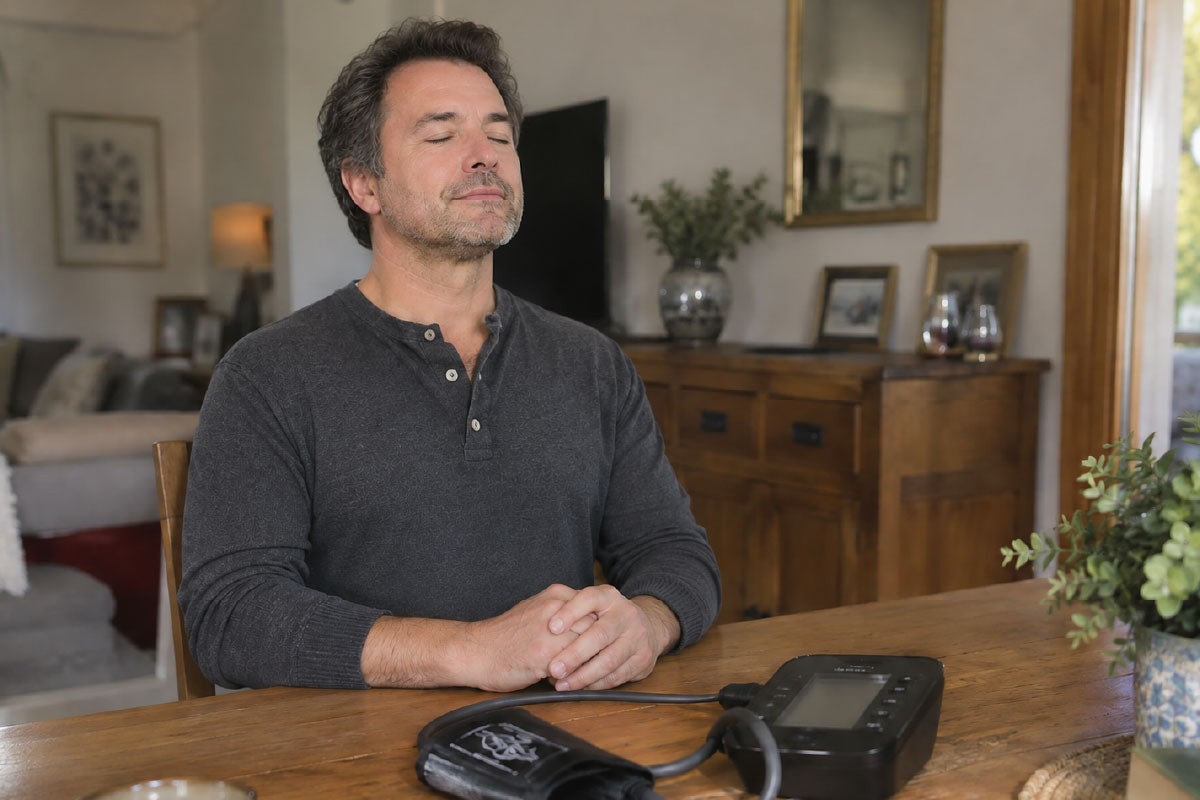
Measuring your blood pressure correctly means the number on the screen should reflect your resting body, not the rush that got you there. Small, fixable steps in preparation and positioning have a ...
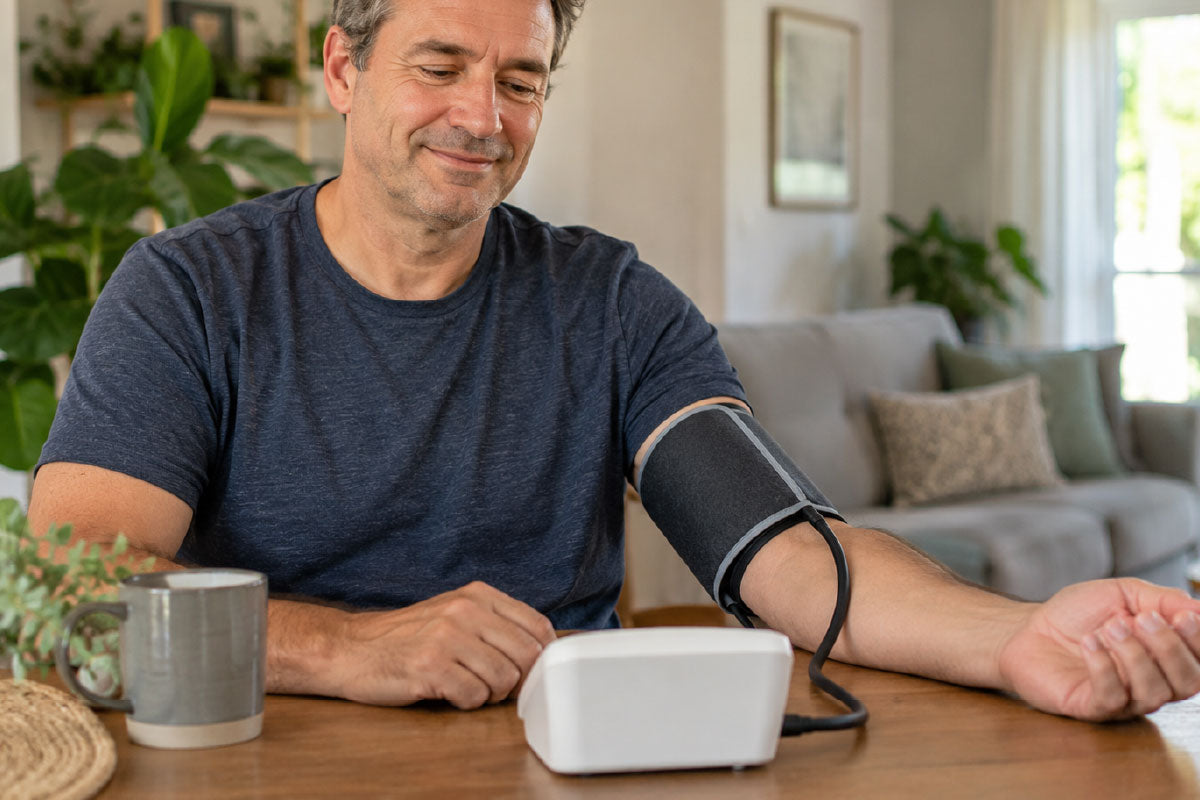
You just got a blood pressure reading back with a normal top number, but the bottom one is elevated. This guide covers what lowers diastolic blood pressure day to day, why the number behaves differ...