

Blood Pressure Without Insurance: The Three Best Options in 2026

You get a blood pressure reading at the pharmacy kiosk that concerns you — but you have no insurance, no primary care doctor, and no clear next step. You’re not alone: approximately 28 million Americans are currently uninsured, and nearly half of all US adults have high blood pressure (CDC, 2024). This guide walks through three practical options — from free pharmacy kiosks to Hilo Core, a new system that helps you understand your BP patterns without a prescription or insurance card.
Key Takeaways
- Coverage gap: Approximately 28 million Americans lack health insurance, and nearly half of all US adults have high blood pressure. Affordable access to standardized cuff measurements and appropriate care remains a genuine challenge for millions of people.
- Affordable entry point: Independently validated upper-arm cuff monitors start at around $35, are available without a prescription, and may be eligible for HSA/FSA spending.
- Beyond the snapshot: A single measurement captures a moment, not a pattern. Conditions like masked hypertension or nocturnal blood pressure shifts typically require 24-hour ambulatory monitoring or repeated home measurements to come into view — approaches that are either costly, clinically managed, or simply impractical for everyday life.
- Hilo Core: A different option that combines exact cuff-based reference measurements with a long-term view of blood pressure trends — no prescription required and no insurance needed.
Why a Single Measurement Isn’t the Full Picture
Most people treat blood pressure as a single number: take a reading, check if it’s okay, move on. But a single measurement is more vulnerable to noise than most people realise. Your blood pressure shifts constantly — with time of day, stress, hormones, and activity. Nocturnal dipping patterns and morning surges are among the most clinically discussed variations, yet among the hardest to capture with occasional spot checks.
A spot check gives you a number — but not the context that makes it meaningful. A reading taken at the doctor’s office, after a stressful commute, or at the wrong time of day tells a very different story than one taken at rest, overnight, or across weeks of daily life. White coat syndrome alone can shift readings by 10 mmHg or more — not because the measurement is wrong, but because the moment it captures doesn’t reflect the full picture.
The American Heart Association recommends two readings taken one minute apart, twice daily at consistent times, to build a reliable picture. Even with that discipline, a once-a-day cuff reading cannot capture what happens during sleep. Nocturnal hypertension and non-dipping — patterns where blood pressure fails to fall as expected overnight — are associated with significantly elevated cardiovascular risk, independent of daytime readings. Blood pressure has no symptoms. It doesn’t announce itself differently at night than during the day — which is exactly why overnight patterns so often go unnoticed. Only about one in four U.S. adults with hypertension has their blood pressure under control — not because effective options don’t exist, but because understanding your full BP pattern requires more than an occasional reading can offer.
The goal isn’t just capturing a number. It’s understanding how your blood pressure behaves across different moments of your life.
Your 3 Best Options for Checking Blood Pressure Without Insurance
Not every option suits every situation. Here’s a side-by-side look at what’s available, followed by a closer look at each tier.
| Option | Cost | Prescription needed? | Trend tracking | Best for |
|---|---|---|---|---|
| Pharmacy kiosk | Free | No | No | Quick one-off checks |
| Home upper-arm cuff monitor | $35–$300 | No | Yes, with a written or digital log | Regular self-checks |
| Hilo Core | $239.98 first year | No | Yes — long-term trends | Everyday pattern awareness plus cuff references |
Option 1 — Free Pharmacy Kiosks
Pharmacy kiosks offer free blood pressure checks with no appointment, no prescription, and no cost. You sit down, wrap the cuff, and get a reading. For a first-ever check or a quick baseline check, kiosks are an excellent starting point.
The limitation is equally clear: a single spot-check with no logging, no trend data, and no guarantee that standard measurement conditions were met. Guidelines recommend at least five minutes of quiet rest beforehand, back supported, feet flat on the floor, and arm at heart level — conditions that are rarely achievable at a pharmacy kiosk. Use a kiosk to get a rough orientation, not to understand your BP over time.
Option 2 — Affordable Home Upper-Arm Cuff Monitors ($35–$300)
For regular spot-checks at home, a validated upper-arm cuff monitor is a reliable and accessible starting point — giving you consistent reference readings when used correctly and at the same time each day. Reliable models start at around $35 with the useful range topping out around $300. The American Heart Association recommends upper-arm cuffs over wrist or finger monitors, as wrist devices are more sensitive to positioning errors and tend to produce less consistent readings. It’s also worth checking the label before you buy: many popular low-cost models are not independently validated and can vary by as much as 20 mmHg — a margin that matters.
Option 3 — Long-Term BP Trend Awareness: Hilo Core
For people who want to go beyond individual readings and observe how blood pressure trends relate to days, nights, sleep, and daily routines, Hilo Core offers a different kind of visibility — one that builds over time rather than capturing a single moment.
The system pairs a validated upper-arm cuff with a lightweight wellness band worn throughout the day. The cuff provides exact point-in-time reference measurements at the medical layer of the system. In an independent validation study, the Hilo Cuff recorded a mean error of 1.3 ± 7.11 mm Hg for systolic BP and −0.2 ± 5.46 mm Hg for diastolic BP, meeting both criteria of the ISO 81060-2 validation standard. That validated reference point is what the band and app then use to surface how BP patterns evolve over time.
Hilo Core is available without a prescription. US pricing is $239.98 for the first year ($89.99 hardware plus a $149.99 annual subscription), available at Hilo.com and Amazon. Hilo Core is a wellness product — designed to support pattern awareness, not to replace clinical diagnosis, treatment, or clinician-directed home or ambulatory monitoring.
See Your Blood Pressure Patterns Clearly With Hilo Core
Not having insurance does not mean having no options. Whether you start with a free pharmacy kiosk, a validated home cuff, or want to add long-term wellness context around your daily life, Hilo Core makes that kind of awareness accessible without a prescription or insurance card. It does not replace medical evaluation when readings are elevated, persistent, or accompanied by symptoms.
In 2024, high blood pressure was a primary or contributing cause of 680,179 deaths in the United States. Understanding your patterns is one of the most meaningful steps you can take for your long-term health, regardless of your coverage status.
No Insurance, No Prescription — Still a Clearer View of Your Patterns
Hilo Core pairs a validated upper-arm cuff reference with a long-term view, so you can observe how blood pressure patterns evolve over time. Get the complete system for $239.98 in your first year ($89.99 hardware plus a $149.99 annual subscription). Available at Hilo.com and Amazon.
Get Hilo CoreDisclaimer: This article is for general informational and wellness purposes only and does not constitute medical advice. The Hilo Core is a wellness product and is not intended to diagnose, treat, cure, or prevent any disease, nor to measure blood pressure for medical purposes. If you suspect you have high blood pressure or are concerned about your cardiovascular health, consult a qualified healthcare professional before making any decisions based on your readings.
Frequently Asked Questions
Can I get a free blood pressure check without insurance?
Yes. Pharmacy kiosks offer free checks with no appointment, no prescription, and no cost. Use them for a quick baseline — not for ongoing trend tracking.
How often should I check my blood pressure at home?
For home cuff readings, guidelines recommend twice daily — morning before medication and evening — with two readings taken at least one minute apart. That gives you a reliable snapshot at consistent moments. What it can’t capture is how your BP shifts across the rest of the day: during activity, at night, or across weeks of daily routines. Systems like Hilo Core are built around that longer arc — surfacing patterns over time rather than individual data points, so you build a fuller picture without a daily cuff session.
What is Hilo Core and how is it different from a standard cuff?
Hilo Core is a wellness system that pairs a clinically validated cuff with a band and app designed to show how BP patterns unfold over time. No prescription or insurance required. Available at Hilo.com and Amazon.
Sources
- Alexandre J, Tan K, Almeida TP, Sola J, Alpert BS, Shah J (2023). Validation of the Hilo Cuff for home blood pressure monitoring according to the ANSI/AAMI/ISO 81060-2:2013 protocol. Blood Pressure Monitoring, 28(2), 109–112. pmc.ncbi.nlm.nih.gov (Accessed June 2026)
- High Blood Pressure Facts and Statistics. Centers for Disease Control and Prevention. cdc.gov (Accessed June 2026)
- Prevalence of Self-Reported Hypertension and Antihypertensive Medication Use Among Adults — United States, 2017–2021. Centers for Disease Control and Prevention, MMWR. cdc.gov (Accessed June 2026)
- Uninsured Rate in 2025 Holds Steady Around 8%. Becker’s Payer Issues. beckerspayer.com (Accessed June 2026)
- Diaz KM et al. (2022). Prevalence and Clinical Significance of Masked Hypertension. Hypertension. doi:10.1161/HYPERTENSIONAHA.122.19263 (Accessed June 2026)
- Pickering TG et al. Ambulatory Blood Pressure Monitoring. Hypertension — AHA Scientific Statement. doi:10.1161/HYP.0000000000000087 (Accessed June 2026)
- Stergiou GS et al. (2014). Diurnal Blood Pressure Variation and Its Clinical Significance. Hypertension. doi:10.1161/HYPERTENSIONAHA.113.01177 (Accessed June 2026)
- White Coat Hypertension and Cardiovascular Outcomes. PMC / NIH. pmc.ncbi.nlm.nih.gov (Accessed June 2026)
- Whelton PK et al. (2021). Home Blood Pressure Monitoring. American Family Physician, 104(3), 237–244. aafp.org (Accessed June 2026)
- Tang A, Yang E, Ebinger JE (2023). Non-Dipping Blood Pressure or Nocturnal Hypertension: Does One Matter More? Current Hypertension Reports. ncbi.nlm.nih.gov (Accessed June 2026)
- Friedman O, Logan AG. Can Nocturnal Hypertension Predict Cardiovascular Risk? Integrated Blood Pressure Control. ncbi.nlm.nih.gov (Accessed June 2026)
- Are You Sure You’re Accurately Measuring BP? American Medical Association. ama-assn.org (Accessed June 2026)
- Monitoring Your Blood Pressure at Home. American Heart Association. heart.org (Accessed June 2026)
- Best Blood Pressure Monitors of 2026. AARP. aarp.org (Accessed June 2026)
- Do Insurance Plans Cover Blood Pressure Screenings? AllSeniors.org. allseniors.org (Accessed June 2026)
- Health and Economic Benefits of High Blood Pressure Interventions. National Center for Chronic Disease Prevention and Health Promotion, CDC. cdc.gov (Accessed July 2026)
Read more

Blood pressure naturally rises in the early-morning hours as part of the body's daily rhythm, so a higher morning reading is often normal. Here is what is ordinary, what doctors mean by a morning s...
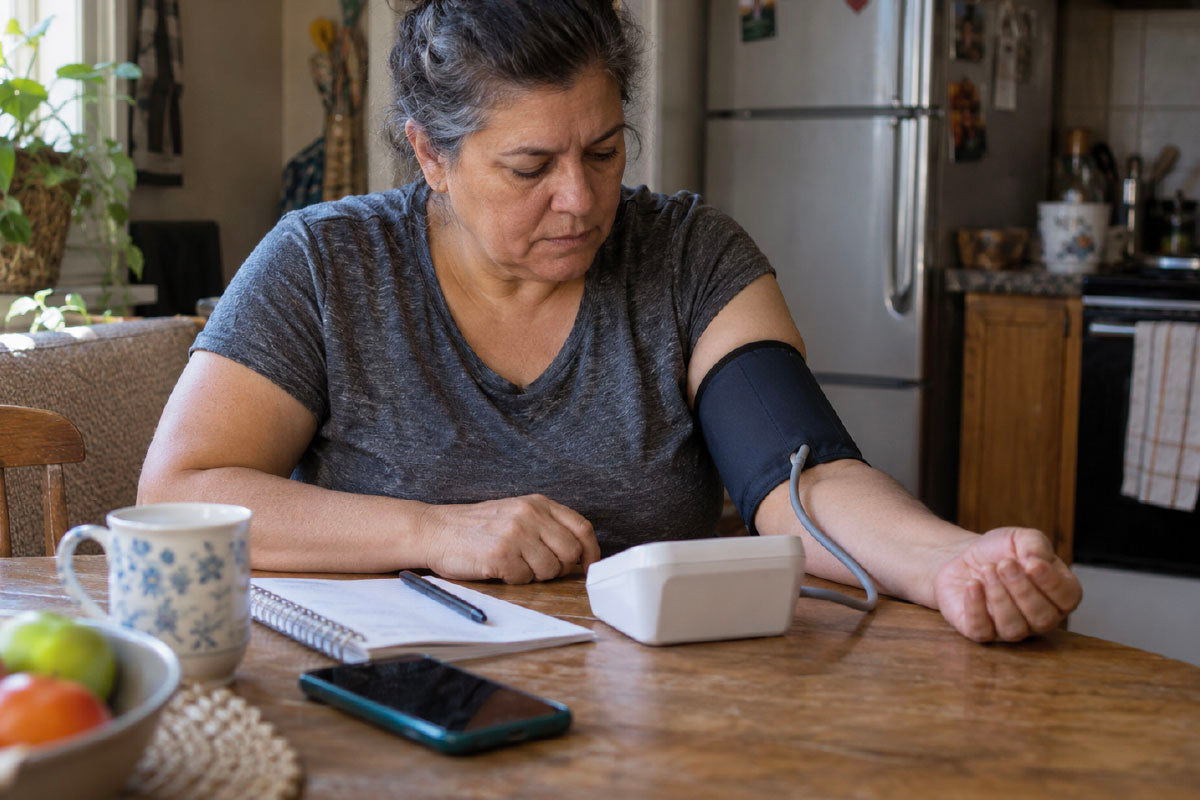
Blood pressure naturally rises and falls over each day and night, so two checks can show two different numbers, and usually both are real. This article walks through the daily rhythm, the nighttime...
A single number on a cuff display used to be the whole story. Then the guidelines moved the line for high blood pressure lower than the number most people memorized. Here is what current guidance a...