

Types of blood pressure monitors: which one is right for you? (2026)
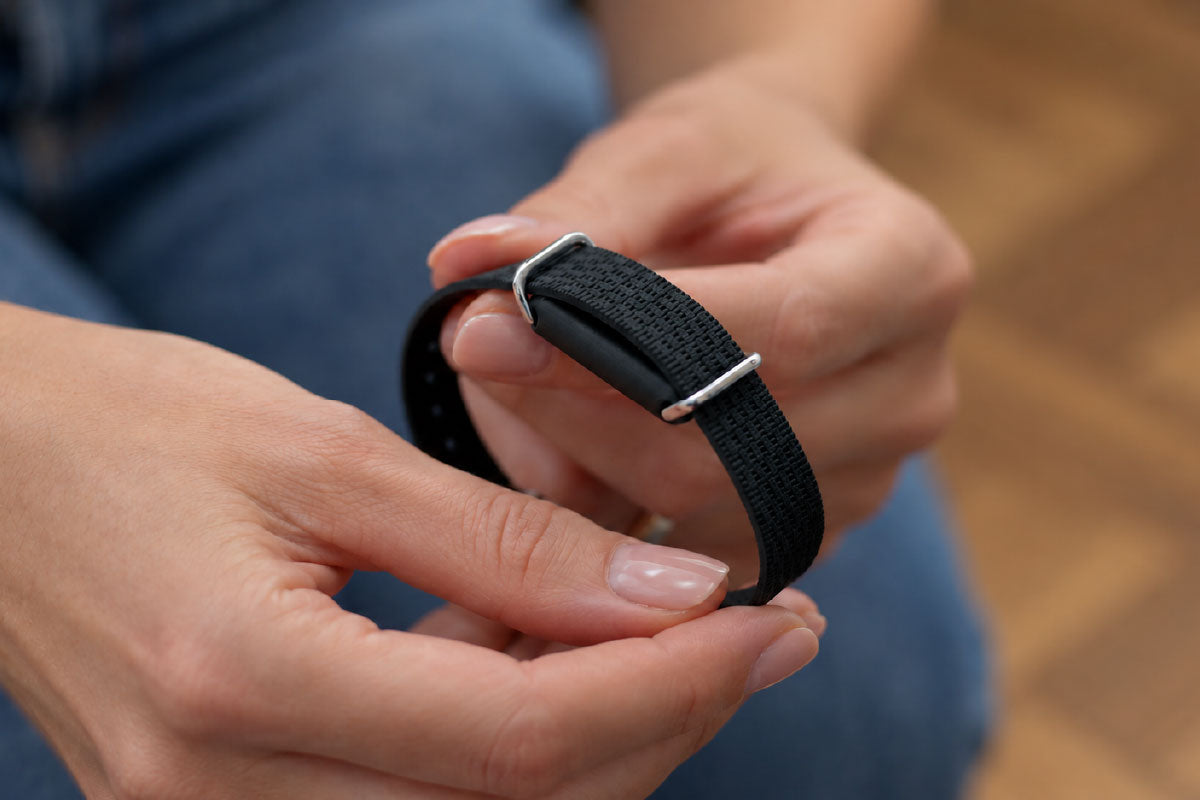
Standing in the pharmacy aisle, blood pressure monitor boxes lined up in every shape and price point, it is easy to wonder if they all work the same way. Some strap to the wrist. Some clip on for a full day. One or two sit quietly on your arm and track patterns in the background. Here is what actually separates the types of blood pressure monitors, and which one fits how you want to track your health.
Key Facts
- Upper-arm cuffs lead the pack: the American Heart Association recommends automatic, cuff-style, upper-arm devices over wrist or finger options for home use.
- Manual and digital arm devices differ in how they are used: an aneroid (manual) cuff is inflated by squeezing a bulb and read on a gauge, while a digital device runs the measurement automatically. Aneroid cuffs cost less but are also the easiest to damage compared with digital arm devices, according to WebMD.
- A newer wearable category tracks patterns, not single numbers: cuffless wearables calibrate against a cuff and reveal trends over time instead of replacing periodic measurements.
- Hilo Core is one example of this pattern-tracking category: its band and app work alongside a calibration cuff to build a longer-term picture of your numbers between readings. Explore Hilo Core.
What "Type" Actually Means: Location vs. Purpose
Comparing device types really means comparing two things at once: location (upper arm, wrist, or finger) and purpose (confirming one number, or revealing a pattern across days and weeks). A device can excel at one purpose and be a poor fit for the other regardless of where it sits. The real question is which type matches what you are trying to learn about your own numbers, as this side-by-side comparison of a system versus a standalone monitor makes concrete.
The Main Types, Compared
Four categories cover most of what you will find in a store or a doctor’s office. Each trades off accuracy, convenience, and cost differently.
| Type | How it works | Accuracy | Typical cost |
|---|---|---|---|
| Upper-arm (aneroid) | Manual bulb inflates the cuff; read a gauge by eye | Accurate when used correctly, but manual, so more prone to reading error | Least expensive, easiest to damage |
| Upper-arm (digital) | Automatic cuff, reads the number directly | Same AHA-preferred category | Many top-rated models run $40 to $75 |
| Wrist cuff | Cuff worn at the wrist | More sensitive to body position, less accurate than arm monitors | Comparable to arm monitors; trades accuracy for portability |
| Ambulatory (24-hour) | Upper-arm cuff plus a small recorder on a strap; readings every 15 to 30 minutes awake, hourly asleep | Clinical-grade; physician-ordered | Not a retail purchase, nearly always requires a doctor referral |
| Cuffless wearable | Band worn continuously, calibrated against a cuff | Requires initial and ongoing recalibration to stay accurate (G. S. Stergiou et al., 2022) | Varies by system |
The most common real-world failure point for a cuff is fit and consistent technique: wearing the cuff over clothing, misplacing the arm, or skipping a reading out of inconvenience. That is part of why a lower-effort way to track patterns alongside the cuff has value: it fills the gap between infrequent, effortful readings and the pattern context those readings alone can’t show.
Why Accuracy Still Starts With the Cuff
Whatever category you land on, the accuracy hierarchy is consistent: the American Heart Association recommends automatic, cuff-style, upper-arm devices and does not recommend wrist or finger options, since they tend to produce less reliable readings. That is why cuffless wearables still calibrate against a cuff rather than skipping it: cuffless estimation drifts over time without a cuffed reference point (G. S. Stergiou et al., 2022).
Before buying anything, check whether a specific device has been independently validated, for example via validatebp.org; accuracy does not follow from price or brand. In the US, this also runs along a regulatory line: Hilo Core’s cuff carries FDA clearance as a medical device, while the Hilo Core Band is positioned as a wellness product for everyday awareness (Android Headlines).
Why the 2026 Guideline Numbers Matter for the Monitor You Pick
The guideline numbers below are the reason the device-type question is worth asking carefully: they define who should be measuring at home, and how much weight the pattern between readings carries.
- The 2025 AHA/ACC guidelines set a treatment goal of below 130/80 mmHg and classify Stage 1 hypertension as systolic 130–139 mmHg or diastolic 80–89 mmHg (G. Santulli, 2025).
- That classification traces back to 2017, when the ACC/AHA guideline first lowered the numbers and reclassified 31 million Americans, about 14% of adults, as having hypertension (C. P. McCarthy et al., 2025).
- Despite that, US hypertension prevalence remains at 46% of adults, with control at only 23% (C. P. McCarthy et al., 2025).
Those numbers make the choice among device types a practical one. A treatment goal below 130/80 mmHg puts regular home measurement in the picture for millions of US adults, and the guidelines’ emphasis on sustained control over time gives the pattern between readings real weight. A single office or home reading is a snapshot of one moment, and a single reading a day still isn’t enough to see the full picture. The device types above reflect that split: an upper-arm cuff answers what your number is right now, while a pattern-tracking wearable calibrated against that cuff shows what happens between readings.
How to Choose the Right Type for You
- Need a confirmed number for a doctor’s visit? An upper-arm cuff is the direct answer.
- Want to understand how your numbers move with sleep or daily habits? A pattern-tracking approach adds context a single reading cannot.
- Don’t assume price equals accuracy: many top-rated devices cost $40 to $75, while a $200 wireless device is not necessarily better (WebMD).
- Always check validation status against a resource like validatebp.org before relying on any device.
- Confirm cuff size fits your arm: an ill-fitting cuff is one of the most common, and most avoidable, sources of a wrong reading.

Where Hilo Core Fits Into the Picture
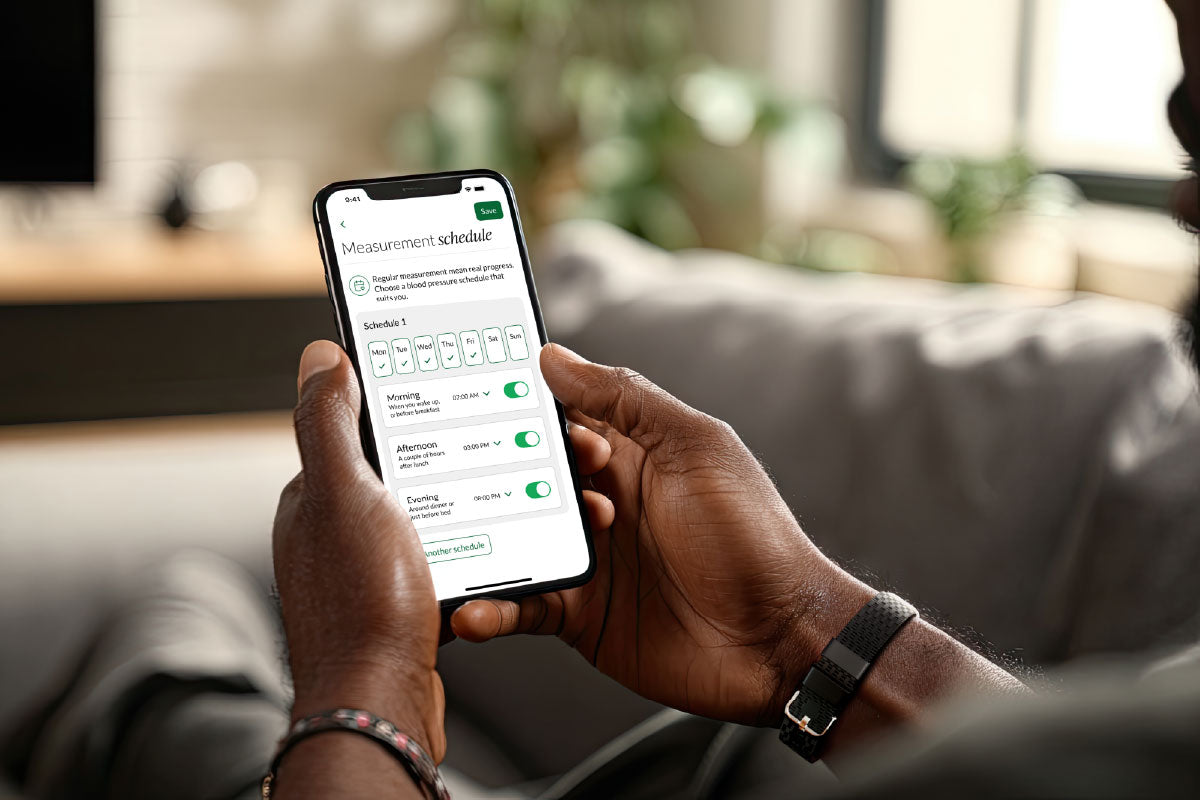
Hilo Core pairs a calibration cuff with a wearable band and app for $239.98 in the first year ($89.99 hardware plus a $149.99 annual subscription), with the cuff establishing accuracy and the band adding pattern context over time (Hilo Core launch announcement). Calibration runs daily for the first four days after setup, then about once a month afterward (Hilo calibration guide), while the band logs roughly 30 to 35 reference points a day, including overnight, alongside sleep, steps, and heart rate (PR Newswire). The two pieces stay separated by design: Hilo Core’s cuff carries FDA clearance as a medical device, while the Hilo Core Band is a wellness product for everyday awareness.
The Right Monitor Depends on What You’re Trying to Learn
The right blood pressure device is the one that matches what you need right now: a confirmed number, or a longer view of your patterns. An upper-arm cuff remains the accuracy standard for that confirmed number. A pattern-tracking wearable, calibrated against that same cuff, adds the day-to-day and overnight context a single reading was never designed to show. Hilo Core deliberately combines the two: the FDA-cleared calibration cuff delivers the confirmed number, and the band turns it into a day-to-day picture, so you don’t have to choose between clinical-grade accuracy and everyday pattern context.
See your blood pressure patterns, not just a single number
Hilo Core pairs a validated calibration cuff with a wearable band, so you get overnight insights and day-to-day context between readings.
Get Hilo CoreDisclaimer: Hilo Core is a wellness product. It is not intended to diagnose, treat, cure, or prevent any disease. It is not intended to measure blood pressure for medical purposes. This article is for general informational purposes only and does not constitute medical advice. Individual health decisions should be made in consultation with a qualified healthcare professional. Hilo Core is not recommended during pregnancy or for individuals with certain cardiac implants or pre-existing conditions. Please consult your healthcare provider before use.
FAQ
Which type of blood pressure device is most accurate for home use?
The American Heart Association recommends an automatic, cuff-style device worn on the upper arm. Wrist and finger devices are not recommended because they tend to produce less reliable readings, largely due to sensitivity to hand and arm position.
Are wrist blood pressure devices as accurate as arm devices?
No. Wrist readings are more sensitive to body position and tend to run less accurate than upper-arm readings. Doctors suggest arm devices more often for this reason, though wrist options can still suit travel or comfort.
What is a validated blood pressure device, and how do I check for one?
A validated device has been independently tested against a clinical reference method. The American Heart Association recommends checking validation status before buying, for example through validatebp.org, since accuracy does not follow from price or brand. Hilo Core is built around that same principle: its FDA-cleared calibration cuff provides the validated reference measurement, and the band adds the long-term pattern view between readings, so one system gives you both the confirmed number and the day-to-day context around it.
Can a wearable band replace my blood pressure cuff?
No, not on its own. Most cuffless wearables need initial and ongoing recalibration against a cuffed reading to stay accurate. The cuff typically carries FDA clearance as a medical device, while the band is positioned as a wellness product working alongside it, adding pattern context a single reading can’t.
Sources
- C. P. McCarthy; J. W. McEvoy; J. L. Cluett (2025). Implementing the 2025 Guideline for the Prevention, Detection, Evaluation, and Management of High Blood Pressure in Adults: Leveraging Evidence to Push the Boundaries of Clinical Care. Hypertension, 82(10), 1538–1540. https://doi.org/10.1161/HYPERTENSIONAHA.125.25418
- G. Santulli (2025). The 2025 AHA/ACC hypertension guidelines: implications for cardiovascular and renal risk in patients with diabetes. Cardiovasc Diabetol Endocrinol Rep, 11(1), 21. https://doi.org/10.1186/s40842-025-00239-3
- G. S. Stergiou et al. (2022). Cuffless blood pressure measuring devices: review and statement by the ESH Working Group on Blood Pressure Monitoring and Cardiovascular Variability. J Hypertens, 40(8), 1449–1460. https://doi.org/10.1097/HJH.0000000000003224
- Monitoring Your Blood Pressure at Home. American Heart Association. https://www.heart.org/en/health-topics/high-blood-pressure/understanding-blood-pressure-readings/monitoring-your-blood-pressure-at-home (Accessed September 2026)
- A. P. Key. How to Pick a Home Blood Pressure Monitor. WebMD. https://www.webmd.com/hypertension-high-blood-pressure/how-pick-home-blood-pressure-monitor (Accessed September 2026)
- Validated Device Listing: Blood pressure devices you can trust. validatebp.org. https://www.validatebp.org/ (Accessed September 2026)
- T. Syrek Jensen et al. National Coverage Determination for Ambulatory Blood Pressure Monitoring (42 CFR 410.32(a)). CMS.gov. https://www.cms.gov/medicare-coverage-database/view/ncacal-decision-memo.aspx?proposed=N&NCAId=294 (Accessed September 2026)
- Hilo Launches the World’s First Blood Pressure Health System. PR Newswire. https://www.prnewswire.com/news-releases/hilo-launches-the-worlds-first-blood-pressure-health-system-turning-snapshots-into-patterns-302829835.html (Accessed September 2026)
- J. Leon. Hilo Core Continuous Blood Pressure Wearable US Launch. Android Headlines. https://www.androidheadlines.com/2026/07/hilo-core-continuous-blood-pressure-wearable-us-launch.html (Accessed September 2026)
Read more

Hilo Core is offered as a general wellness product in the United States. It combines a validated upper-arm cuff for point-in-time reference readings with a wrist-worn cuffless band and an app that ...
Hilo Core and Omron start from the same foundation: a validated upper-arm cuff. What each system builds around that cuff is where they differ. This comparison shows how the two systems differ on va...

Regular exercise can reduce resting systolic blood pressure by up to 9 mmHg (AHA, 2025) — an effect comparable to some medications. But most people exercising for their BP have no real way of seein...